The short answer
You need a new chimney liner when the existing one is cracked, deteriorated or missing, or when you switch appliances or fuels, such as converting a boiler from oil to gas. Nexora inspects the flue with a camera, then installs a liner sized to your appliance so exhaust vents safely and the masonry is protected.
A chimney liner is the channel inside your chimney that carries smoke and exhaust gases up and out of the house. It protects the surrounding brick from heat and corrosive condensate. It keeps dangerous gases from leaking into walls and living space. It also gives your fireplace, stove, boiler or water heater a flue that is the right size to draw properly. Many older homes around New York have clay tile liners that have cracked or shifted over decades, and some chimneys were never lined at all. Nexora Chimney Services installs new liners sized to the appliance that uses them. Before we recommend anything, our certified technicians inspect the flue and show you what we found, so you know exactly why a liner is or isn't needed.
Signs you need a new chimney liner
A damaged liner rarely announces itself all at once. Most homeowners notice small changes first, often during the first fires or the first cold weeks of the heating season. If you see any of the following, schedule an inspection before using the appliance heavily.
- A smoke or creosote smell in the room, especially on humid days or when the fireplace is not in use
- Poor draft: smoke rolling into the room, fires that are hard to start, or a boiler that struggles to vent
- Pieces of tile, mortar or flaking brick collecting in the firebox or at the base of the flue
- White staining on the outside or inside brick, a sign that moisture is moving through the masonry
- Water dripping into the firebox or pooling at the bottom of the chimney after rain
- An upcoming change of appliance or fuel, such as replacing a boiler or converting from oil to gas
What's included in a liner installation
Every job starts with understanding the chimney as it is today. From there, we size and install a liner for the appliance it will serve and leave the system ready to use.
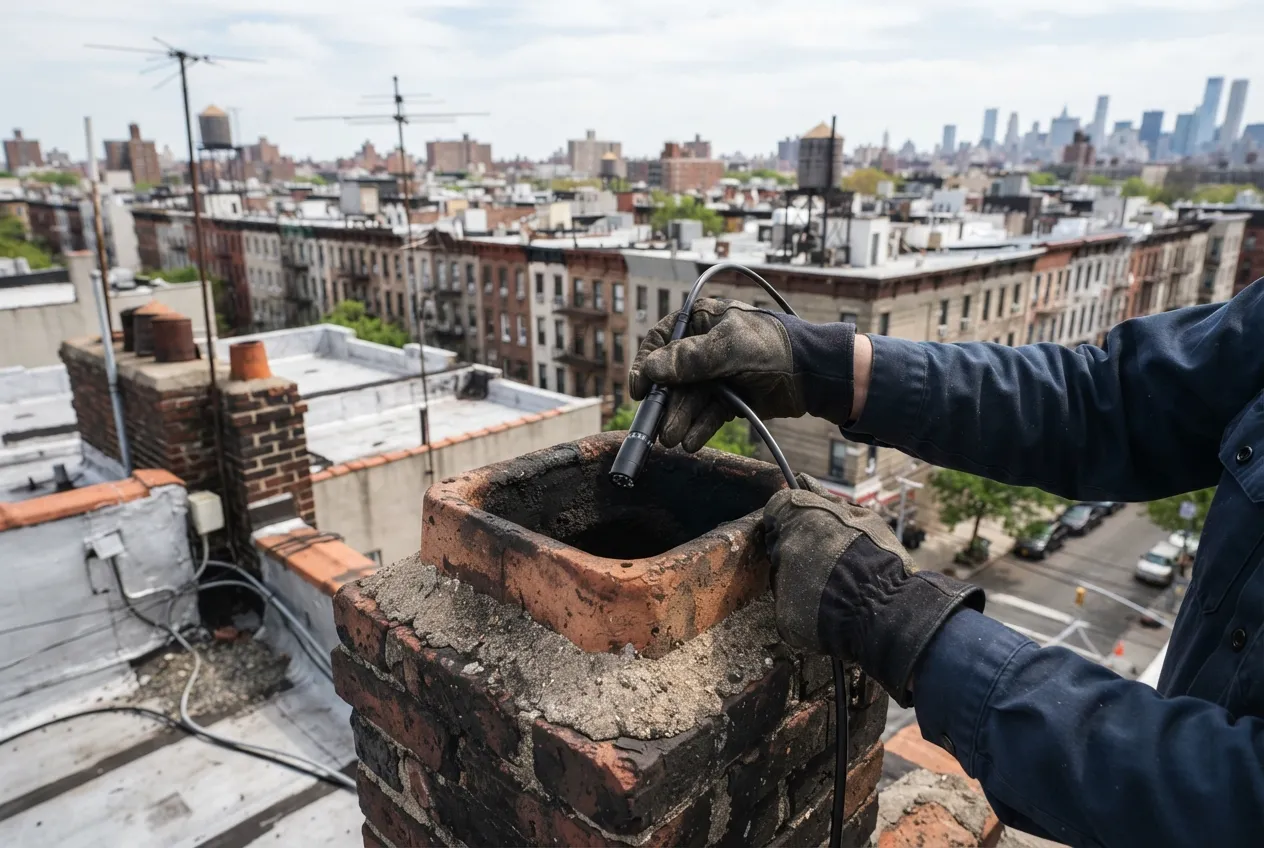
- Camera inspection of the full flue to document cracks, gaps, missing tile and buildup
- Measurement of the flue and review of the appliance it serves to size the new liner correctly
- Cleaning of the existing flue to remove creosote, soot and loose debris before installation
- Removal of broken tile where needed to make room for the new liner
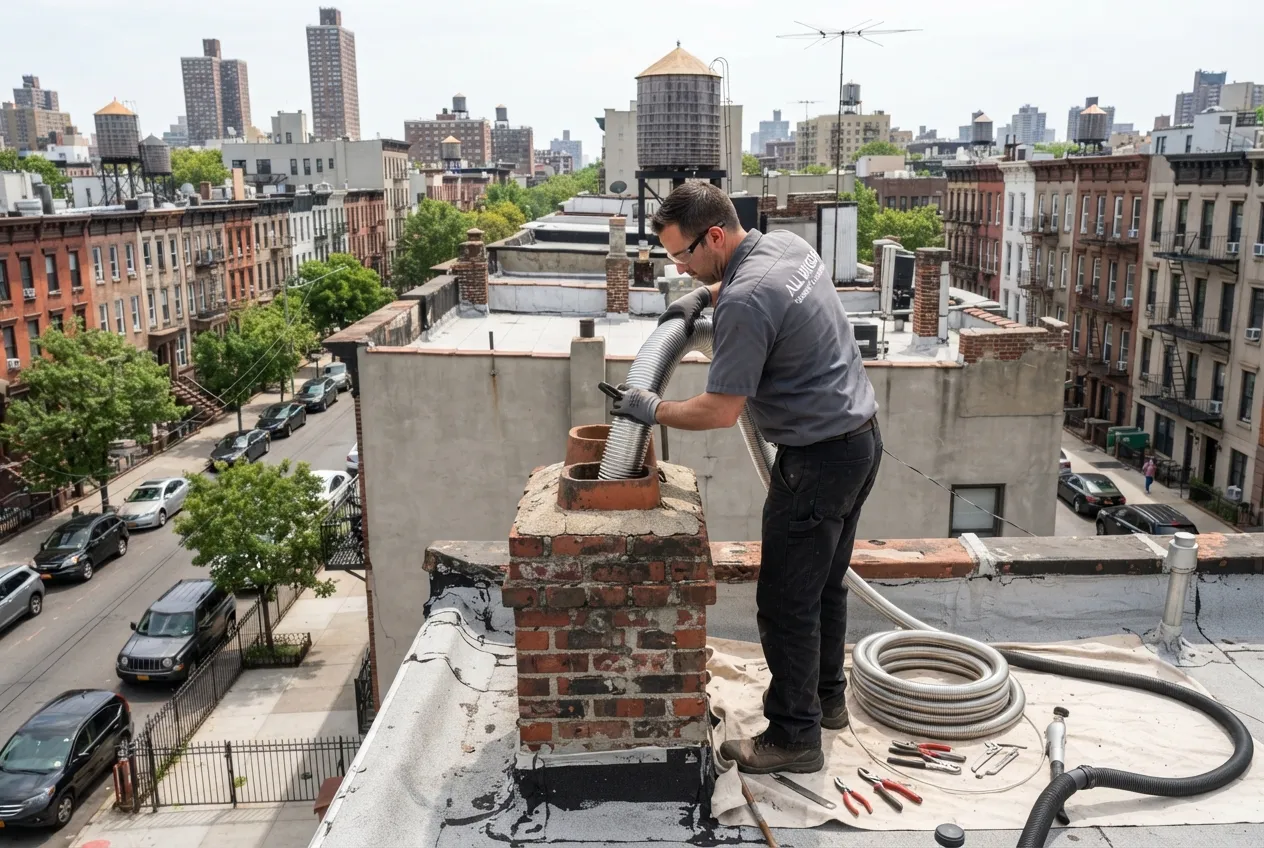
- Installation of a stainless steel liner, with a connection at the appliance or smoke chamber
- Insulation where the chimney and appliance call for it
- A top plate and rain cap to keep water, debris and animals out
- A final draft check and a walk-through of the finished work, with photos
How our crew works inside your home and on the roof
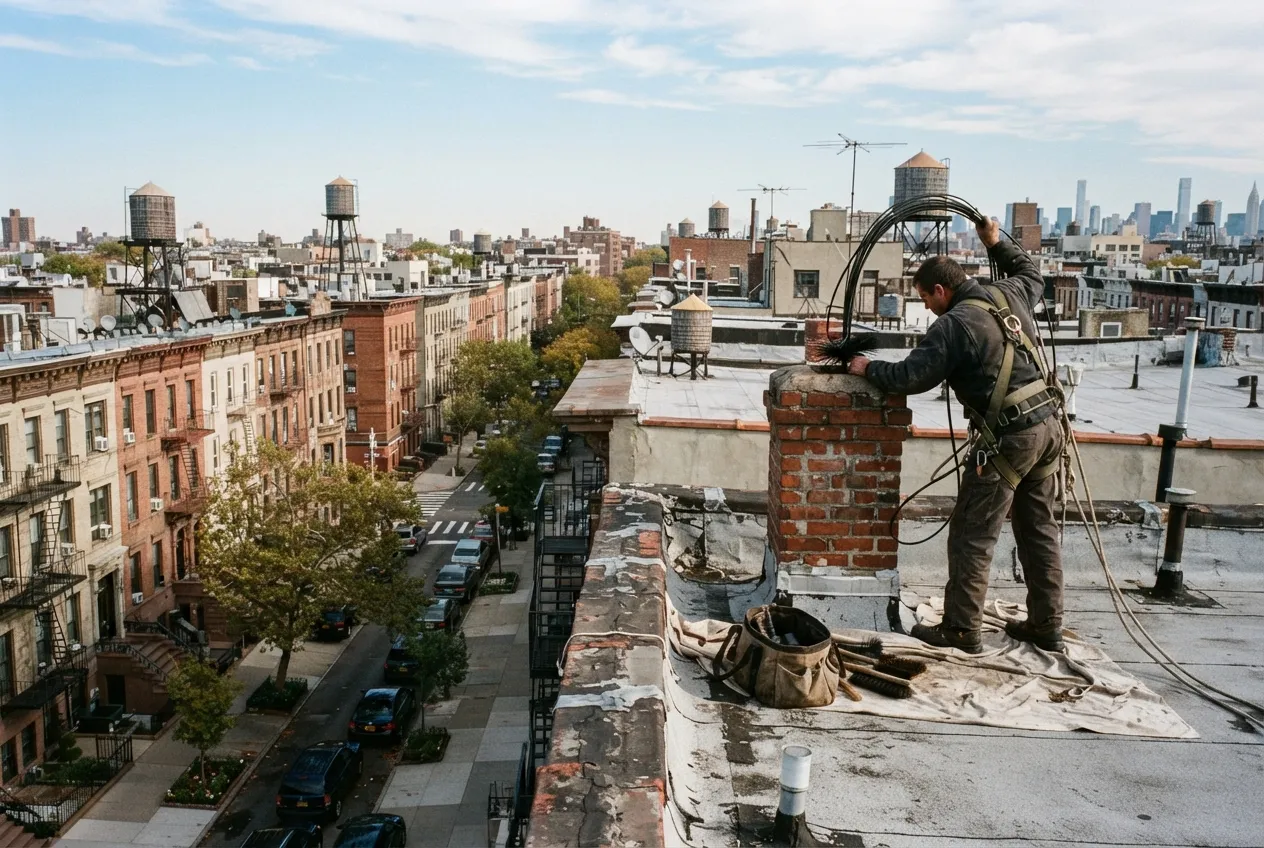
Inside, we lay drop cloths from the door to the fireplace or appliance and seal the opening so soot stays in the chimney. HEPA vacuums run while we work to capture fine dust. Rotary brushes clear the old flue walls before the liner goes in, and a camera lets us see the length of the chimney instead of guessing.
On the roof, the crew sets up safe access, checks the crown and the top of the flue, and feeds the liner down from above. We protect roofing and nearby surfaces and carry away old tile and debris. For row houses and attached homes, we plan the roof route ahead of time and let you know if neighbor access or building management approval is needed.
Time for your annual chimney check?
The standard we follow
Our work follows NFPA 211, the national standard for chimneys, fireplaces and vents. It calls for these systems to be inspected once a year. Chimney professionals use three inspection levels. Level 1 applies when nothing has changed. Level 2 applies when the system changes, for example a new appliance or a switch of fuel, or when the home is sold. Level 3 applies when a hidden hazard can only be reached by opening part of the chimney or building. Relining usually follows a Level 2 inspection, since it involves a camera look at the whole flue.
Fuel conversions are a common reason for relining in New York City. When a building converts its boiler from oil to gas, the chimney has to be evaluated as part of the work. A new liner is often needed because gas exhaust produces acidic condensate that can corrode a masonry flue.
What affects the price
Each chimney is different, so we quote after we inspect. These are the main factors that shape the cost of a liner installation.
- Chimney height and how easy it is to reach the roof safely
- Fuel type and appliance: wood, gas, oil, or more than one appliance sharing a chimney
- Flue size and shape, and the condition of the existing tile
- How much creosote or soot buildup has to be cleaned first
- Whether broken tile must be removed or the flue enlarged to fit the liner
- Whether insulation, a new top plate or cap, or masonry repairs are needed
How a visit works
When you contact us, we ask about the home, the appliance and what you've noticed. A technician then visits to inspect the chimney, runs the camera and walks you through the footage. You get a clear explanation of the liner options that fit your appliance and a written quote. Nothing proceeds until you approve it.
On installation day, the crew protects the work area, cleans the flue, installs the liner and cap, and tests the draft. Most single-flue installations are finished in one visit, though complex chimneys can take longer. New York City's heat season runs from October 1 through May 31, so if your liner serves a boiler or furnace, booking in late spring or summer leaves time to finish before heat is needed.
Chimney Liner Installation by city
- Chimney Liner Installation in Gramercy
- Chimney Liner Installation in Stuyvesant Town
- Chimney Liner Installation in Peter Cooper Village
- Chimney Liner Installation in East Village
- Chimney Liner Installation in Murray Hill
- Chimney Liner Installation in Kips Bay
- Chimney Liner Installation in Midtown South
- Chimney Liner Installation in Flatiron
- Chimney Liner Installation in Union Square
- Chimney Liner Installation in Greenwich Village
- Chimney Liner Installation in West Village
- Chimney Liner Installation in Lower East Side