The short answer
You need a new chimney liner when the existing flue is cracked, corroded, missing, or the wrong size for the appliance it serves. In New York City this often comes up during an oil-to-gas boiler conversion, because gas exhaust creates acidic condensate that can eat away at a masonry flue. We inspect the chimney first, then size and install a liner matched to your heating appliance or fireplace.
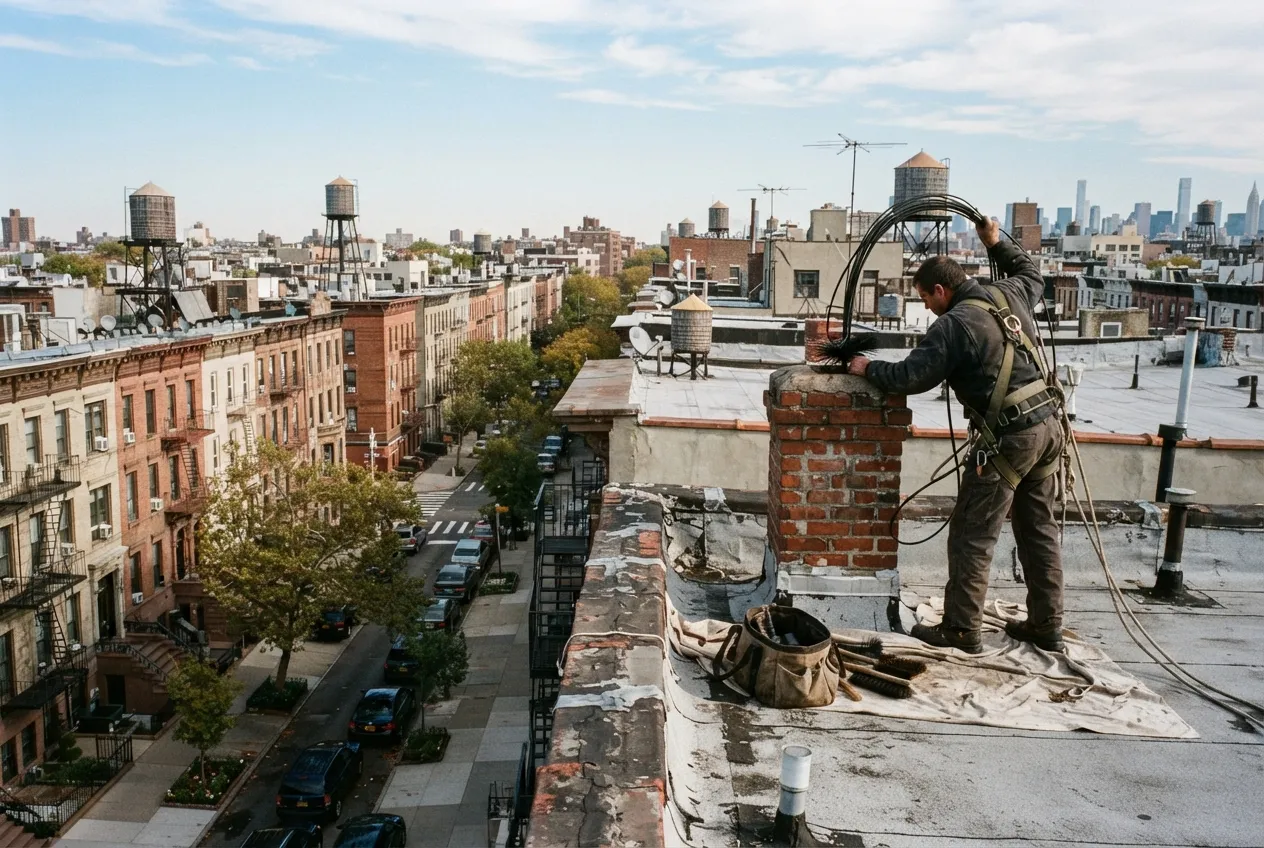
A chimney liner is the protective channel inside your flue that carries smoke and exhaust gases up and out of the building. When it cracks, corrodes or no longer matches the appliance connected to it, heat and combustion byproducts can reach the masonry and the framing around it. Nexora Chimney Services works from our office at 304 E 20th St in Stuyvesant Town. Our certified technicians install and replace liners in apartment buildings, rowhouses and brownstones across this part of Manhattan. This page explains when a new liner is needed, how we choose one, and what to expect during the work.
Why Liners Matter in Older Manhattan Buildings
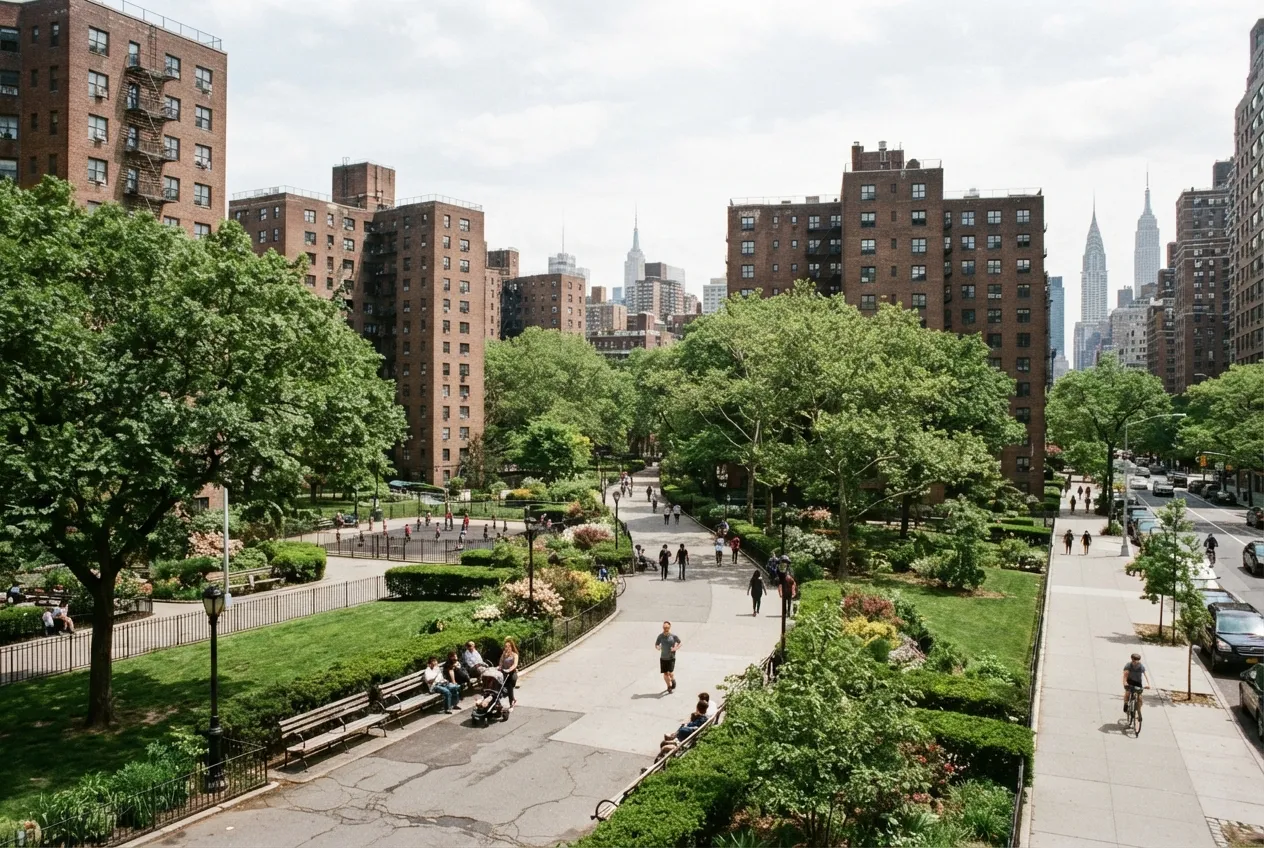
Many buildings in and around Stuyvesant Town have masonry chimneys that were built for a different era of heating. Some flues were originally lined with clay tile. Others were never lined at all. Over decades of use, tiles crack, mortar joints wash out, and the flue can end up far larger or smaller than today's equipment needs.
A liner that is damaged or the wrong size causes real problems. Exhaust may not draft properly, and carbon monoxide can back up into living spaces. Moisture and acidic residue can also soak into the brick. Fixing these issues before the heating season starts is far easier than dealing with them in January.
Oil-to-Gas Conversions and Your Chimney
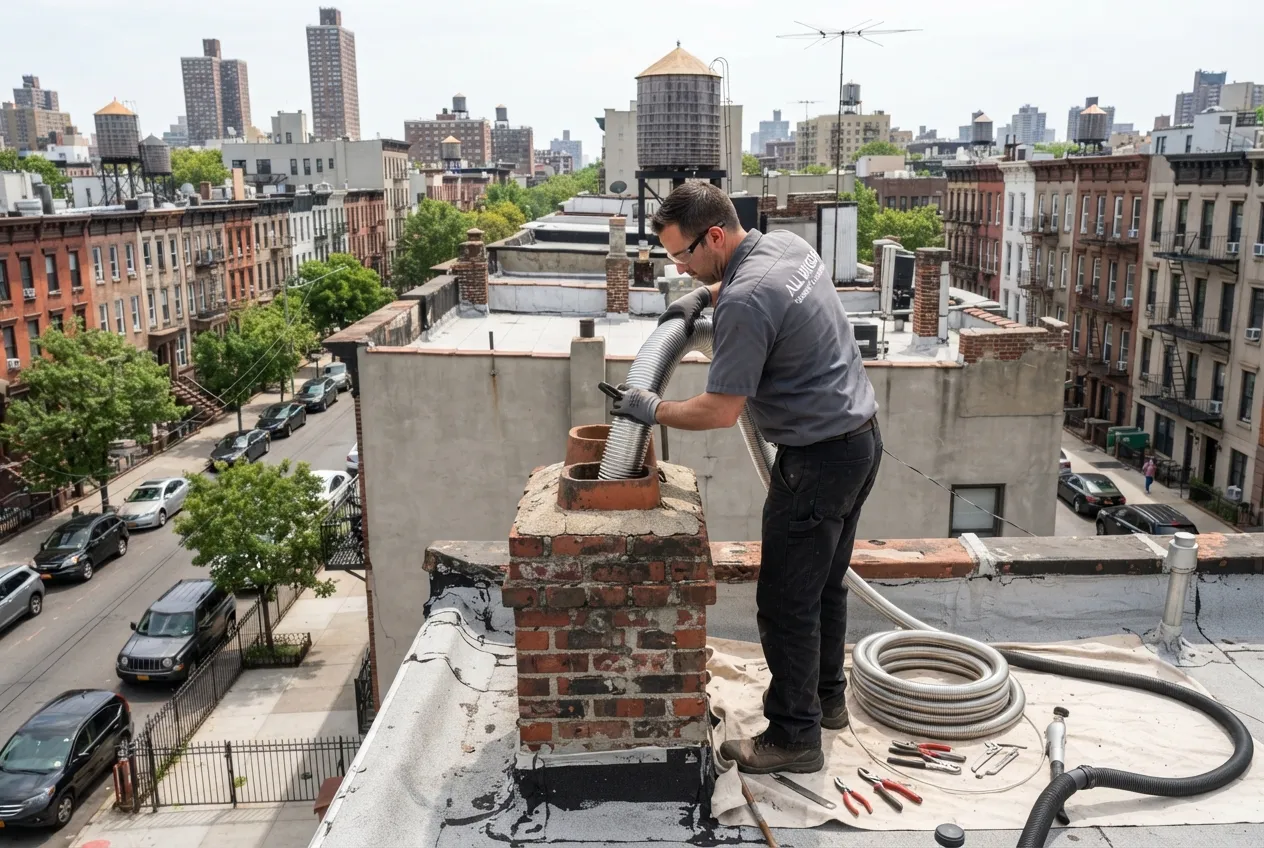
When a New York City building converts its boiler from oil to gas, the chimney has to be evaluated as part of that work. A new liner is often required. Gas exhaust runs cooler and produces acidic condensate, which can corrode a masonry flue that was designed for oil.
If your building or home is planning a conversion, bring us in early. We can inspect the existing flue and tell you whether it can be reused. If it can't, we recommend a liner suited to the new appliance, so the chimney work doesn't hold up the rest of the project.
How We Choose the Right Liner
There is no single liner that fits every chimney. We base our recommendation on the appliance, the fuel and the condition of the flue.
- Stainless steel liners: a common choice for gas, oil and wood appliances, and well suited to relining an existing masonry chimney
- Liners sized to the appliance: a flue that is too large or too small can cause poor draft and condensation, so we match the diameter to the equipment
- Cast-in-place liners: a poured, insulating lining that can strengthen a deteriorated masonry flue where that approach makes sense
- Insulation where needed: helps keep exhaust warm so it drafts properly and produces less condensate
- Proper connections and caps: a secure fit at the appliance and a cap at the top to keep out rain, debris and animals
Time for your annual chimney check?
Inspection Comes First
The NFPA 211 standard calls for chimneys, fireplaces and vents to be inspected once a year. Chimney professionals use three inspection levels. A Level 1 inspection is for when nothing has changed. Level 2 applies when the system changes, such as a new appliance or a switch of fuel, or when a home is sold. Level 3 is used when a hidden hazard can only be reached by opening part of the chimney or the building.
A liner installation usually follows a Level 2 inspection, because it involves a change to the venting system. We use a camera to look at the full length of the flue. Then we explain what we found and walk you through your options before any work begins.
Planning Around the Heat Season
New York City's heat season runs from October 1 through May 31. During those months, building owners must keep apartments heated to the city's minimum temperatures. A boiler that can't run safely during that window becomes an urgent problem.
For that reason, we suggest scheduling liner work in late spring or summer whenever you can. If a problem shows up mid-season, we will work with you to plan the job so the heating system is out of service for as short a time as possible.
Our office is right in Stuyvesant Town, and we also serve Peter Cooper Village, the East Village, Gramercy, Murray Hill and Kips Bay.
More services in Stuyvesant Town
- Chimney Sweep in Stuyvesant Town
- Chimney Inspection in Stuyvesant Town
- Chimney Repair in Stuyvesant Town
- Air Duct Cleaning in Stuyvesant Town