The short answer
A chimney sweep clears creosote, soot and blockages from your flue so smoke and exhaust leave the house the way they should. NFPA 211 calls for chimneys, fireplaces and vents to be inspected once a year, and a sweep is the natural time to do that. Our certified crew protects your floors, cleans from the firebox to the cap and walks you through what they saw.
A chimney sweep removes the creosote, soot and debris that build up inside a flue every time you burn a fire or run a fuel-burning appliance. Left in place, creosote can catch fire, and blockages can push smoke and exhaust gases back into your living space. Nexora Chimney Services sweeps wood-burning fireplaces, wood and pellet stoves, and oil and gas appliance flues for homeowners in New York and nearby cities. Our certified technicians clean the full length of the flue, from the firebox or appliance connection to the top of the chimney. Then they tell you plainly what they found and whether anything needs attention beyond a cleaning.
Signs you need it
Many chimney problems give early warnings, and homeowners usually notice them before anyone climbs onto the roof. If you see or smell any of the following, schedule a sweep and inspection before your next fire or heating season.
One sign alone doesn't mean something is seriously wrong. Several together, or any sign that keeps coming back, points to a flue that needs cleaning and a closer look.
- A smoky or tar-like creosote smell, especially on humid days or when the air conditioning runs
- Poor draft: smoke rolls into the room, fires are hard to start, or the fire smolders instead of burning cleanly
- Soot, debris or flakes of brick and mortar collecting in the firebox
- White, chalky staining on the chimney brick, which usually means moisture is moving through the masonry
- Scratching, chirping or rustling inside the chimney, a sign that birds or animals have moved in
- Water pooling in the firebox or rust on the damper after rain
- Dark, shiny or crusty deposits you can see when you shine a flashlight up past the damper
What's included in a chimney sweep
Every sweep covers the whole system, not just the part you can see from the hearth. Here is what our technicians do on a standard visit.
- Set up drop cloths and seal the fireplace opening before any brushing starts
- Brush the full flue with rotary brushes sized to your flue's shape and liner type
- Clean the smoke chamber, smoke shelf and damper area, where creosote often collects
- Clear the firebox of ash, soot and loose debris
- Remove nests, leaves and other blockages
- Check the damper for smooth opening, closing and sealing
- Look over the chimney cap, crown and visible flashing from the roof when it's safe to reach
- A Level 1 inspection of the readily accessible parts of the chimney
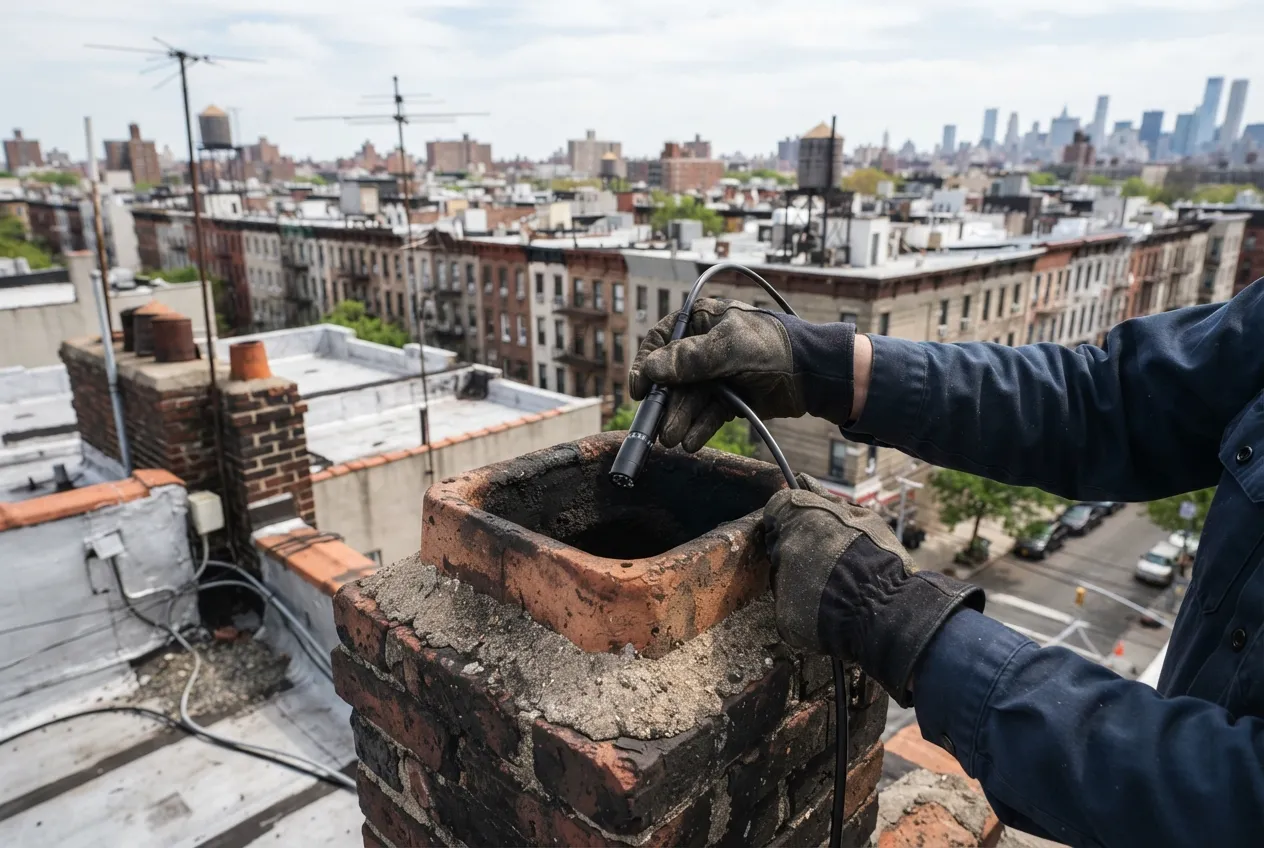
- A camera view of the flue interior when the liner condition needs a closer look
- A plain-language rundown of what we found, with photos where they help
How our crew works inside your home and on the roof
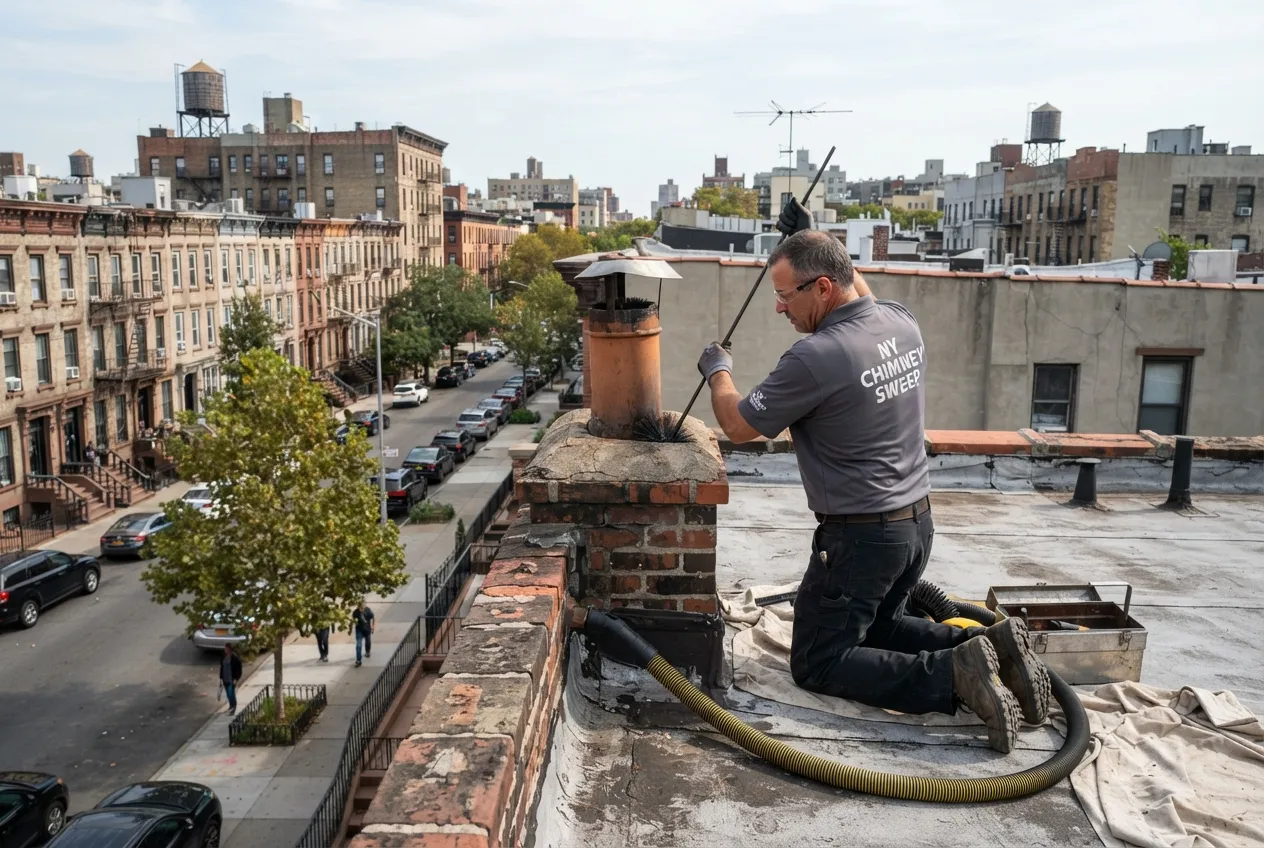
Inside, we treat your home the way we'd want ours treated. Technicians lay drop cloths from the door to the hearth and cover the area around the fireplace. Before brushing begins, we seal the fireplace opening and run a HEPA vacuum so soot is drawn into the machine instead of drifting into the room. Rotary brushes attached to flexible rods spin against the flue walls to break up creosote, and the loosened material drops down to be collected. When the liner condition is in question, we run a camera up the flue so you can see cracks, gaps or heavy glazing for yourself.
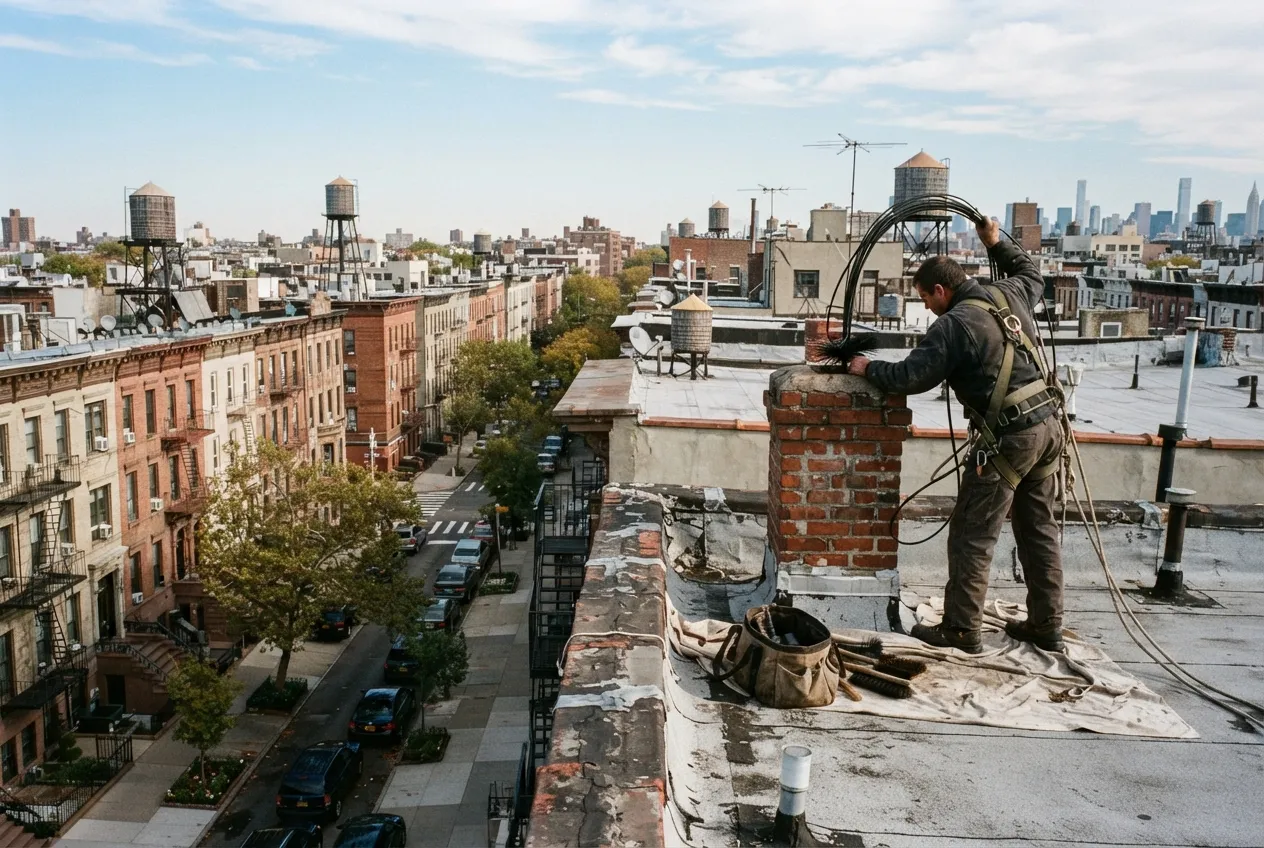
On the roof, we check access and footing before anyone climbs. From the top, the crew looks at the cap, the crown and the flue opening, clears any blockage, and can brush downward when the flue or appliance setup calls for it. We note loose brick, a cracked crown or a missing cap and photograph them so you don't have to take our word for it. When the crew leaves, the drop cloths come up and the work area is vacuumed.
Time for your annual chimney check?
The standard we follow
Our work follows NFPA 211, the national standard for chimneys, fireplaces, vents and solid fuel-burning appliances. NFPA 211 calls for chimneys, fireplaces and vents to be inspected once a year, whether or not you think they need cleaning. Chimney professionals use three inspection levels. Level 1 applies when nothing about the system has changed. Level 2 applies when the system changes, for example with a new appliance or a switch of fuel, or when the home is sold. Level 3 applies when a hidden hazard has to be reached by opening part of the chimney or building.
Fuel changes matter in New York City. When a building converts its boiler from oil to gas, the chimney has to be evaluated as part of the work, and a new liner is often needed because gas exhaust produces acidic condensate that can corrode a masonry flue. If you're planning a conversion, tell us when you book. City heat season runs from October 1 through May 31, so many owners schedule their sweep in the warmer months, before heating systems run full time.
What affects the price
Every chimney is different, so we price the job after we know what we're working with. We'll explain the factors before any work begins. These are the main ones.
- Chimney height and roof access, including steep pitches, multi-story buildings and how the crew reaches the top
- Fuel type: wood, pellet, oil and gas leave different deposits and call for different methods
- Flue size, shape and condition, including the liner material and any damage
- How much buildup there is, from light soot to heavy or glazed creosote that takes more work to remove
- Whether a camera inspection is needed to see the liner clearly
- Whether repairs come up, such as a new cap, damper work or liner replacement, which we quote separately
How a visit works
When you contact us, we ask what you burn, how often you use it, and whether you've noticed any of the warning signs above. That helps us send the right equipment. Please let the fire die out and the firebox cool completely before the appointment. A cold firebox is safer and easier to clean.
On the day of the visit, the crew walks the space with you, sets up protection and completes the sweep and inspection. Afterward, they show you what they found, answer your questions and explain any recommended repairs. You decide what happens next, with no pressure to book additional work on the spot.
Chimney Sweep by city
- Chimney Sweep in Gramercy
- Chimney Sweep in Stuyvesant Town
- Chimney Sweep in Peter Cooper Village
- Chimney Sweep in East Village
- Chimney Sweep in Murray Hill
- Chimney Sweep in Kips Bay
- Chimney Sweep in Midtown South
- Chimney Sweep in Flatiron
- Chimney Sweep in Union Square
- Chimney Sweep in Greenwich Village
- Chimney Sweep in West Village
- Chimney Sweep in Lower East Side