The short answer
A chimney inspection checks your flue, firebox, damper, crown, cap, and flashing for damage, blockages, and fire hazards. The NFPA 211 standard calls for chimneys, fireplaces, and vents to be inspected once a year, and more often in practice when something changes, such as a new appliance, a fuel switch, or a home sale.
A chimney can look fine from the living room and still have cracked flue tiles, heavy creosote, or water damage hidden inside. Nexora Chimney Services inspects chimneys, fireplaces, and vents for homeowners in New York and nearby cities. Our certified technicians check the whole system, from the firebox to the crown, and explain what they find in plain terms. You get a clear picture of whether your chimney is safe to use, what needs attention now, and what can wait. Whether you burn wood every weekend, rely on a gas or oil heating appliance, or are buying a home with a fireplace you've never used, an inspection is the place to start.
Signs you need a chimney inspection
Even if your chimney is due for its yearly check anyway, some problems shouldn't wait. If you notice any of the following, stop using the fireplace or appliance until it has been looked at.
- A smoky or tar-like creosote smell in the room, especially on humid days or when the air conditioning is running
- Poor draft: smoke rolls into the room instead of rising, or fires are hard to start and keep going
- Debris, flakes of brick, or pieces of flue tile collecting in the firebox
- White, chalky staining on the brick, inside or outside, which points to water moving through the masonry
- Scratching, chirping, or other animal noises from inside the chimney
- Water in the firebox or rust on the damper after rain
What's included in an inspection
Every inspection covers the readily accessible parts of the chimney, inside and out. We note the condition of each component, flag anything unsafe, and take photos so you can see what we saw.
- Firebox: brick, mortar joints, and firebrick panels for cracks or gaps
- Damper: opens, closes, and seals properly
- Smoke chamber and smoke shelf: buildup, debris, and parging condition
- Flue liner: cracks, missing mortar, gaps, and creosote level
- Clearances to nearby wood framing and combustible materials where visible
- Chimney exterior: brick, mortar, and signs of spalling or leaning
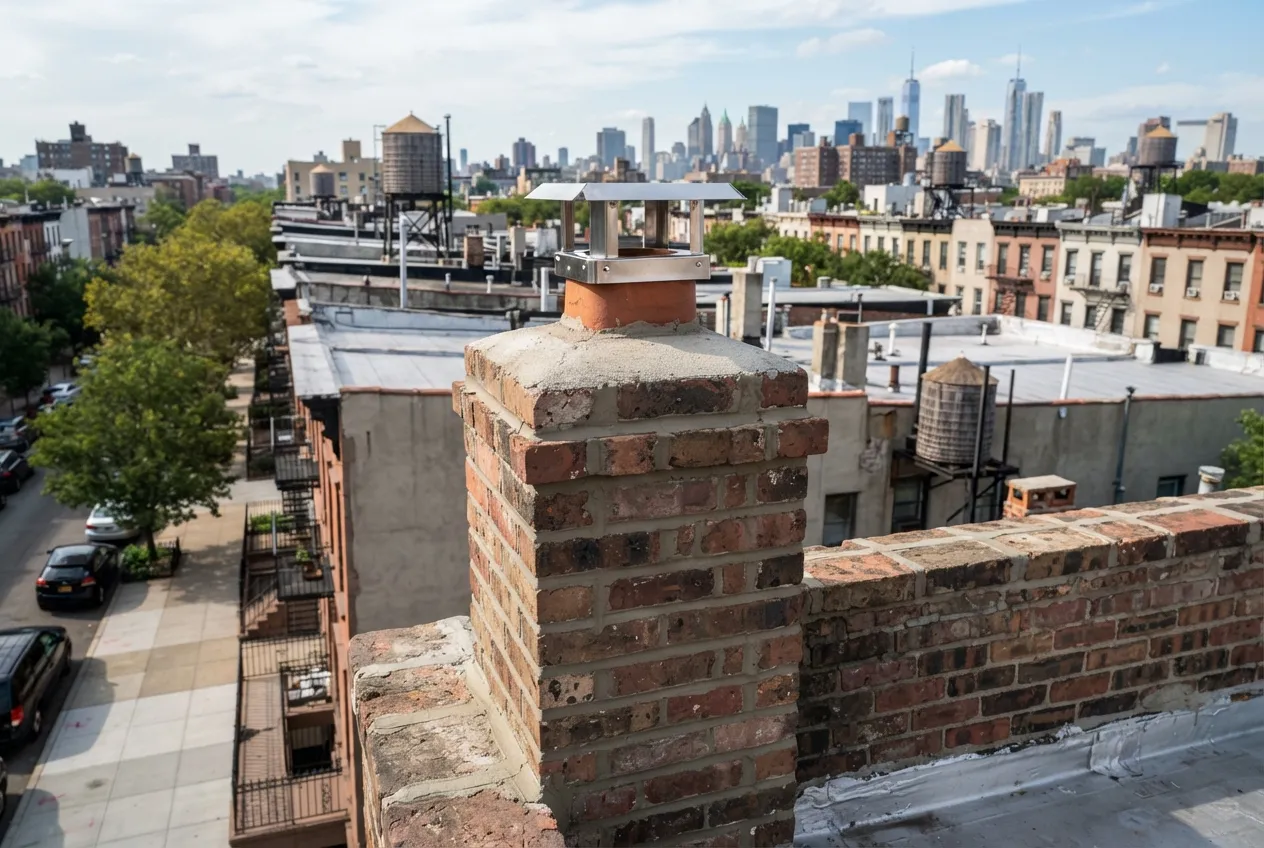
- Crown: cracks or deterioration that let water in
- Chimney cap and spark screen: present, secure, and intact
- Flashing where the chimney meets the roof
- Connections for gas, oil, or wood-burning appliances venting into the chimney
- A written summary with photos and recommended next steps
How our crew works in your home and on the roof
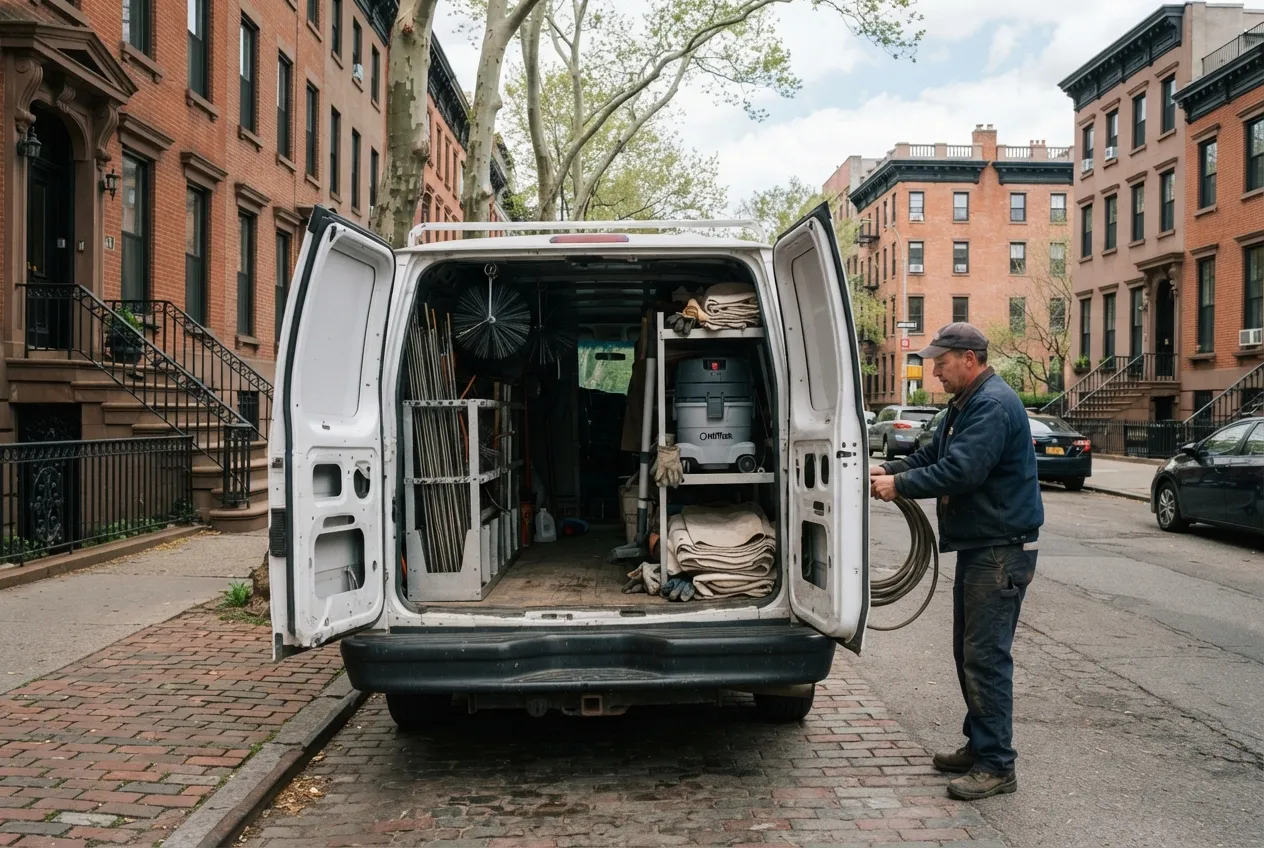
Inside, we lay drop cloths from the door to the fireplace and cover the hearth before we open anything. We keep HEPA vacuums running at the firebox opening so soot and dust stay inside the chimney, not on your floors or furniture. If the flue is coated enough to hide its condition, we may recommend a cleaning with rotary brushes first, since an inspector can't judge tiles that are buried under creosote.
For a closer look at the flue, we run a video camera up the chimney. This lets us see cracked tiles, gaps in mortar joints, and damage that can't be seen with a flashlight from the firebox.
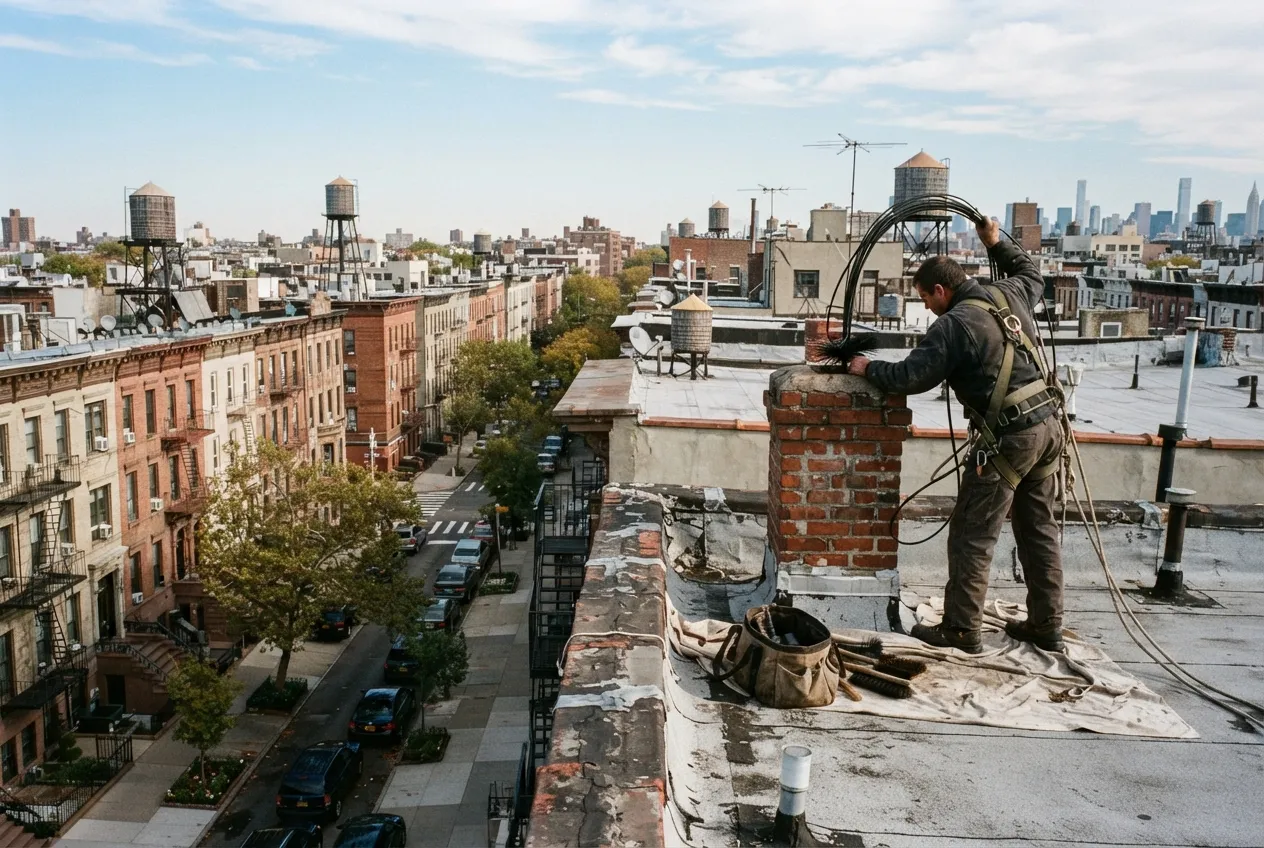
On the roof, we check the crown, cap, flashing, and outside masonry. We use proper ladders and roof access methods, and if a roof is too steep or unsafe to walk, we tell you and inspect what we safely can.
Time for your annual chimney check?
The standard we follow
Our inspections follow NFPA 211, the national standard for chimneys, fireplaces, and vents. It calls for an inspection once a year and describes three levels, each matched to a situation.
Level 1 is for chimneys where nothing has changed and you plan to keep using the system as before. Level 2 applies when the system changes, such as a new appliance or a switch from one fuel to another, and when a home is sold; it includes a camera inspection of the flue. Level 3 is used when a hidden hazard has to be reached by opening part of the chimney or the building.
Fuel switches matter in New York. When a building converts its boiler from oil to gas, the chimney has to be evaluated as part of the work, and a new liner is often needed because gas exhaust produces acidic condensate that can corrode a masonry flue. With the city's heat season running from October 1 through May 31, it makes sense to schedule before heating starts.
What affects the price
We give you a price before any work begins. The main factors are:
- Chimney height and how easy it is to reach the roof
- Fuel type: wood, gas, or oil
- Flue size, number of flues, and the liner's condition
- How much creosote or debris has built up
- Whether a camera inspection or a higher inspection level is needed
- Whether repairs are needed after the inspection
How a visit works
When you book, we ask what kind of fireplace or appliance you have, when it was last used, and whether anything has changed, so we arrive with the right equipment and plan for the right inspection level. Please let the fireplace or appliance cool completely beforehand, ideally for at least a day.
On arrival, the technician sets up protection, inspects inside and on the roof, and then walks you through the findings. If something needs repair, we explain why, show you the photos, and give you a quote. You decide what to do next, with no pressure to book work on the spot.
Chimney Inspection by city
- Chimney Inspection in Gramercy
- Chimney Inspection in Stuyvesant Town
- Chimney Inspection in Peter Cooper Village
- Chimney Inspection in East Village
- Chimney Inspection in Murray Hill
- Chimney Inspection in Kips Bay
- Chimney Inspection in Midtown South
- Chimney Inspection in Flatiron
- Chimney Inspection in Union Square
- Chimney Inspection in Greenwich Village
- Chimney Inspection in West Village
- Chimney Inspection in Lower East Side