The short answer
The NFPA 211 standard calls for chimneys and vents to be inspected once a year. In Peter Cooper Village, it's smart to schedule before heat season starts on October 1. Nexora's certified technicians, based on E 20th St, inspect fireplaces, boiler flues and liners and tell you clearly what needs attention.
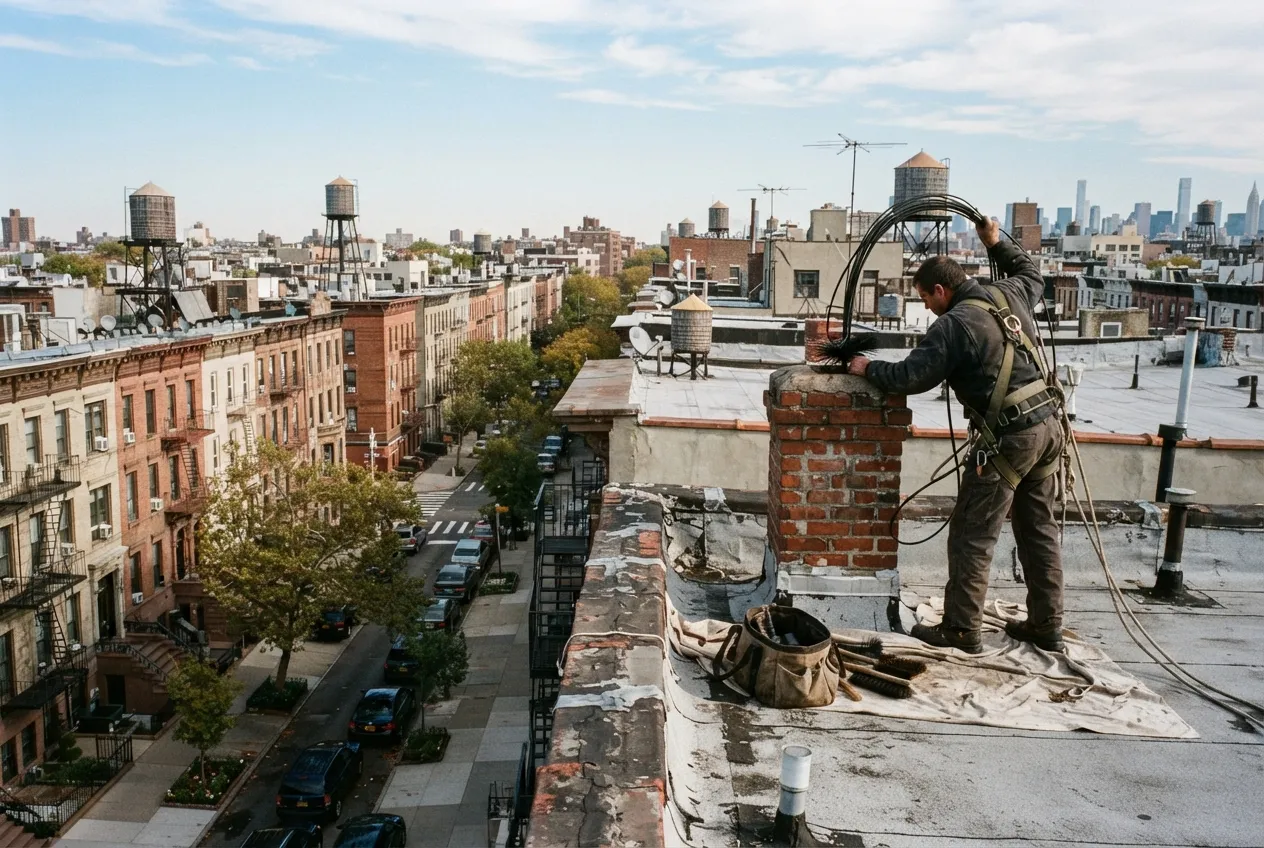
Nexora Chimney Services is based in Peter Cooper Village, at 304 E 20th St, so chimney inspections here are close to home for us. You might have a working fireplace in your apartment, a boiler flue that serves a whole building, or an older masonry chimney in a nearby brownstone. In each case, an inspection tells you the condition of the system before you rely on it. Our certified technicians look at the flue, liner, connections and exterior masonry, then explain what they found in plain terms.
Why a yearly inspection matters in Manhattan
The NFPA 211 standard calls for chimneys, fireplaces and vents to be inspected once a year. That applies whether you light a fire every weekend or only a few times a winter. Cracked flue tiles, loose mortar and blockages can develop even when a chimney sits unused.
In New York City, timing matters too. The city's heat season runs from October 1 through May 31. During those months, building owners must keep apartments heated to the city's minimum temperatures. A boiler flue that needs repair in January is a much bigger problem than one checked in late summer. Booking your inspection before October leaves time to handle any repairs before the heat has to stay on.
Choosing the right inspection level
Chimney professionals use three inspection levels. The right one depends on what has happened to your system since it was last looked at.
- Level 1: For a chimney in regular use that hasn't changed. We check the accessible parts of the chimney and the fireplace or appliance connection, and we look for obstructions and buildup.
- Level 2: For when something changes, such as a new appliance, a switch of fuel, or the sale of the home. This goes further into the system and often includes a camera inspection of the flue interior.
- Level 3: For when a hidden hazard has to be reached by opening part of the chimney or building. We recommend this only when a Level 1 or Level 2 inspection points to a problem that can't be evaluated any other way.
Chimneys in apartment buildings, brownstones and rowhouses
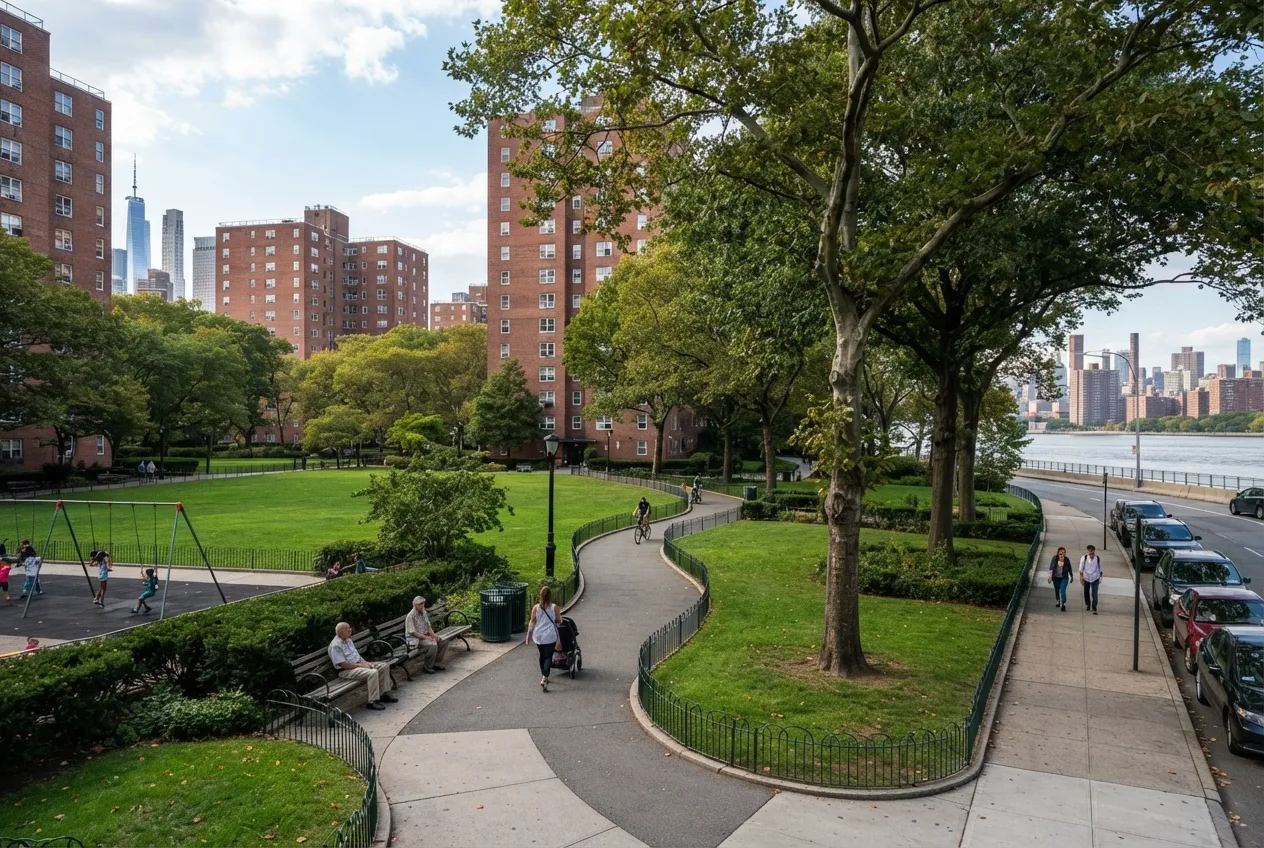
Peter Cooper Village is made up largely of apartment buildings. Pre-war buildings, brownstones and rowhouses are common in nearby neighborhoods. Each type of building comes with its own chimney concerns.
In larger buildings, one chimney often serves the boiler, so the condition of that flue affects every unit. Older masonry chimneys in brownstones and rowhouses may have original clay tile liners or no liner at all. Years of freeze-thaw cycles can open up mortar joints and crack chimney crowns.
Fuel conversions need special attention. When a New York City building converts its boiler from oil to gas, the chimney has to be evaluated as part of the work. A new liner is often needed, because gas exhaust produces acidic condensate that can corrode a masonry flue. If your building is planning a conversion or has already made one, an inspection shows whether the flue is ready.
Time for your annual chimney check?
What our technicians check
Our certified technicians work through the system from the firebox or appliance connection up to the top of the chimney. A typical inspection covers:
- Flue liner condition, including cracks, gaps and signs of corrosion
- Creosote and soot buildup inside the flue
- Blockages from debris, nests or fallen masonry
- Damper operation and the smoke chamber
- Connections between the boiler, furnace or water heater and the chimney
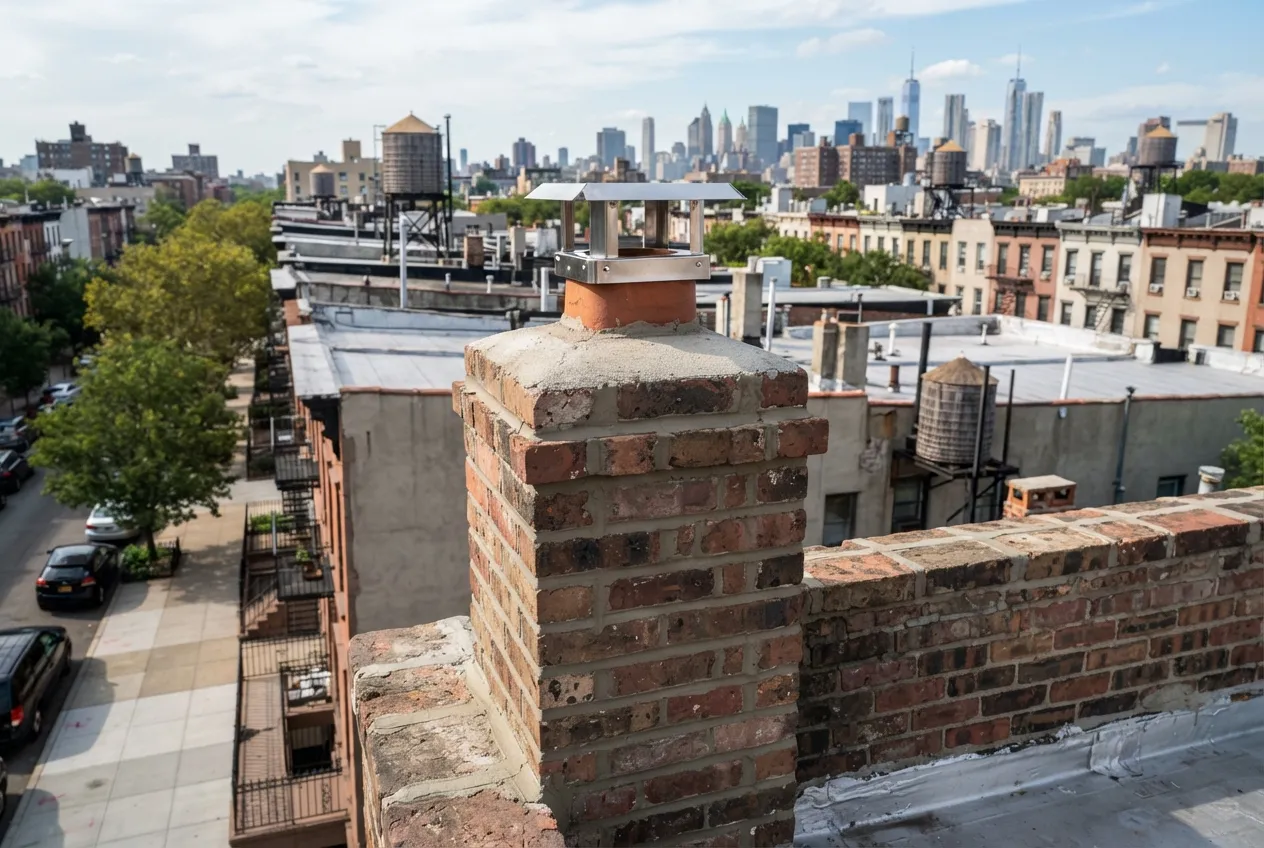
- Chimney crown, cap, flashing and exterior mortar joints
- Visible clearances between the chimney and nearby wood framing
After the inspection
We walk you through what we found and what, if anything, needs attention. Some issues can wait a season. Others, like a damaged liner or a blocked flue, should be handled before the appliance is used again. We'll tell you which is which so you can plan.
Our office is on E 20th St, so we're close by for homes in Peter Cooper Village and in Stuyvesant Town, the East Village, Gramercy, Murray Hill and Kips Bay. If your building has a superintendent or management office, we can coordinate access with them.
More services in Peter Cooper Village
- Chimney Sweep in Peter Cooper Village
- Chimney Repair in Peter Cooper Village
- Air Duct Cleaning in Peter Cooper Village
- Chimney Liner Installation in Peter Cooper Village