The short answer
Fireplace and damper repair fixes the firebox, smoke chamber and damper so smoke, heat and flames stay where they should and the chimney seals when not in use. A certified technician inspects the system under the NFPA 211 standard, cleans what needs cleaning, makes the repairs, and walks you through the results with photos.
A fireplace that smokes into the room, a damper that won't open or close, or firebrick that crumbles when you sweep out the ashes are all signs that the parts closest to the fire need attention. Nexora Chimney Services repairs fireboxes, smoke chambers and dampers for homeowners in New York and nearby cities. Our certified technicians find out why the problem started, fix the damaged parts, and show you what they found. The goal is a fireplace that drafts well, keeps heat and flames where they belong, and closes off properly when you're not using it. Below you'll find the signs to watch for, what a repair visit includes, how we protect your home while we work, and what affects the cost.
Signs you need it
Most fireplace and damper problems show up slowly. If you notice any of the following, have the fireplace looked at before your next fire.
- Smoke or a sharp creosote smell in the room, especially on humid days or when the heat is running
- Poor draft: the fire is hard to start, smoke rolls out of the opening, or the fire burns weakly
- Brick flakes, crumbled mortar or loose debris on the firebox floor
- White, chalky staining on the brick, which usually means water is moving through the masonry
- Water, rust streaks or a damp smell in the firebox after rain
- A damper handle that sticks, spins freely, or won't hold the plate open or shut
- Scratching, chirping or nesting noises above the fireplace, which can mean the damper no longer closes
What's included in a repair visit
Every visit starts with an inspection so we repair the cause, not just the symptom. A cracked firebrick can come from overfiring, but it can also come from a leak above it. Depending on what we find, the work can include the items below. We explain each repair before we start.
- Inspection of the firebox, hearth, damper, smoke chamber and visible flue
- Cleaning of the firebox and smoke chamber so repairs bond to clean masonry
- Replacing cracked or spalled firebrick
- Repointing worn firebox joints with refractory (heat-rated) mortar
- Parging or repairing the smoke chamber walls where they are rough or cracked
- Repairing or replacing a warped, rusted or seized throat damper, handle or pivot
- Installing a top-sealing damper at the chimney top when the original damper can't be saved
- Sealing gaps between the firebox and hearth
- Photos of the before-and-after condition and a written summary of the work
How our crew works in your home and on the roof
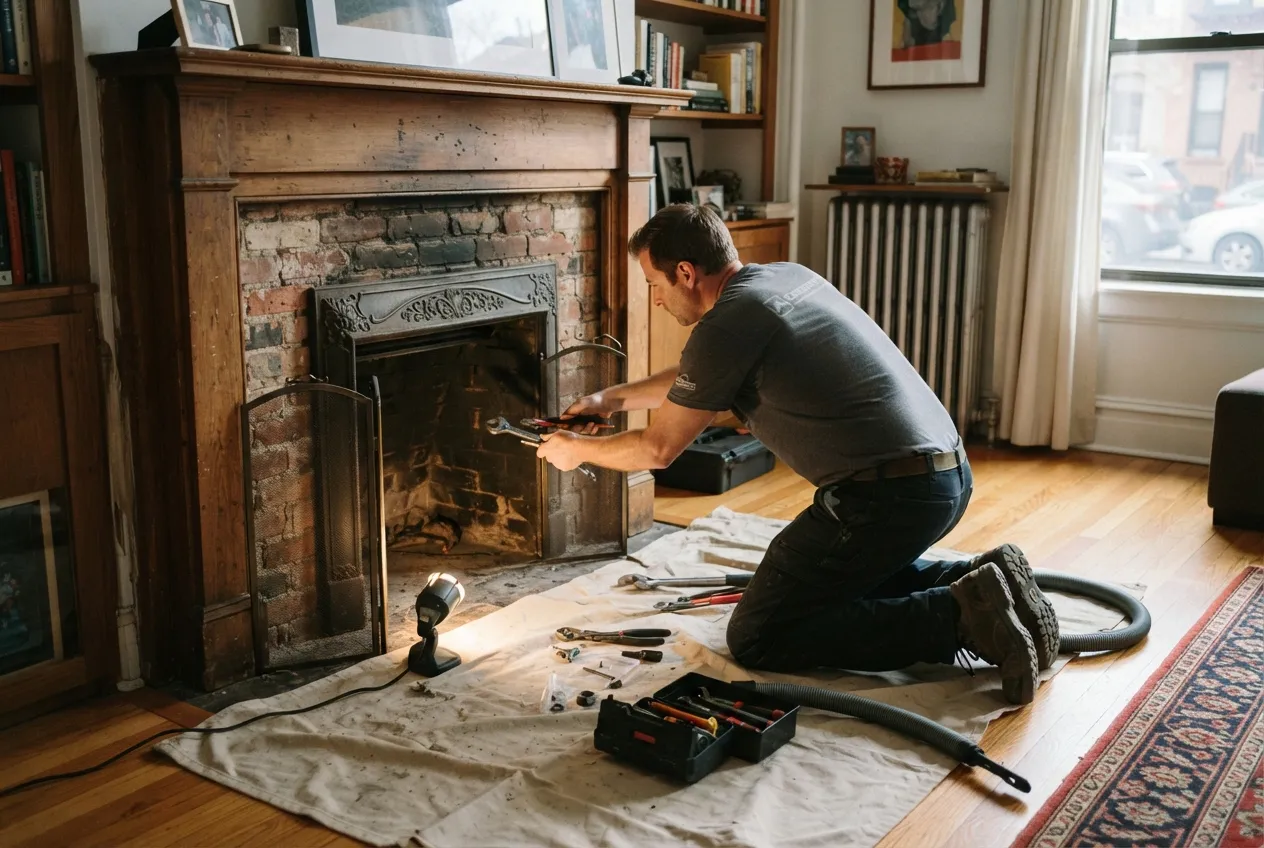
Inside, we lay drop cloths from the door to the hearth and cover the fireplace opening while we brush. We run HEPA vacuums during cleaning so fine soot and mortar dust are pulled out of the air instead of settling on your furniture. Rotary brushes clean the smoke chamber and flue walls before any repair, because new mortar won't bond to creosote.
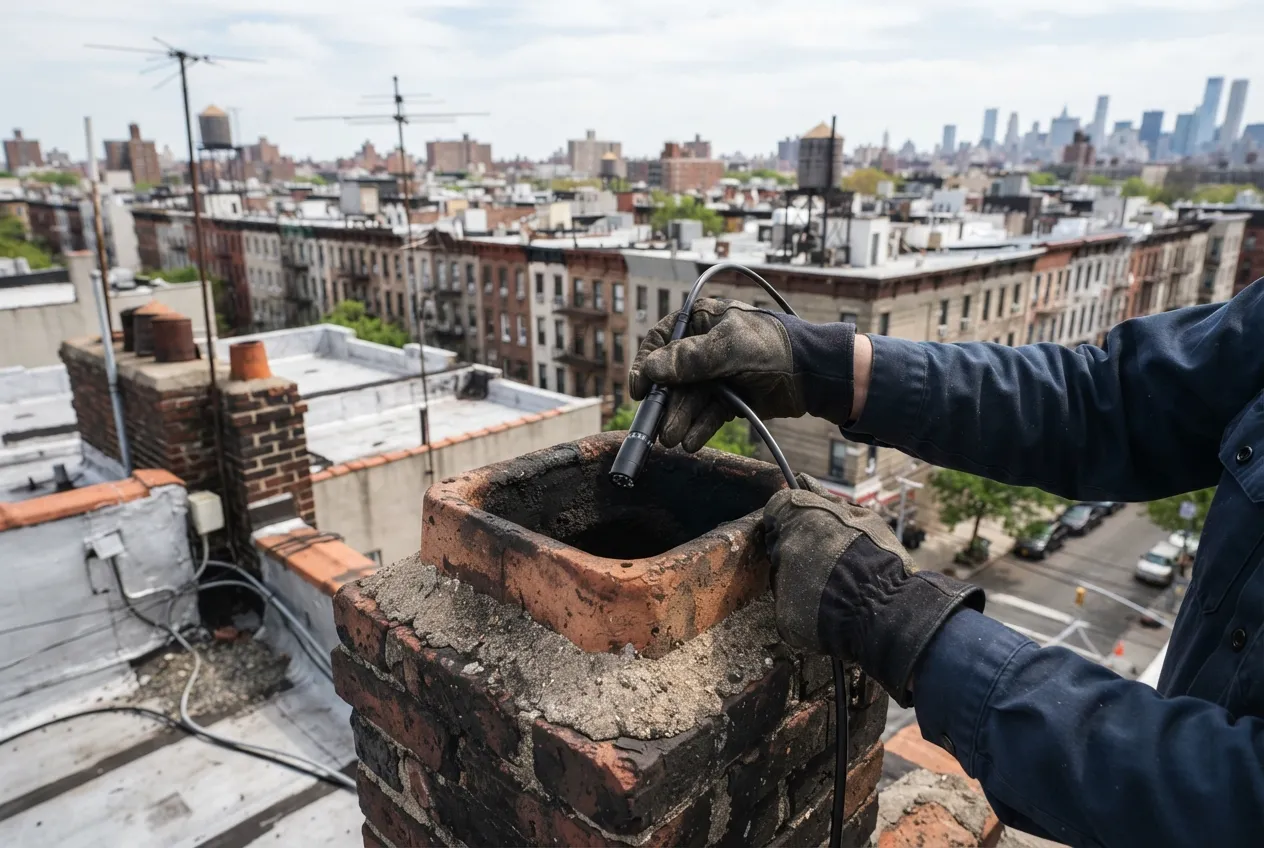
Where the problem is out of sight, we use a camera to look up through the damper, smoke chamber and flue. That lets us show you exactly what we're seeing instead of asking you to take our word for it.
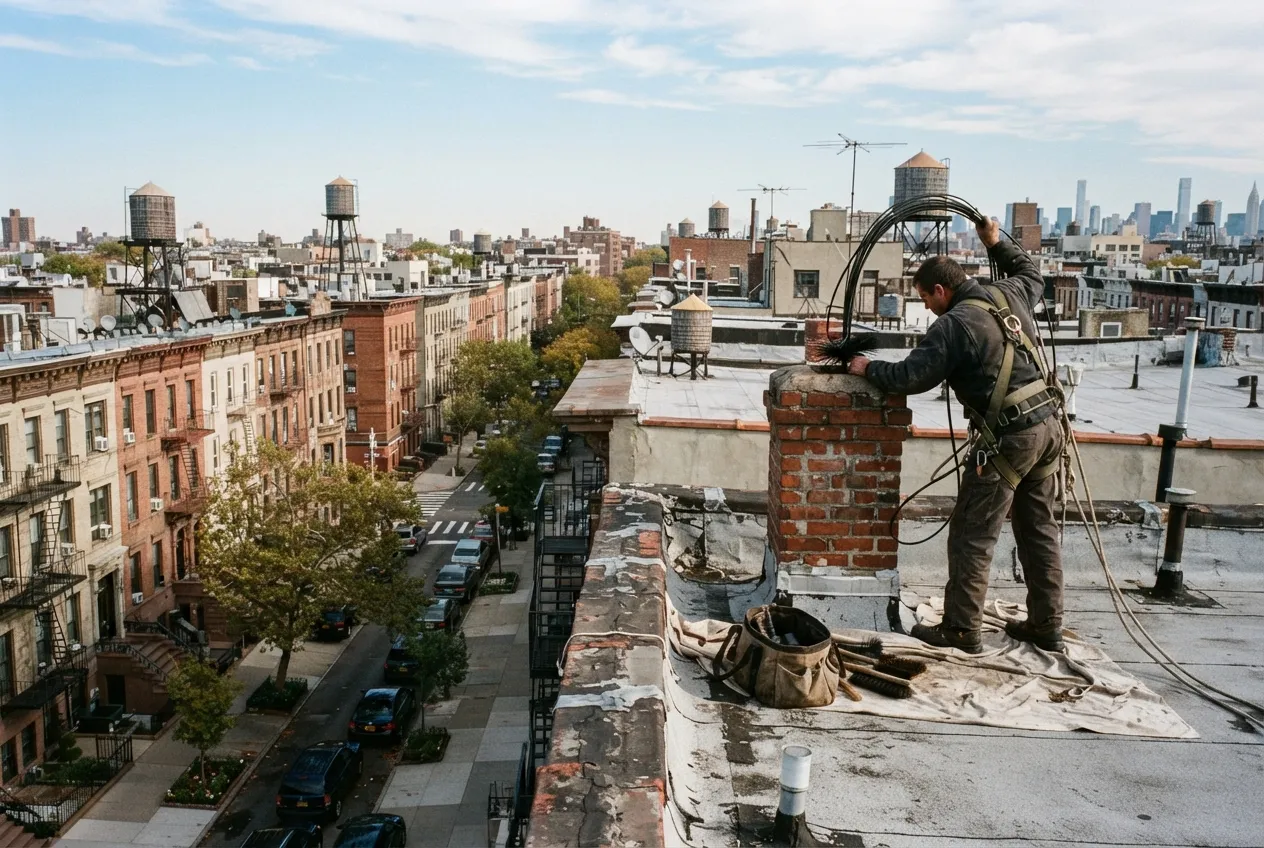
On the roof, we check the chimney crown, cap and the top of the flue, since many firebox and damper problems start with water or animals getting in from above. If a top-sealing damper is the right fix, it is installed here and connected to a cable that runs down to a handle in the firebox. We use roof protection and secure ladders, and we leave the roof and yard as we found them.
Time for your annual chimney check?
The standard we follow
We follow NFPA 211, the national standard that calls for chimneys, fireplaces and vents to be inspected once a year. Chimney professionals use three inspection levels. Level 1 is for a system that hasn't changed and is used the same way. Level 2 applies when something changes, such as a new appliance or a switch of fuel, or when the home is being sold. Level 3 is used when a hidden hazard can only be reached by opening part of the chimney or the building.
Most fireplace and damper repairs start with a Level 1 or Level 2 inspection. If we suspect damage behind a wall or inside the chimney that we can't reach otherwise, we'll explain why a Level 3 inspection may be needed before we recommend any work.
What affects the price
We give you a clear quote after the inspection, once we know what the job actually involves. The main factors are:
- Chimney height and how easy it is to reach the roof safely
- Fuel type: wood-burning, gas logs or a converted fireplace
- Flue size and the condition of the flue and smoke chamber
- How much creosote or debris has to be removed before repairs
- How much firebrick, mortar or damper work is needed
- Whether a camera inspection or a Level 3 inspection is required
- Whether the damper can be repaired or needs replacing with a top-sealing damper
How a visit works
When you book, we ask a few questions about your fireplace, how you use it and what you've noticed. On the day of the visit, the technician sets up drop cloths, inspects the system inside and on the roof, and shows you photos or camera footage of anything that needs work.
You get a plain explanation of the problem and the repair options before anything is done. If you approve the work and we have the materials, we can often complete smaller repairs the same day; larger masonry or damper replacements are scheduled as a follow-up. Before we leave, we test the damper, check the draft, clean up the work area and go over care tips. New York City's heat season runs from October 1 through May 31, so many homeowners book repairs in late summer or early fall to have the fireplace ready before cold weather.