The short answer
Dryer vent cleaning removes lint and debris from the duct between your dryer and the outside, which restores airflow and removes fuel for a fire. According to the U.S. Fire Administration, failure to clean is the leading factor contributing to home clothes dryer fires, so a vent that dries slowly or runs hot should be checked and cleaned.
Every load of laundry sends warm, damp air and a small amount of lint out through your dryer vent. The lint screen catches most of it, but not all. Over months and years, lint builds up in the transition hose behind the machine, in bends and joints in the duct, and at the outside hood, where it can also mix with debris or nesting material. That buildup slows airflow, makes the dryer work harder, and leaves dry, flammable material sitting next to a heat source. Nexora Chimney Services cleans dryer vents for homeowners in New York City and nearby communities, from single-family houses with short wall vents to row houses and small buildings where the vent runs a long way or ends on the roof. This page explains the signs that a vent needs attention, exactly what our certified technicians do, how we protect your home while we work, what affects the cost, and what to expect from a visit.
Signs you need it
Most homeowners notice the dryer before they notice the vent. When lint narrows the duct, hot air has nowhere to go, so clothes take longer to dry and the machine and laundry area get warmer than they used to. Some signs point to a blockage, others to a damaged or disconnected duct, and a few point to animals at the outside opening. Any of the following is a good reason to schedule a cleaning and inspection.
- Clothes need two or more cycles to dry, or come out hot and still damp
- The dryer, the top of the machine, or the laundry room feels unusually hot during a cycle
- A burning or scorched smell while the dryer is running
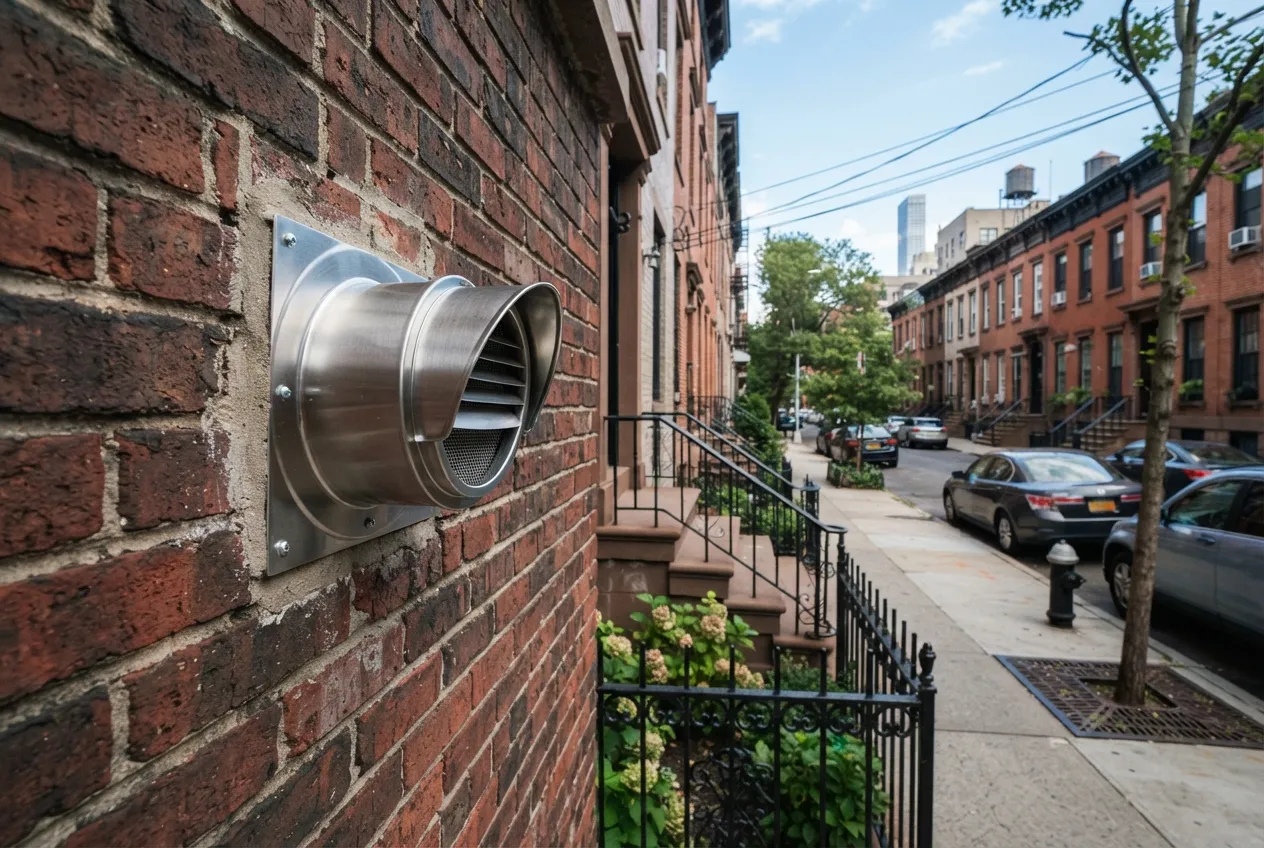
- Lint collecting around the outside vent hood, behind the dryer, or on the floor near the machine
- Dust or lint blowing back into the room instead of out of the house
- The outside flap barely opens, or no air seems to come out when the dryer runs
- Chirping, scratching or fluttering sounds near the vent, which can mean birds or rodents have moved in
- A crushed, kinked or torn foil or plastic hose behind the dryer
What's included
A dryer vent cleaning is more than pulling lint from the hood. We clean the full run from the back of the dryer to the outside termination and check the parts that commonly fail. If we find something that needs repair, we explain it and let you decide before any additional work is done.
- Disconnecting the dryer and pulling it out carefully to reach the vent
- Cleaning the lint trap housing and the area behind and under the dryer
- Cleaning or replacing the transition hose between the dryer and the wall
- Brushing the full length of the duct with rotary brushes sized to the vent
- Vacuuming dislodged lint and debris with HEPA-filtered equipment
- Clearing the outside vent hood or roof cap, including nesting material where present
- Checking that the hood flap opens and closes freely
- A camera look inside long, hidden or hard-to-reach runs where it fits
- Reconnecting the dryer and running it to confirm airflow at the outside opening
- A plain-language summary of what we found and any repairs we recommend
How our crew works in your home and on the roof
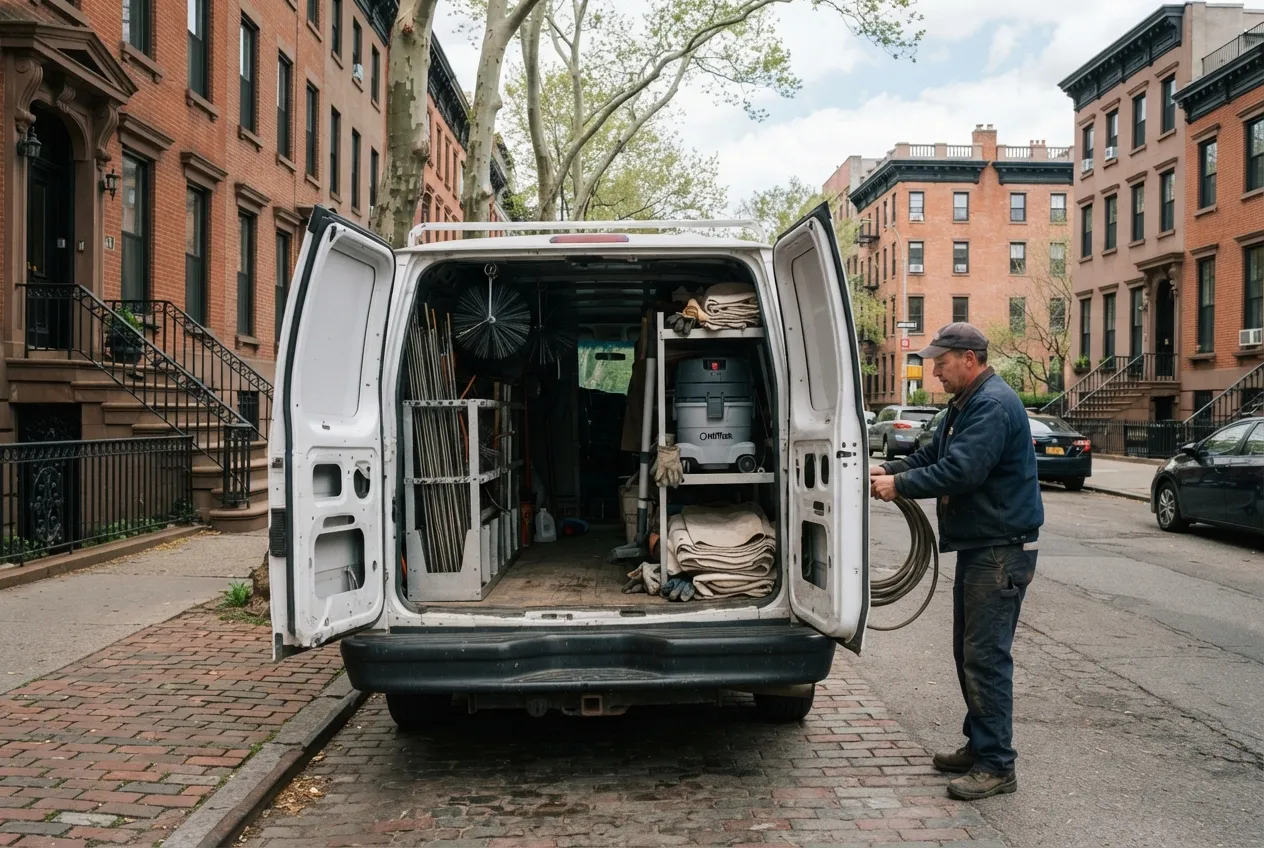
Inside, we lay drop cloths from the entry to the laundry area before moving anything. The dryer is pulled out only as far as needed, and for gas dryers we take care with the gas connection and check it when the machine goes back in place. We run HEPA-filtered vacuums at the dryer end while the rotary brush works through the duct, so loosened lint is pulled out of the vent instead of drifting into your laundry room.
Rotary brushes are fed through the duct on flexible rods and spun to scrub lint off the walls, including at elbows and joints where it tends to pack in. On long or concealed runs, such as vents that pass through closets, ceilings or upper floors, a small camera lets us see whether the duct is clear, crushed or separated without opening walls.
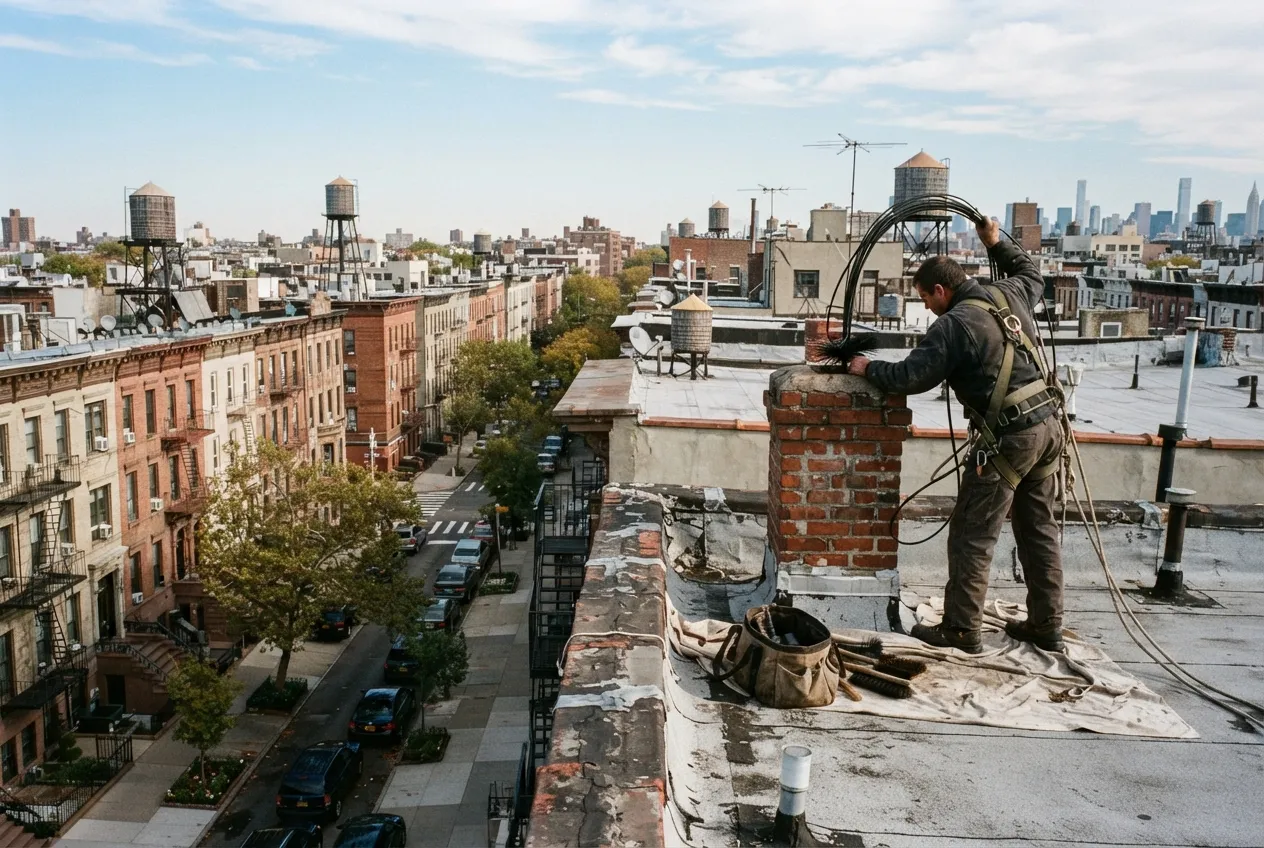
Many New York homes have dryer vents that end on the roof rather than a side wall. When the vent terminates on the roof, our technicians work from the roof cap as well, clearing lint and any nesting material from the top and confirming that air moves freely through the full length. Roof work depends on safe access and weather, and we'll tell you ahead of time if roof access is needed.
Time for your annual chimney check?
Why cleaning matters for fire safety
According to the U.S. Fire Administration, failure to clean is the leading factor contributing to clothes dryer fires in homes. Lint is light and dry, and when it builds up in a hot duct with poor airflow, it becomes fuel close to a heat source. Cleaning the lint screen after every load helps, but the screen does not catch everything, and the duct itself still needs periodic cleaning.
Airflow matters for more than fire risk. A restricted vent makes the dryer run longer and hotter, which wears on the machine. With a gas dryer, the vent also carries combustion gases out of the house, so a blocked or disconnected duct is worth taking seriously. How often a vent needs cleaning depends on how much laundry you do, how long the run is and how it is routed, so we'll give you a recommendation based on what we find rather than a fixed schedule.
What affects the price
Every vent is different, so we quote after we know a little about the setup. These are the main factors that change the time and equipment a job takes:
- Length of the vent run and the number of bends between the dryer and the outside
- Where the vent ends: a ground-level wall hood, an upper-floor wall, or the roof
- Building height and how easy it is to reach the roof or outside termination
- Gas or electric dryer, since gas units need extra care at the connection
- Duct size, material and condition, including old foil or plastic hose
- How much lint, debris or nesting material has built up
- Whether a camera inspection is needed to see a hidden run
- Repairs such as replacing the transition hose, a damaged section of duct, or a broken vent hood
How a visit works
When you contact us, we'll ask a few questions about your dryer, where the vent goes, and whether the vent ends on a wall or the roof. That helps us send the right equipment and give you a clear idea of the work involved before we arrive.
On the day of the visit, the technician walks through the setup with you, protects the floor, and then cleans and inspects the vent from both ends. Before leaving, we reconnect and run the dryer, show you the airflow at the outside opening, and go over anything we noticed, such as a crushed hose or a hood that sticks. If a repair is needed, we explain the options and you decide whether to go ahead. We clean up the work area before we leave.