
What Chimney and Air Duct Work Costs in New York, and Why
Serving New York and nearby cities.
- Diagnosis before any repair
- Photos of every finding
- Written price before we start
We don't publish a flat price list, and this page explains why. The cost of chimney and duct work in New York depends on things we can only judge in person. These include how high the chimney is, how we reach the roof, what fuel the system burns, what shape the flue is in, and how much buildup is inside. Below we walk through what drives the price of each service we offer. That way, when you get a written quote from us, you'll understand what you're paying for and why.
What affects the price of a chimney sweep
A sweep removes soot and creosote from the flue, smoke chamber and firebox. Two chimneys that look alike from the street can take very different amounts of time and equipment to clean.
These are the main factors:
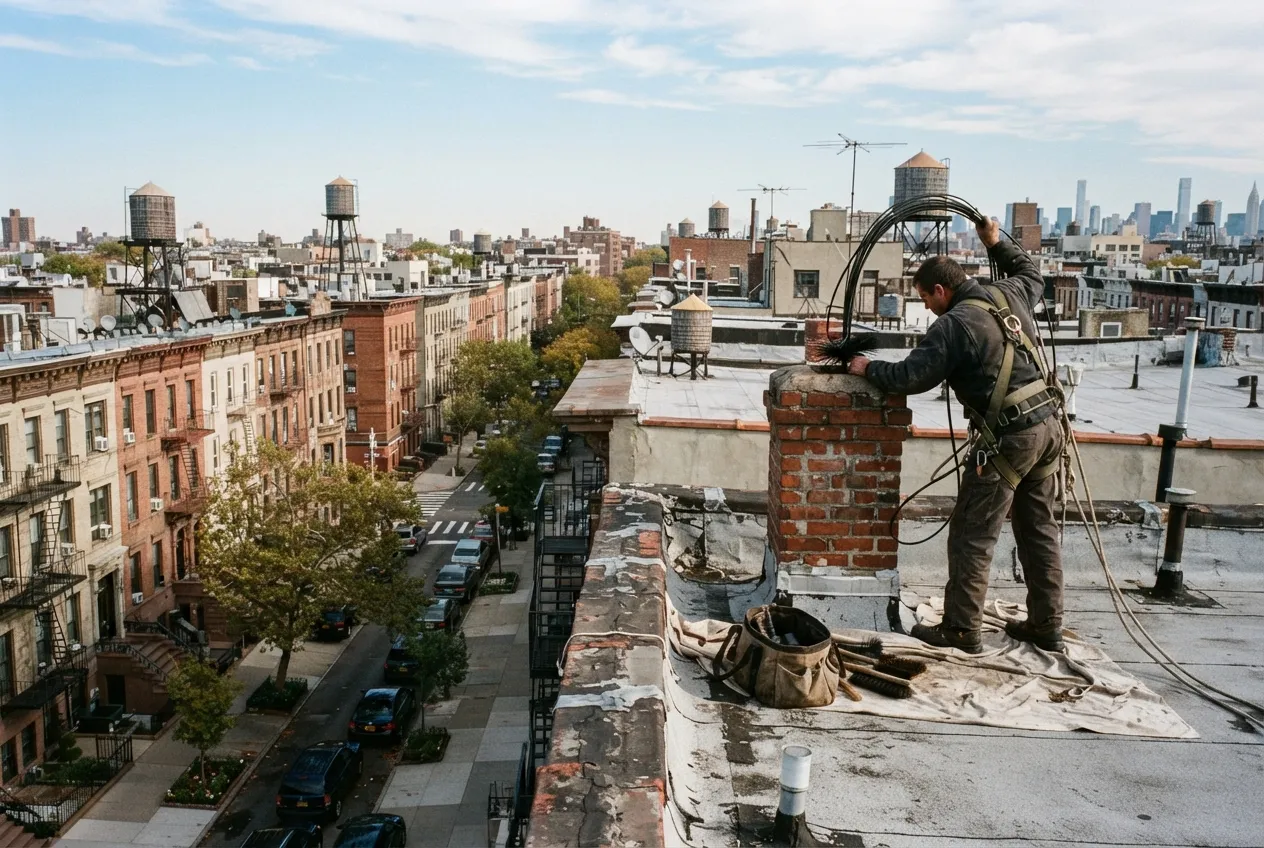
- Height and roof access: A short chimney on a low roof is quicker than a tall stack on a steep or multi-story roof that needs extra ladders, roof anchors or access through a building's bulkhead.
- Fuel type: Wood-burning fireplaces build up creosote, which can harden into a glazed layer that takes more work to remove. Oil and gas systems leave different residue and need different tools.
- Flue size and shape: Larger flues, oval or rectangular clay tiles, and offsets in the chimney all change which brushes and methods we use.
- Amount of buildup: A flue swept regularly cleans faster than one that hasn't been touched in a long time or has nesting material or debris inside.
- Number of flues: Many New York homes and buildings have several flues in one chimney, and each is cleaned separately.
Chimney inspections: Level One versus Level Two with a camera
The national fire safety standard for chimneys calls for chimneys, fireplaces and vents to be inspected once a year. Chimney professionals use three levels of inspection, and the level largely determines the cost.
A Level One inspection fits when nothing about your system has changed. We look at the readily accessible parts of the chimney, firebox, damper and connections to confirm the system is sound and free of blockages.
A Level Two inspection is called for when the system changes, such as a new appliance or a switch of fuel, or when the home is being sold. It includes a camera scan of the flue interior, which takes more time and equipment. A Level Three inspection is only needed when a hidden hazard has to be reached by opening part of the chimney or building. That is the most involved and is priced based on what has to be opened.
Repairs, liners and rebuilding
Repair work varies more than any other service, so we quote it only after an inspection. Repointing a few mortar joints is a small job. Rebuilding a crown, replacing a damper, or taking a chimney down to the roofline and relaying the brick is a much larger one.
Liner installation depends on the flue's height and dimensions, the number of bends, the liner material that suits your fuel, and whether the old liner has to be removed first. In New York City, converting a boiler from oil to gas means the chimney has to be evaluated as part of the work. A new liner is often needed because gas exhaust produces acidic condensate that can corrode a masonry flue.
Caps, chase covers and waterproofing are priced by the size and shape of the chimney top and the condition of the masonry. Fireplace and damper repairs depend on the parts involved and how easy they are to reach.
Air duct and dryer vent cleaning
Duct cleaning cost depends on how many supply vents and return grilles you have, the length and layout of the duct runs, the type of ductwork, and how dirty it is. The U.S. EPA advises cleaning ducts when there is substantial visible mold growth, vermin, or excessive dust and debris. It also notes that duct cleaning has not been shown to prevent health problems, so we'll tell you honestly whether your system needs it.
Dryer vent cleaning depends on the vent's length, number of turns, and where it exits, whether that's through a wall, up to the roof, or into a shared shaft. According to the U.S. Fire Administration, failure to clean is the leading factor contributing to home clothes dryer fires. That makes it a modest job worth keeping up with.
Apartments and co-ops add their own variables. Building rules may limit work hours, require certificates of insurance from the board, call for elevator reservations, or restrict roof access. Scheduling around the heat season, which runs from October through May, can also affect timing for boiler-connected flues.
Why we give a written price after seeing the job
Because so much depends on access, condition and layout, any price given without seeing the job is a guess. We look first, explain what we found, and give you a written price for the specific work. You decide before anything begins.
You've probably seen very cheap advertised offers for whole-house duct cleaning. The EPA warns consumers to research the process before responding to them. Too often, the low number covers only a basic pass. The bill then grows on site with add-ons like extra vents, sanitizers, or "necessary" repairs. The EPA also urges caution with chemical treatments, which we don't push. A clear written scope protects you from that kind of surprise.
Can you give me a price over the phone?
We can talk through your situation and explain what usually drives the cost. But we give a firm written price only after seeing the chimney, vents or ducts, because access and condition change the work involved.
Why does a gas chimney sometimes cost more to work on than I expected?
Gas exhaust produces acidic condensate that can corrode an unlined or old masonry flue. If the flue is damaged or the system was converted from oil, a new liner may be needed, which is a larger job than a sweep.
Do I need a Level Two inspection?
You likely do if you've added or replaced an appliance, switched fuels, or are buying or selling the home. Otherwise, a Level One annual inspection is usually appropriate.
Is whole-house duct cleaning always worth it?
Not always. The EPA recommends it when there is substantial visible mold, vermin, or excessive dust and debris. We'll look at your system and tell you if it actually needs cleaning.
Does living in a co-op or apartment change the price?
It can. Building rules on work hours, roof access, elevator use and paperwork can add time, and shared or long vent runs take more work. We factor these into the written quote.
Will the price change once work starts?
Our written price covers the scope we describe. If we uncover something unexpected, we stop, show you what we found, and get your approval before doing any additional work.
Schedule a Chimney or Vent Inspection
Tell us about your fireplace, boiler flue, dryer vent or ducts and what you've noticed. We'll set up a visit, inspect before recommending anything, and give you a written price before any work begins.