The short answer
Most Manhattan chimneys need a new liner when the existing flue is cracked or corroded, or when a boiler or furnace changes fuel, especially from oil to gas. Nexora Chimney Services inspects the flue, sizes a liner to the appliance, and installs it from our office in Peter Cooper Village.
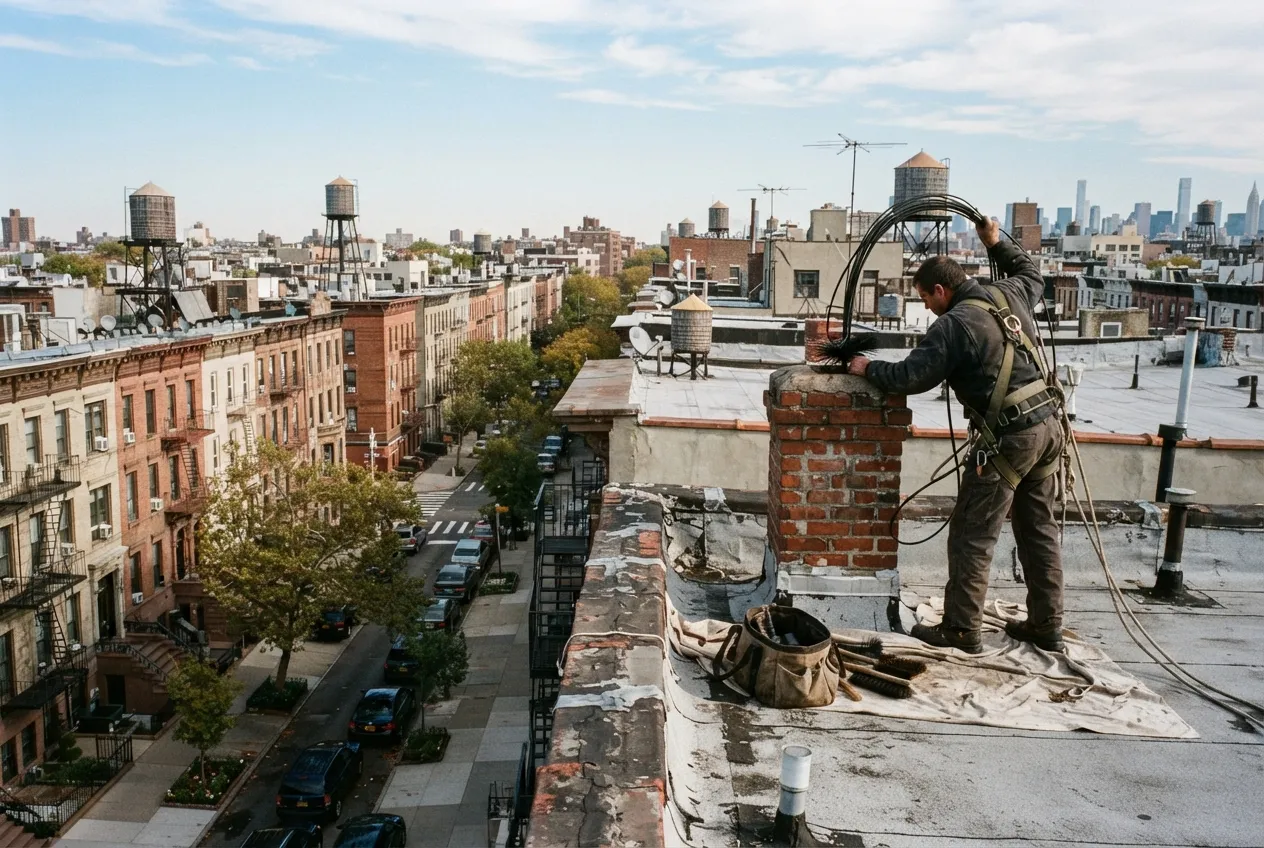
A chimney liner is the protective channel inside a flue that carries smoke and exhaust gases up and out of the building. When it cracks, corrodes or no longer fits the appliance it serves, heat and combustion gases can reach the surrounding masonry and nearby wood framing. Nexora Chimney Services installs chimney liners for apartment buildings, rowhouses, brownstones and other homes in Peter Cooper Village and across Manhattan. Our office is at 304 E 20th St, so our certified technicians work in this neighborhood every week. This page explains when a liner is needed, how we install one, and how to plan the work around the city's heating calendar.
Why Liners Fail in Manhattan Chimneys
Many chimneys in this part of Manhattan are masonry flues that have served heating equipment for decades. Original clay tile liners can crack from repeated heating and cooling, and the mortar joints between tiles can wear away. Once that happens, the flue no longer seals properly, and exhaust can seep into the brickwork or the space around the chimney.
Fuel changes are another common cause. When a New York City building converts its boiler from oil to gas, the chimney has to be evaluated as part of the work. A new liner is often needed because gas exhaust produces acidic condensate that can corrode a masonry flue. A chimney that handled oil for years may not hold up once it starts carrying gas exhaust.
Signs Your Chimney May Need a New Liner
Some liner problems can only be found during an inspection, but several warning signs are worth watching for. If you notice any of these, schedule an evaluation before the next heating cycle.
- Pieces of tile, flaking masonry or crumbled mortar collecting at the base of the flue
- White staining or damp patches on walls next to the chimney
- Rust or debris near the boiler or furnace connection
- A recent or planned conversion from oil to gas heat
- A new boiler, furnace or water heater that is a different size than the old one
- Smoke or odors entering the home instead of drafting up the chimney
How We Install a Chimney Liner
The NFPA 211 standard calls for chimneys, fireplaces and vents to be inspected once a year, and chimney professionals use three inspection levels. A Level 1 inspection fits when nothing has changed. A Level 2 inspection applies when the system changes, such as a new appliance or a fuel switch, or when the home is sold. A Level 3 inspection is used when a hidden hazard can only be reached by opening part of the chimney or building. Liner work usually begins with a Level 2 inspection, since a liner is typically installed because something in the system is changing.
From there, our process follows these steps:
- Inspect the flue, including a camera inspection of its full height, and document its condition
- Confirm the appliance type, fuel and venting requirements
- Size the liner to match the appliance so the chimney drafts properly
- Clean the flue and clear debris before installation
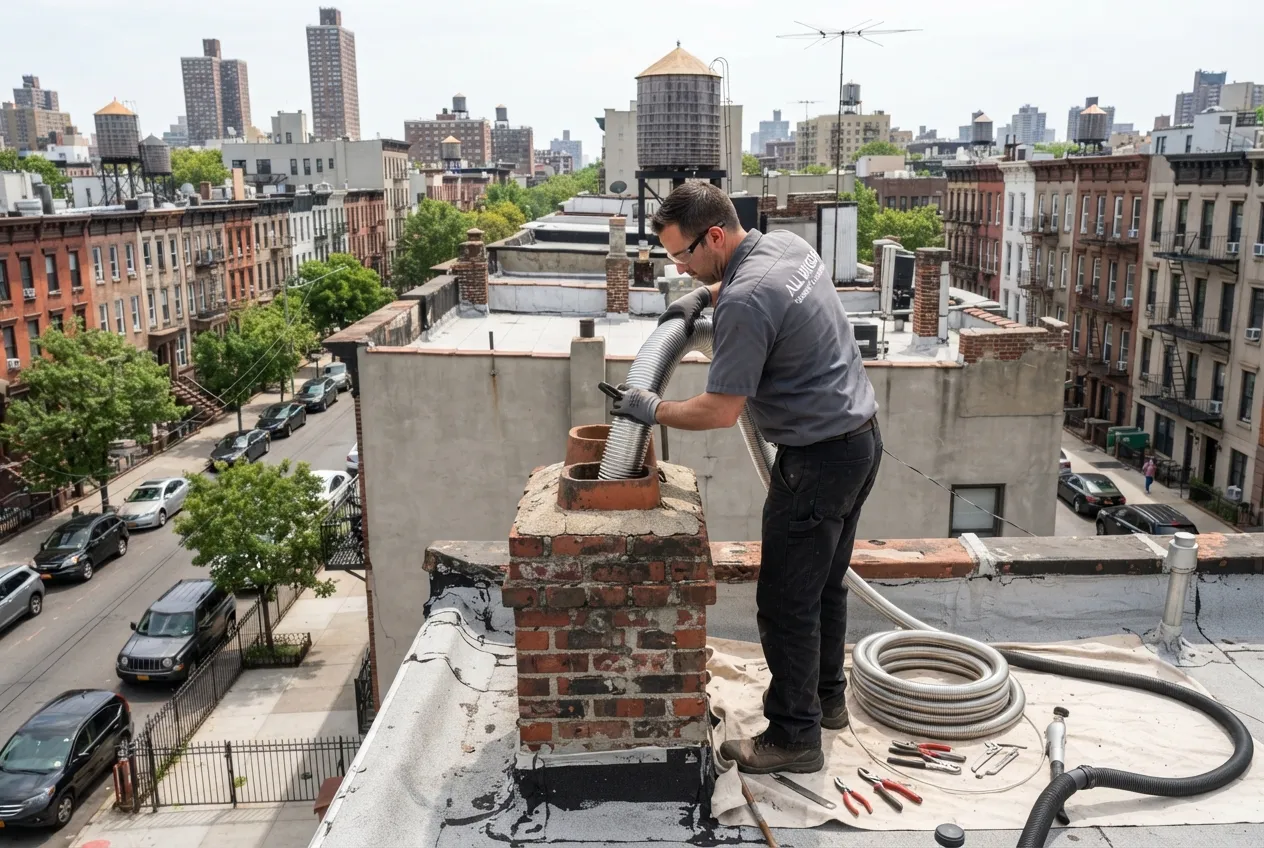
- Install the liner with the correct connections at the top and bottom of the chimney
- Check draft and inspect the finished installation, then review the results with you
Time for your annual chimney check?
Planning Around the Heat Season
New York City's heat season runs from October 1 through May 31. During that period, building owners must keep apartments heated to the city's minimum temperatures. Because liner installation usually means taking the heating appliance offline for a while, late spring and summer are the easiest times to do the work.
If a conversion or a liner problem comes up during the heating months, we can still help. We will talk through scheduling so the heating system is down for as short a time as possible, and we will coordinate with your building management or boiler contractor when needed.
Serving Peter Cooper Village and Nearby Neighborhoods
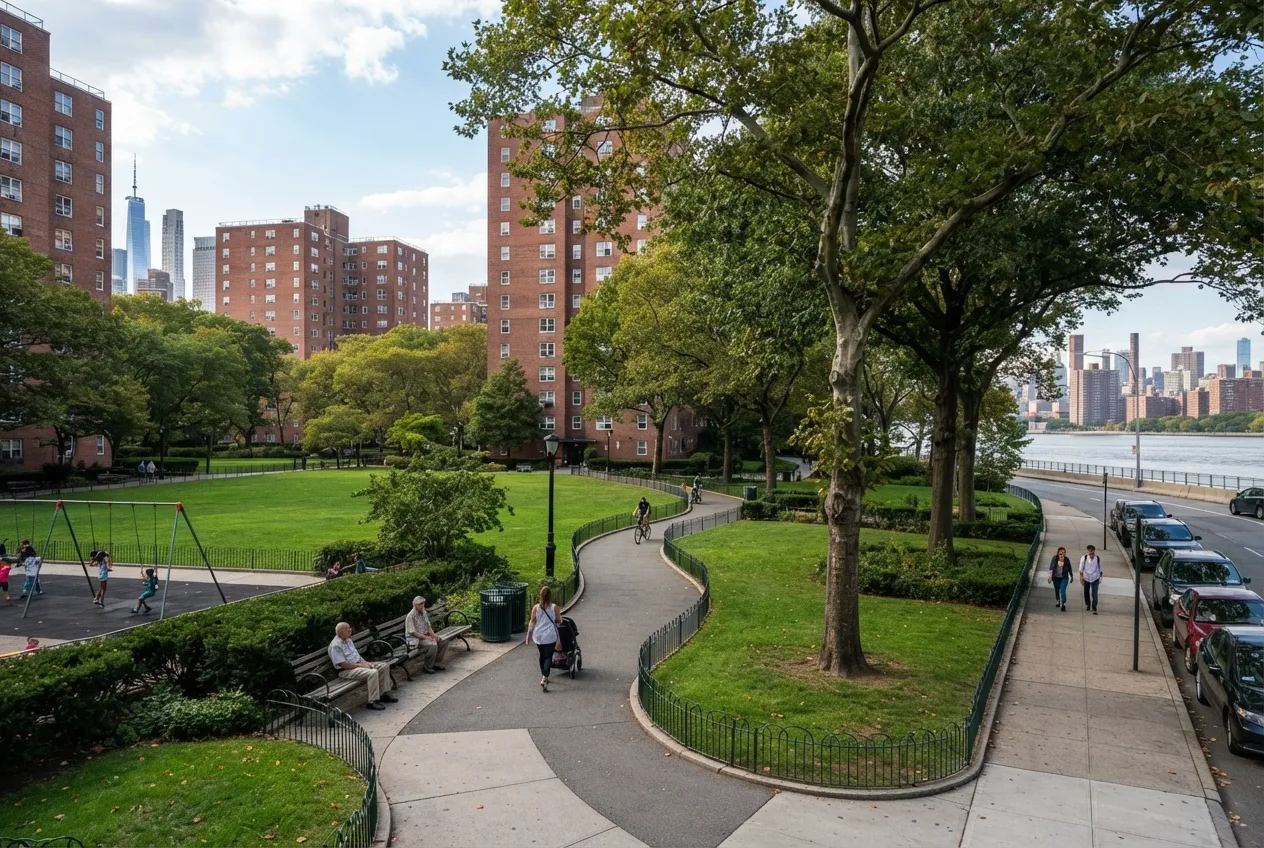
Because our office is in Peter Cooper Village, we can reach homes here quickly for inspections, follow-up visits and installation days. We also install chimney liners in Stuyvesant Town, the East Village, Gramercy, Murray Hill and Kips Bay. The housing across these neighborhoods ranges from large apartment buildings with shared boiler chimneys to brownstones and rowhouses with individual flues, and each type calls for a different approach to access and liner sizing.
Whether you manage a building or own a single home, we start by looking at the chimney you have and the equipment it serves, then recommend the liner that fits.
More services in Peter Cooper Village
- Chimney Sweep in Peter Cooper Village
- Chimney Inspection in Peter Cooper Village
- Chimney Repair in Peter Cooper Village
- Air Duct Cleaning in Peter Cooper Village