
The short answer
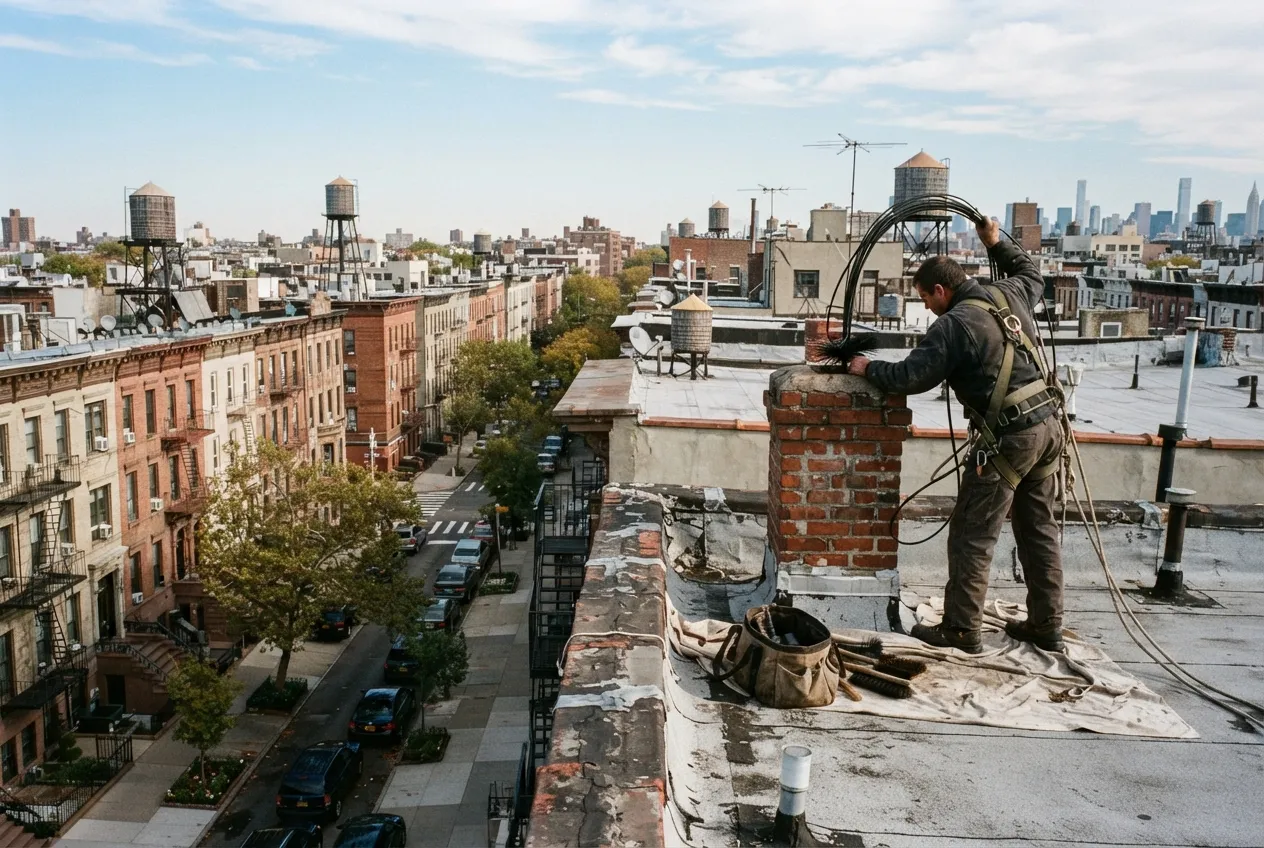
Chimneys in Flatiron homes should be inspected once a year, as the NFPA 211 standard calls for. The inspection level depends on whether anything has changed, such as a new appliance, a fuel switch or a sale. Our certified technicians check the flue, masonry and connections and explain what they find.
Flatiron's housing is mostly pre-war apartment buildings and converted loft buildings, with some walk-ups and townhouses. Many of them have masonry chimneys that have served fireplaces and boilers for decades. Nexora Chimney Services inspects these chimneys from our office in Gramercy, about a mile southeast. You might have a wood-burning fireplace in a loft, a gas insert in a co-op unit, or a building boiler venting through a shared flue. In each case, an inspection tells you whether the system is safe to use and what needs attention before the next heating season.
Why Flatiron chimneys need a yearly inspection
The NFPA 211 standard calls for chimneys, fireplaces and vents to be inspected once a year. That applies whether you burn wood every weekend or light the fireplace only a few times a winter. Soot and creosote build up with use. Older masonry flues can also crack, shed mortar and collect debris even when they sit idle.
Timing matters in Manhattan. New York City's heat season runs from October 1 through May 31, and building boilers work hardest during those months. An inspection in late summer or early fall leaves time for repairs before the cold arrives.
Choosing the right inspection level
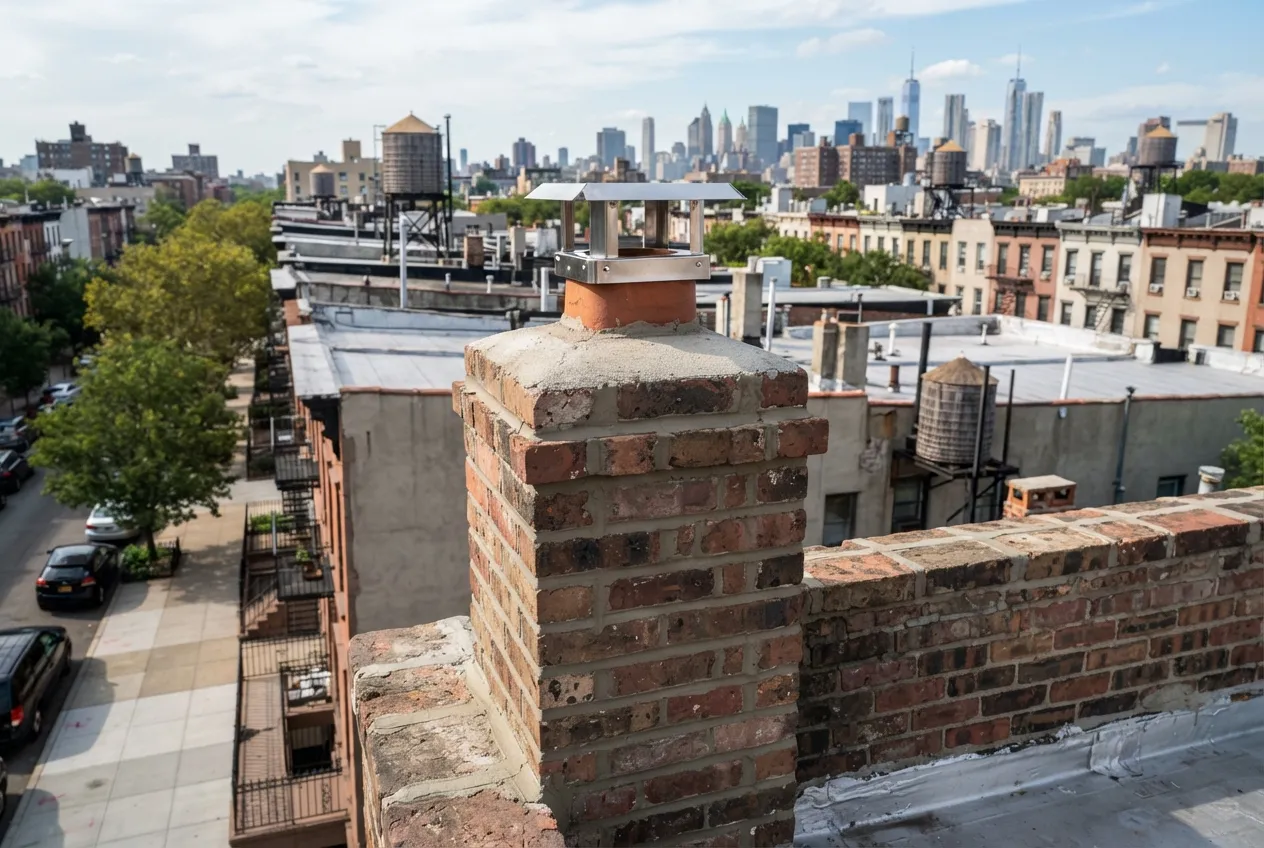
Chimney professionals use three inspection levels. The right one depends on what has changed in your home and heating system.
If you are buying or selling an apartment or townhouse in Flatiron, a Level 2 inspection gives both sides a clear picture of the chimney's condition before closing.
- Level 1 is for a chimney in regular use with no change to the appliance, fuel or structure. We examine the readily accessible parts of the chimney, flue and connections.
- Level 2 applies when the system changes, such as a new insert, a new boiler or a switch of fuel, or when the home is sold. It includes a closer look, including a camera scan of the flue interior.
- Level 3 applies when a hidden hazard has to be reached by opening part of the chimney or building. It is uncommon, and we recommend it only when earlier findings point to a concealed problem.
What our certified technicians look for
Many buildings in the neighborhood are pre-war, so their chimneys have been through decades of use and freeze-thaw cycles. Our certified technicians check the whole system, from the firebox or appliance connection up to the top of the flue.
- Creosote and soot buildup inside the flue
- Cracked or missing flue tiles and gaps in mortar joints
- Condition of the damper, smoke chamber and firebox
- The crown, cap and flashing on the roof, where access allows
- Blockages from debris, nests or fallen masonry
- Connections between gas or oil appliances and the flue
- Signs of water entry, such as staining or flaking brick
Time for your annual chimney check?
Oil-to-gas conversions and chimney liners
When a New York City building converts its boiler from oil to gas, the chimney has to be evaluated as part of the work. A new liner is often needed. Gas exhaust produces acidic condensate that can corrode a masonry flue built for oil.
Your building may be planning a conversion, or it may have finished one without a chimney review. Either way, we can inspect the flue and tell you whether it can safely vent the new equipment or whether a liner should be part of the plan.
Preparing for an inspection in a Flatiron building
Inspections in apartment and loft buildings usually involve more than one person. Roof access, the superintendent's schedule and, in some co-ops and condos, management approval can all affect timing. A little preparation keeps the visit short.
We also serve nearby Midtown South, Union Square, Gramercy, Murray Hill and Kips Bay, where buildings often have similar access arrangements.
- Tell your super or managing agent the date and ask about roof access
- Clear a few feet of space around the fireplace or appliance
- Stop using the fireplace at least a day before so the firebox is cool
- Gather any records of past cleanings, repairs or appliance changes
After the inspection
We walk you through what we found in plain terms: what is in good condition, what needs cleaning and what needs repair. If cleaning is the only issue, we explain that right away. If repairs are needed, you get a clear description of the problem, so you can bring it to your building or plan the work on your own timeline.
More services in Flatiron
- Chimney Sweep in Flatiron
- Chimney Repair in Flatiron
- Air Duct Cleaning in Flatiron
- Chimney Liner Installation in Flatiron