
The short answer
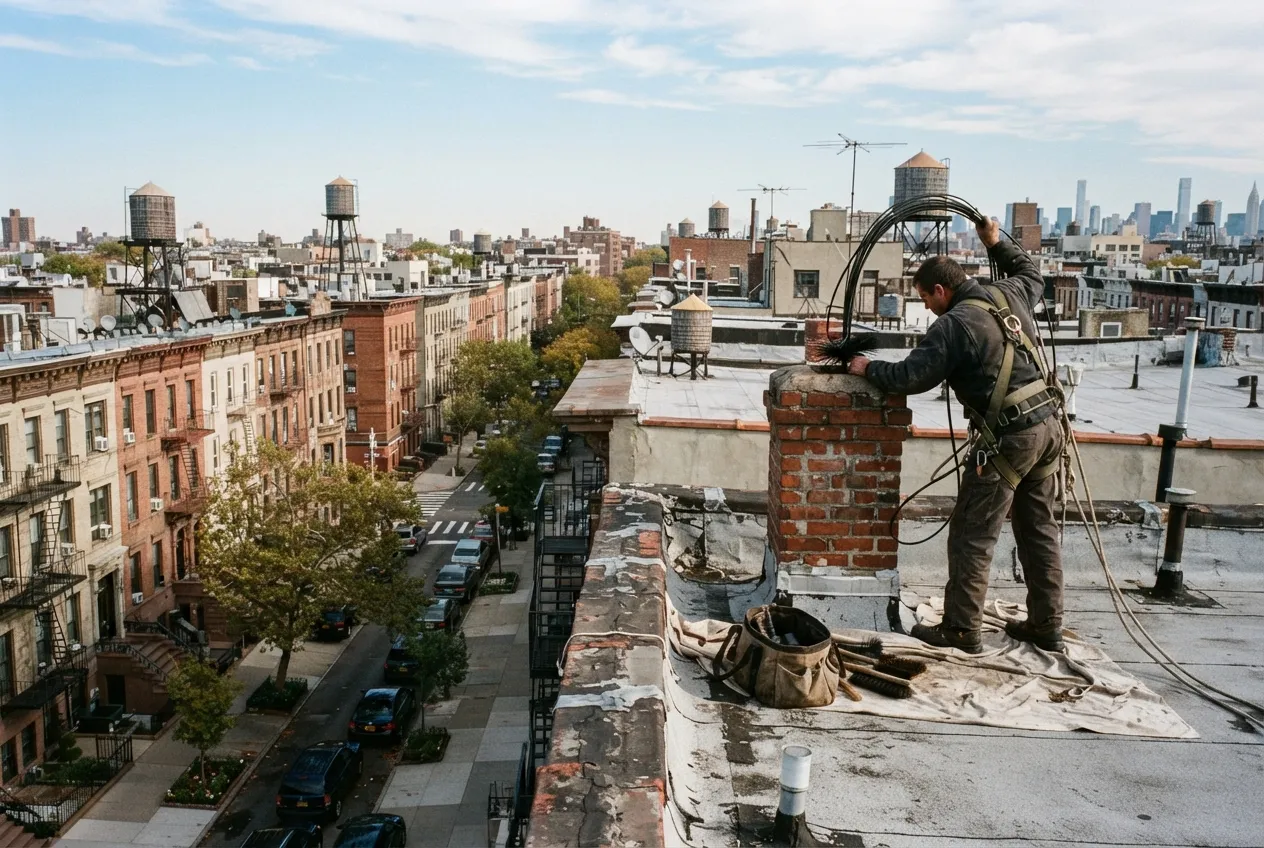
Nexora Chimney Services repairs chimney masonry, crowns, flashing, dampers and flue liners for Flatiron homes and buildings. We inspect first, explain what we found and why it matters, and then repair only what the chimney actually needs.
Chimneys in Flatiron take a beating. Many serve pre-war apartment buildings, converted loft buildings and older townhouses, and they have been through decades of freeze-thaw cycles, wind at roof level and long heating seasons. Nexora Chimney Services is based in Gramercy, about a mile southeast of Flatiron, so our certified technicians can reach your building quickly. We repair damaged masonry, crowns, flashing, dampers and flue liners. We also work in Midtown South, Union Square, Gramercy, Murray Hill and Kips Bay.
Chimney Problems We See in Flatiron Buildings
Most Flatiron chimneys are masonry, and many are tall stacks that rise well above the roofline. That height gives wind, rain and winter cold more surface to work on. Over time, water gets into brick and mortar, freezes and expands, and the masonry starts to break down. Inside the flue, years of heating exhaust can wear down clay tile or bare masonry.
These are the problems we repair most often:
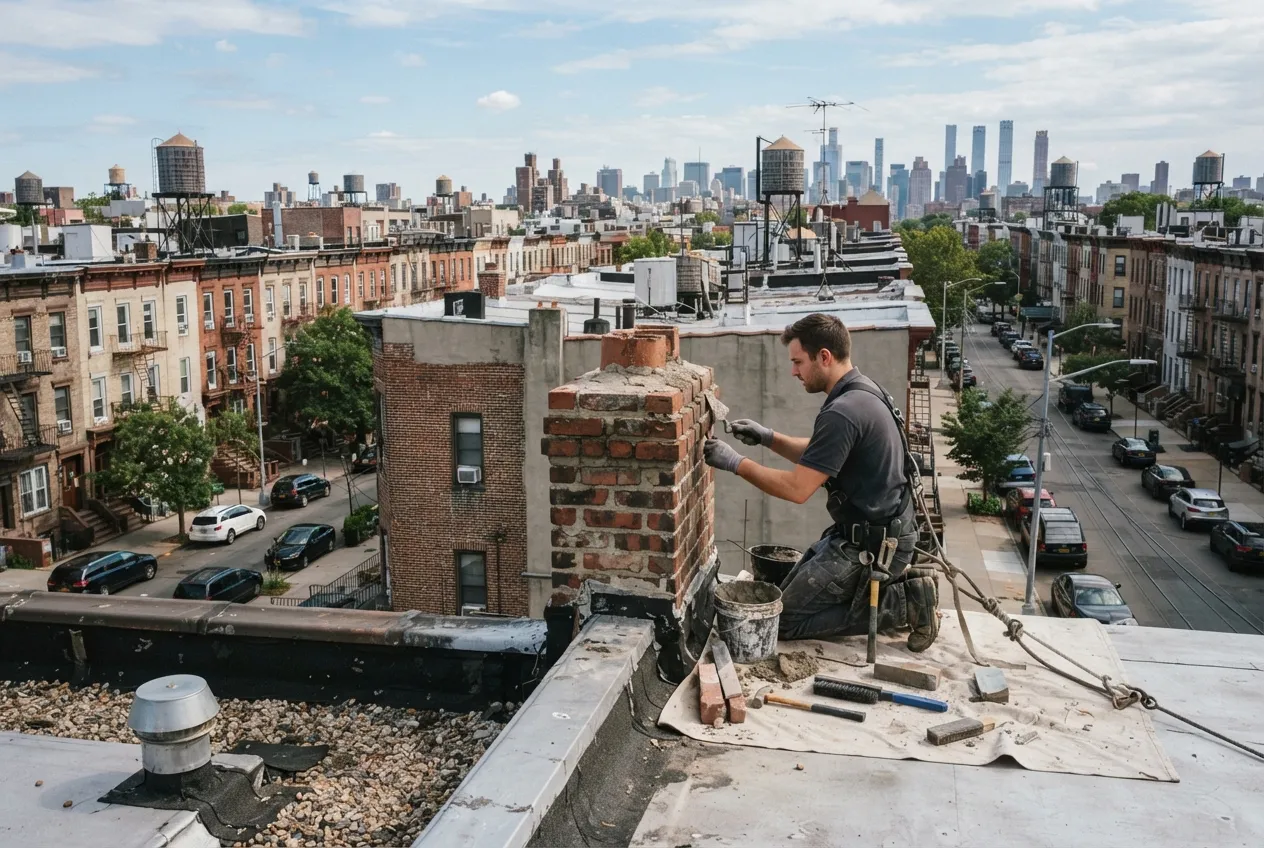
- Cracked or crumbling mortar joints that need repointing
- Spalling brick, where the faces of bricks flake or pop off
- Cracked chimney crowns that let water into the stack
- Failed flashing where the chimney meets the roof, which often shows up as a leak or stain on a top-floor ceiling
- Cracked, gapped or deteriorated flue tiles
- Rusted or stuck dampers in fireplace chimneys
- Missing or damaged chimney caps that let in rain, debris and animals
We Find the Cause Before We Repair Anything
A leak on a top-floor ceiling or a pile of brick fragments on the roof is a symptom. Before we recommend a repair, we look for what is causing it. The NFPA 211 standard calls for chimneys, fireplaces and vents to be inspected once a year, and it describes three inspection levels. A Level 1 inspection covers the readily accessible parts of the system when nothing has changed. A Level 2 inspection applies when the system changes, such as a new appliance or a switch of fuel, or when the home is sold. A Level 3 inspection is used when a hidden hazard can only be reached by opening part of the chimney or the building.
For many repairs, a camera inspection of the flue shows us whether the damage is limited to the outside of the stack or extends into the liner. We show you what we found and explain the repair options in plain terms. Then you decide what to do.
Flue Liner Repair and Oil-to-Gas Conversions
Liner problems are common in older Manhattan buildings, especially where the heating system has changed. When a New York City building converts its boiler from oil to gas, the chimney has to be evaluated as part of the work. A new liner is often needed because gas exhaust produces acidic condensate that can corrode a masonry flue. If your building is planning a conversion, bring us in early so the chimney work fits the project schedule and does not hold it up.
A damaged liner can let heat and exhaust reach the surrounding masonry and nearby building materials. Depending on its condition, we can repair the existing liner or install a new liner sized for the appliance that uses it.
Time for your annual chimney check?
Planning Repairs Around Heat Season
New York City's heat season runs from October 1 through May 31. During those months, building owners must keep apartments heated to the city's minimum temperatures. A boiler chimney that needs major work in January leaves a building with few good options. That is why we encourage Flatiron owners and managers to schedule inspections and repairs in late spring and summer, when the heating system can be taken offline without affecting tenants.
Some repairs cannot wait. If you see falling masonry, smell exhaust indoors or notice smoke backing up, stop using the appliance and call us so we can assess the chimney.
What to Expect on a Repair Visit
Flatiron jobs usually involve roof access, building management and neighbors living close by. We plan around all of that.
- We coordinate roof access and timing with your super or building manager
- We protect interior areas around fireplaces and appliance connections
- We document the damage with photos before and after the work
- We clean up debris and mortar dust before we leave
- We give you a written summary of the work and any items to watch
More services in Flatiron
- Chimney Sweep in Flatiron
- Chimney Inspection in Flatiron
- Air Duct Cleaning in Flatiron
- Chimney Liner Installation in Flatiron