The short answer
A chimney liner is a sealed channel inside the chimney that carries exhaust safely out of the building and protects the masonry from heat and corrosion. In Flatiron, liners are most often needed after an oil-to-gas boiler conversion, when an old clay liner has cracked, or when a new appliance is connected to an existing chimney.
Most chimneys in Flatiron were built long before today's boilers, water heaters and fireplace inserts existed. Many are unlined brick, or they still have an old clay tile liner that has cracked or shifted over the decades. Nexora Chimney Services installs new chimney liners for pre-war apartment buildings, converted loft buildings and the neighborhood's rowhouses and townhouses. Our office is in Gramercy, about a mile southeast, so Flatiron jobs are close to home for our crews. Our certified technicians inspect the flue first, explain what we find, and recommend the liner that fits your appliance and your building.
Why Flatiron chimneys often need a new liner
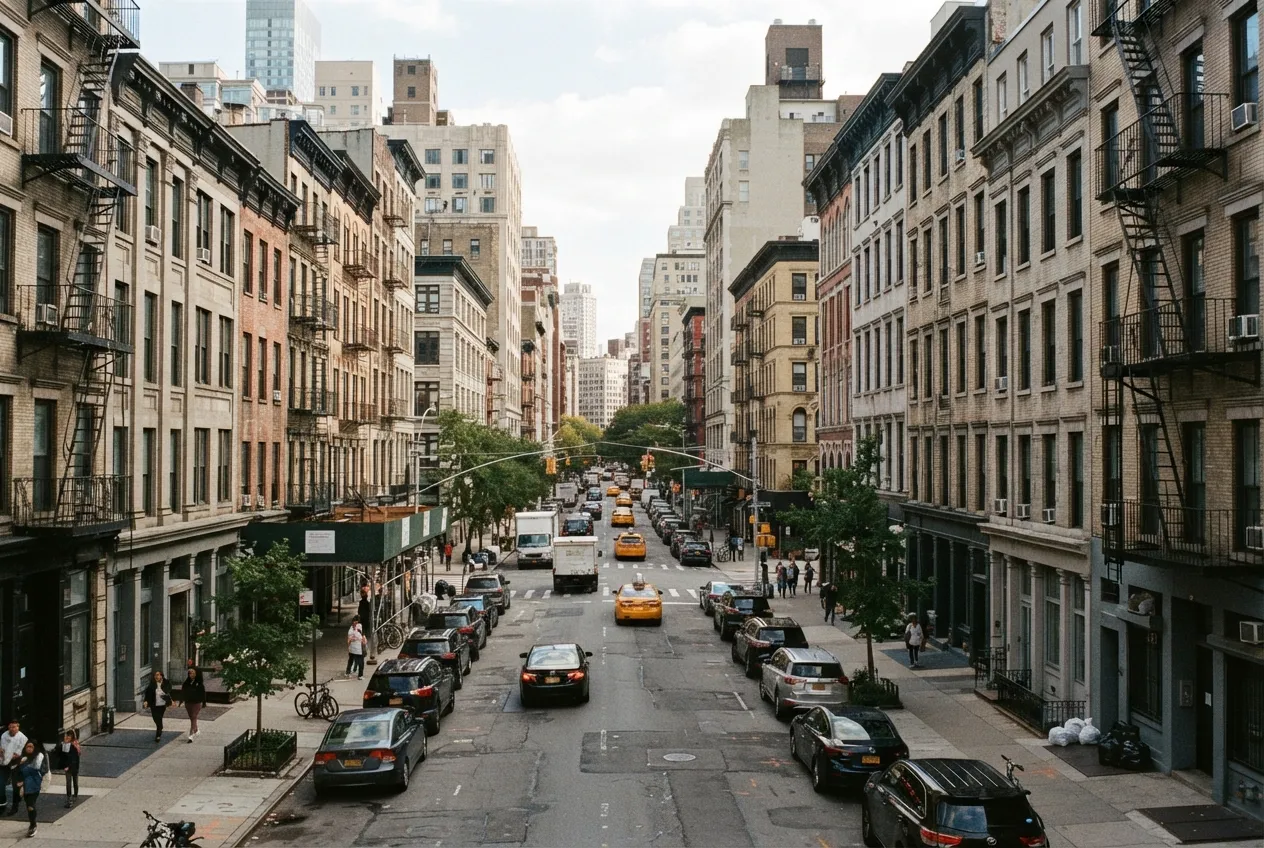
Flatiron's housing is mostly older masonry: pre-war apartment buildings, former commercial and loft buildings converted to residences, and some rowhouses and townhouses. Their chimneys were sized for coal or oil equipment, and many have no liner at all. Others have terra cotta tiles with failed mortar joints that let exhaust reach the brick.
The most common trigger in Manhattan is a boiler conversion. When a New York City building switches its boiler from oil to gas, the chimney has to be evaluated as part of the work. A new liner is often needed because gas exhaust produces acidic condensate, and that moisture can corrode a masonry flue from the inside. A flue that worked for oil for decades can begin to deteriorate quickly once gas equipment is connected.
Signs your chimney liner needs attention
Some liner problems only show up on a camera inspection. Others leave clues you can spot yourself. Call us for an evaluation if you notice any of the following:
- Your building is planning or has just finished an oil-to-gas conversion
- A new boiler, water heater or fireplace insert is being connected to an old chimney
- Flakes of tile, mortar or brick collecting at the base of the chimney or in the cleanout
- White staining, damp patches or peeling paint on walls next to the chimney
- Rust or water dripping near where the flue pipe enters the chimney
- Exhaust odors or poor draft in the boiler room or around the fireplace
- An inspection report that mentions cracked tiles, gaps or missing mortar joints
How we install a chimney liner
Every job starts with an inspection. The NFPA 211 standard calls for chimneys, fireplaces and vents to be inspected once a year, and it describes three inspection levels. A change of fuel or a new appliance calls for a Level 2 inspection, which includes a camera survey of the flue. If a hidden problem can only be reached by opening part of the chimney or wall, a Level 3 inspection may be needed. We will tell you which level applies and why.
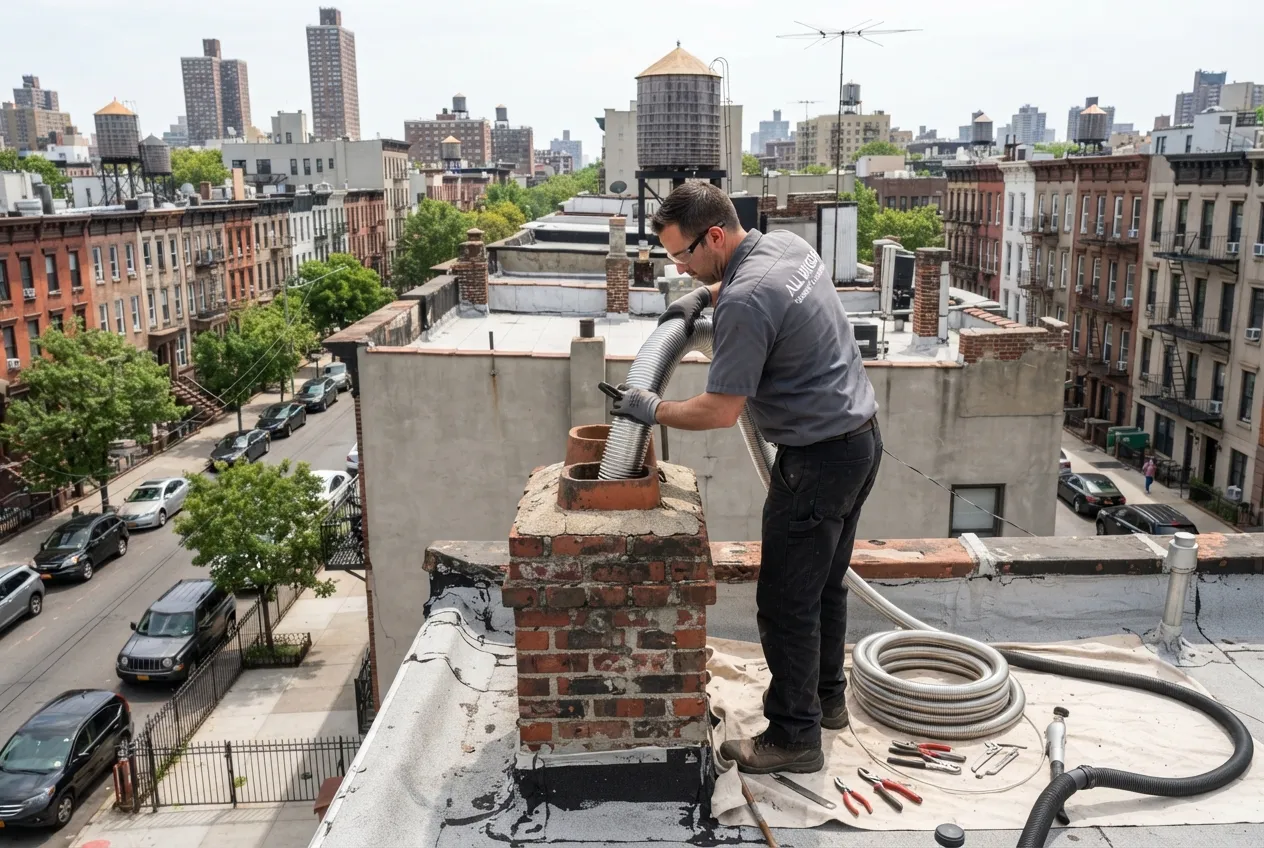
Next we measure the flue and match the liner to the appliance. Gas boilers and water heaters usually call for a stainless steel or aluminum liner rated for that equipment. Wood-burning fireplaces and inserts need a liner built for higher temperatures. Where an old clay liner is badly broken, we may need to remove the debris first so the new liner can run straight and clear.
Installation is done mostly from the roof. In a multi-story Flatiron building we coordinate with the superintendent or managing agent on roof access, elevator use and protecting hallways and the boiler room. After the liner is in place, we connect and seal it at the top and bottom, install a cap, and run a final camera check so you can see the result.
Time for your annual chimney check?
Planning around heating season
New York City's heat season runs from October 1 through May 31. During those months, building owners must keep apartments heated to the city's minimum temperatures. That makes timing important for any liner work tied to a boiler.
If your building is converting fuel or replacing a boiler, the best time to evaluate and reline the chimney is in late spring or summer, before the boiler has to run full time. If a liner problem turns up in the middle of winter, we work with the building to keep downtime short and to complete the work as quickly as conditions allow.
Serving Flatiron and nearby neighborhoods
Because we are based in Gramercy, Flatiron is one of the closest neighborhoods we serve. We also install chimney liners in Midtown South, Union Square, Gramercy, Murray Hill and Kips Bay. Whether you own a townhouse, sit on a co-op board or manage a pre-war rental building, we can assess your chimney and give you a clear written explanation of what it needs.
More services in Flatiron
- Chimney Sweep in Flatiron
- Chimney Inspection in Flatiron
- Chimney Repair in Flatiron
- Air Duct Cleaning in Flatiron