The short answer
Under the NFPA 211 standard, chimneys, fireplaces, and vents should be inspected once a year. West Village owners usually need a Level 1 inspection, a Level 2 after a fuel switch, new appliance, or sale, and a Level 3 only when a hidden hazard has to be reached by opening part of the chimney or building.
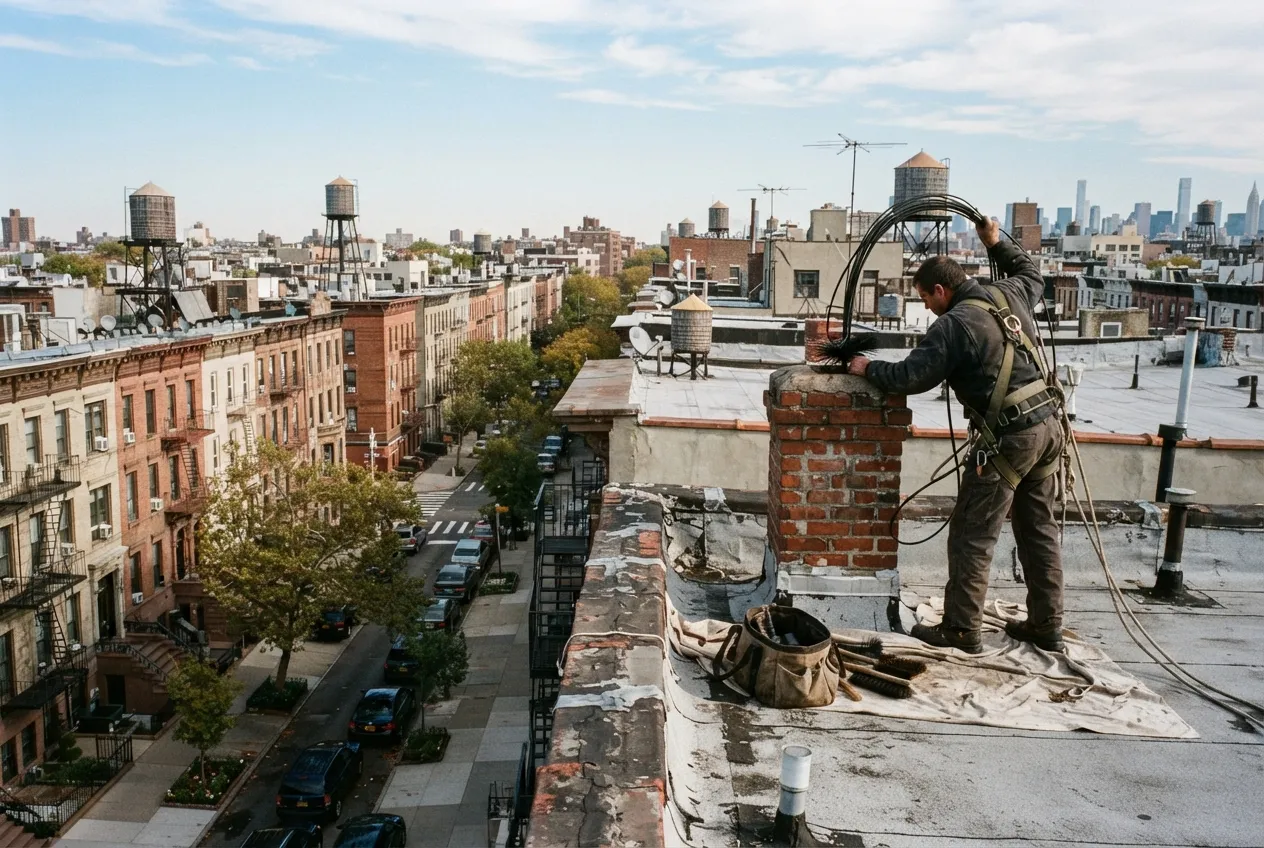
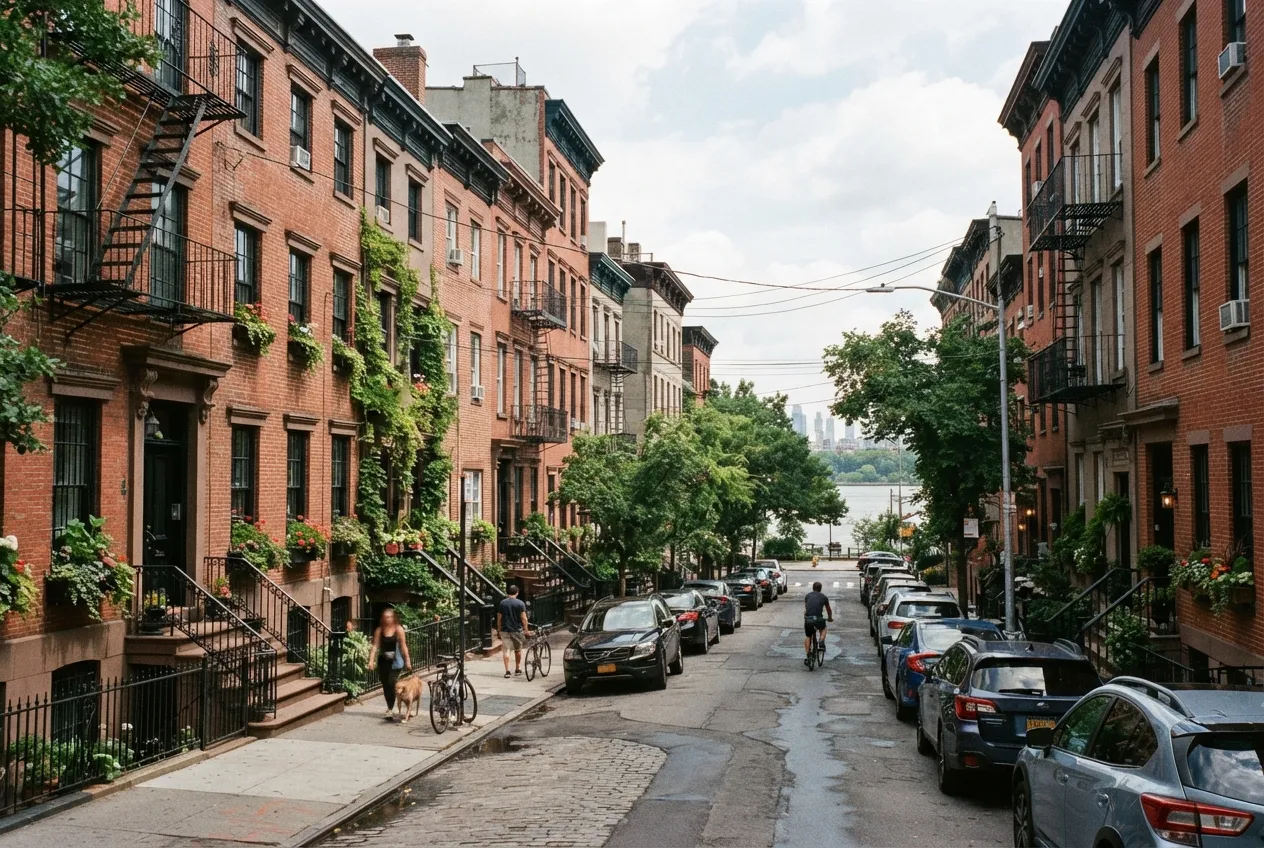
West Village homes have chimneys that have been in use for a long time. Many were built for coal or wood, then adapted for oil or gas, and some were closed off and later reopened. A chimney inspection tells you what condition the flue, liner, and masonry are in and whether the system suits the appliance it serves now. Nexora Chimney Services sends certified technicians from our Gramercy office, about a mile east, to inspect fireplaces, boiler flues, and vents in rowhouses, brownstones, townhouses, and pre-war apartment buildings throughout the 10014 ZIP code.
Why West Village Chimneys Need a Yearly Look
The NFPA 211 standard calls for chimneys, fireplaces, and vents to be inspected once a year. That applies to a wood-burning parlor fireplace you use a few times each winter and to a boiler flue that runs every day of the heating season.
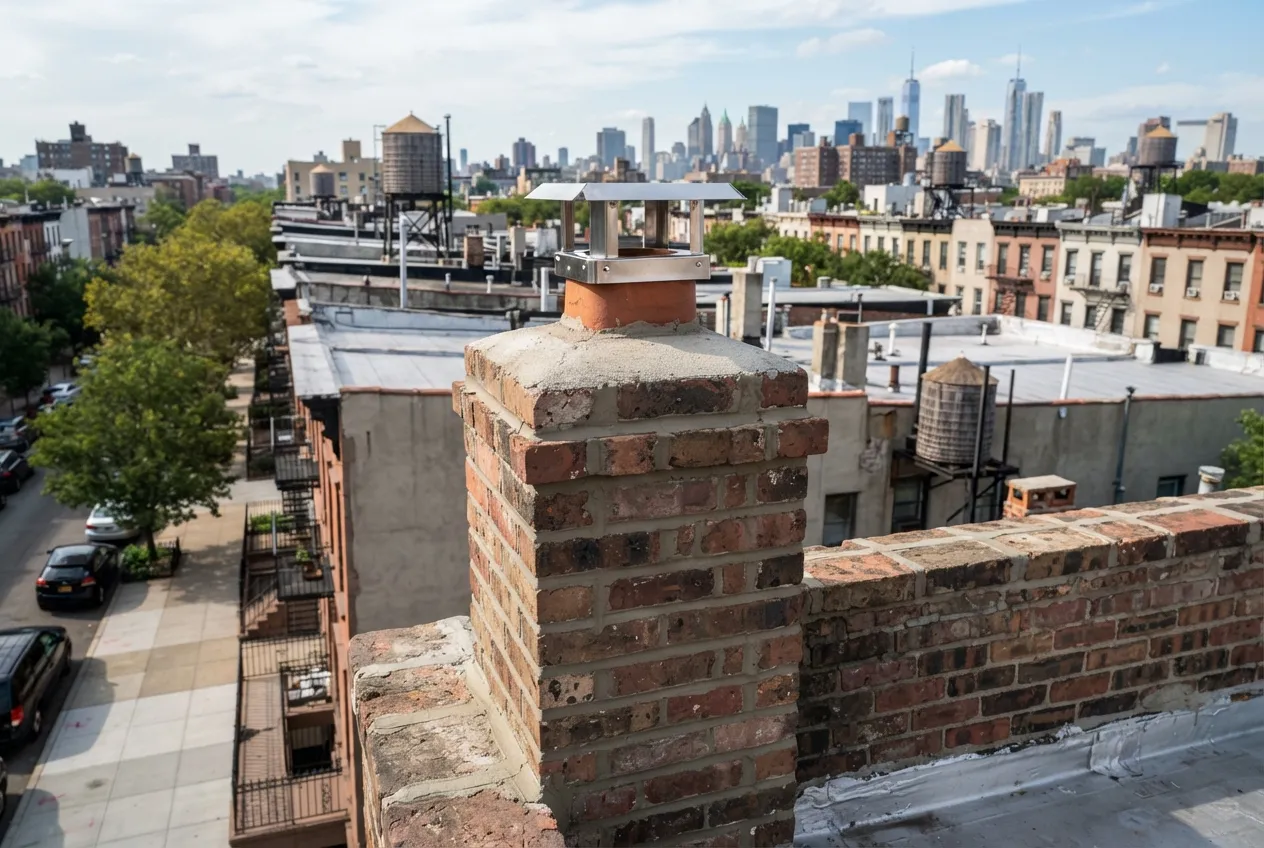
Older masonry chimneys in this neighborhood often share walls with the house next door. They may have several flues running side by side, and some of those flues may be abandoned. Mortar joints wear down, clay flue tiles crack, and crowns at the roofline take years of freeze-thaw cycles. Most of this can't be seen from inside the living room. A yearly inspection catches small problems before they turn into a blocked flue, smoke spilling into a room, or water coming through a wall.
Choosing the Right Inspection Level
Chimney professionals use three inspection levels. We recommend the one that fits your situation and explain why before any work starts.
- Level 1: For a chimney that is in regular use and hasn't changed. We check the readily accessible parts of the chimney, the firebox or appliance connection, and the flue for obstructions and buildup.
- Level 2: When something about the system changes, such as a new boiler or water heater, a switch from oil to gas, or a fireplace insert. It is also the level used when a home is sold. It includes a camera look inside the flue and an examination of the accessible attic, basement, and roof areas.
- Level 3: Only when a Level 1 or Level 2 points to a hidden hazard that can't be reached without opening part of the chimney or the building. We discuss this with you first and don't recommend it routinely.
What We Check in Rowhouse and Brownstone Chimneys
Chimneys in attached Manhattan homes have their own set of concerns. Our technicians focus on the conditions that typically show up in older masonry construction:
- Cracked, shifted, or missing flue tiles and gaps at the joints
- Deteriorated mortar and loose brick, inside the flue and at the stack
- Crown, cap, and flashing condition where the chimney meets the roof
- Creosote or soot buildup in fireplace flues
- Debris, nesting material, or collapsed masonry blocking a flue
- Connector pipes and draft at boiler and water heater flues
- Signs of water entry, such as staining, efflorescence, or rust on dampers
- Damper operation and firebox condition for wood-burning fireplaces
Time for your annual chimney check?
Oil-to-Gas Conversions and Boiler Flues
Many West Village buildings have converted, or plan to convert, from heating oil to natural gas. In New York City, the chimney has to be evaluated as part of that work. A new liner is often needed because gas exhaust produces acidic condensate that can corrode an unlined or clay-lined masonry flue over time.
If you are planning a conversion, schedule a Level 2 inspection early so the chimney findings can go into your heating contractor's plans. If a conversion has already been done and you aren't sure the flue was evaluated, an inspection will show whether a liner is in place and what condition it is in.
Timing Around the Heat Season
New York City's heat season runs from October 1 through May 31. During that time, building owners must keep apartments heated to the city's minimum temperatures. For owners of multi-unit rowhouses and small pre-war buildings, a boiler flue problem found in January is far harder to deal with than one found in August.
We suggest booking your inspection in late spring or summer. That leaves time for any repairs or relining before the boiler has to run steadily. Fireplace owners benefit from the same timing, because problems can be fixed before the first cold weekend.
Serving West Village and Nearby Neighborhoods
Our technicians work across the 10014 ZIP code. We also serve Greenwich Village, Midtown South, Flatiron, Union Square, and Gramercy. After each inspection we give you a plain explanation of what we found, including photos or camera footage where they help, along with any recommended next steps. You decide what to do from there.
More services in West Village
- Chimney Sweep in West Village
- Chimney Repair in West Village
- Air Duct Cleaning in West Village
- Chimney Liner Installation in West Village