The short answer
West Village chimneys often need a new liner because older clay tiles crack with age, or because a fuel change such as an oil-to-gas boiler conversion calls for a flue built for acidic gas exhaust. We inspect the chimney first, then size and install a liner matched to your appliance and building.
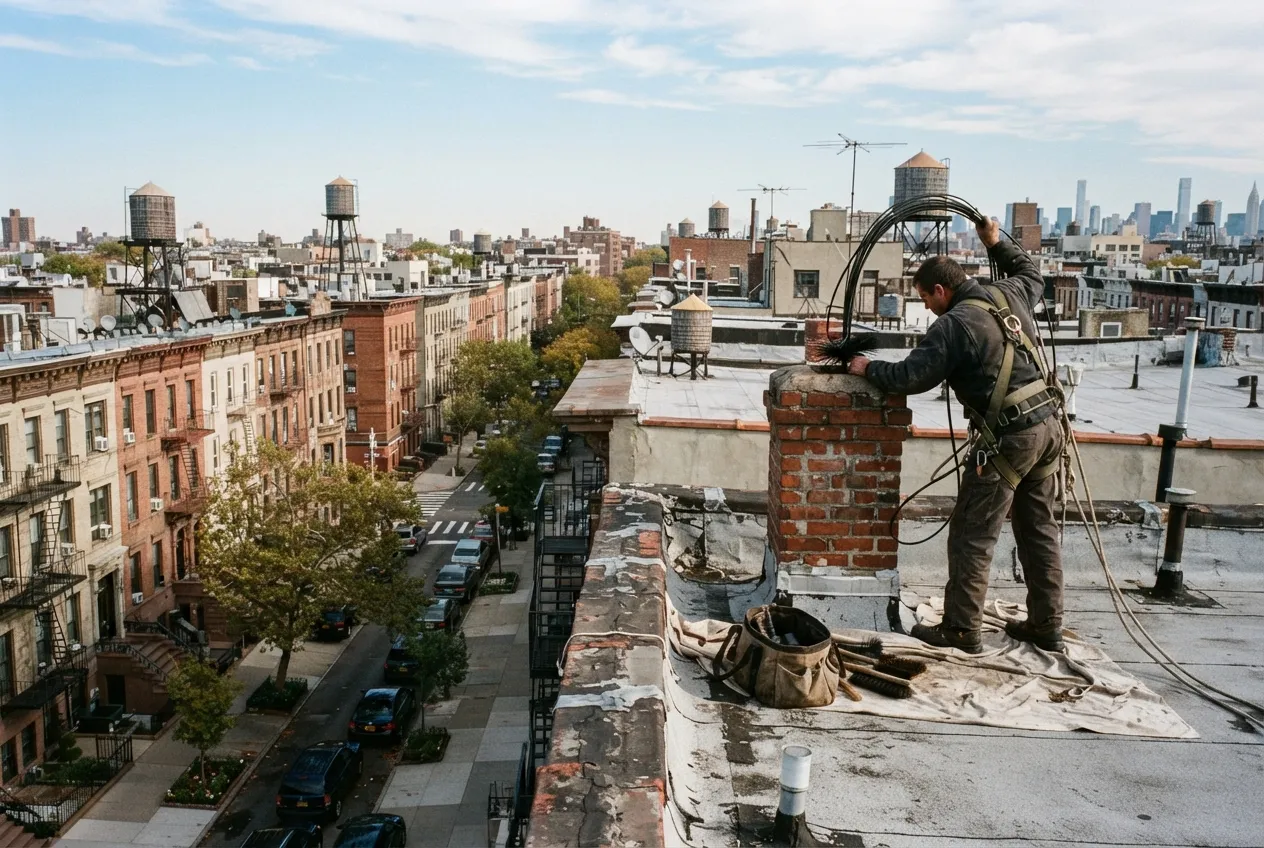
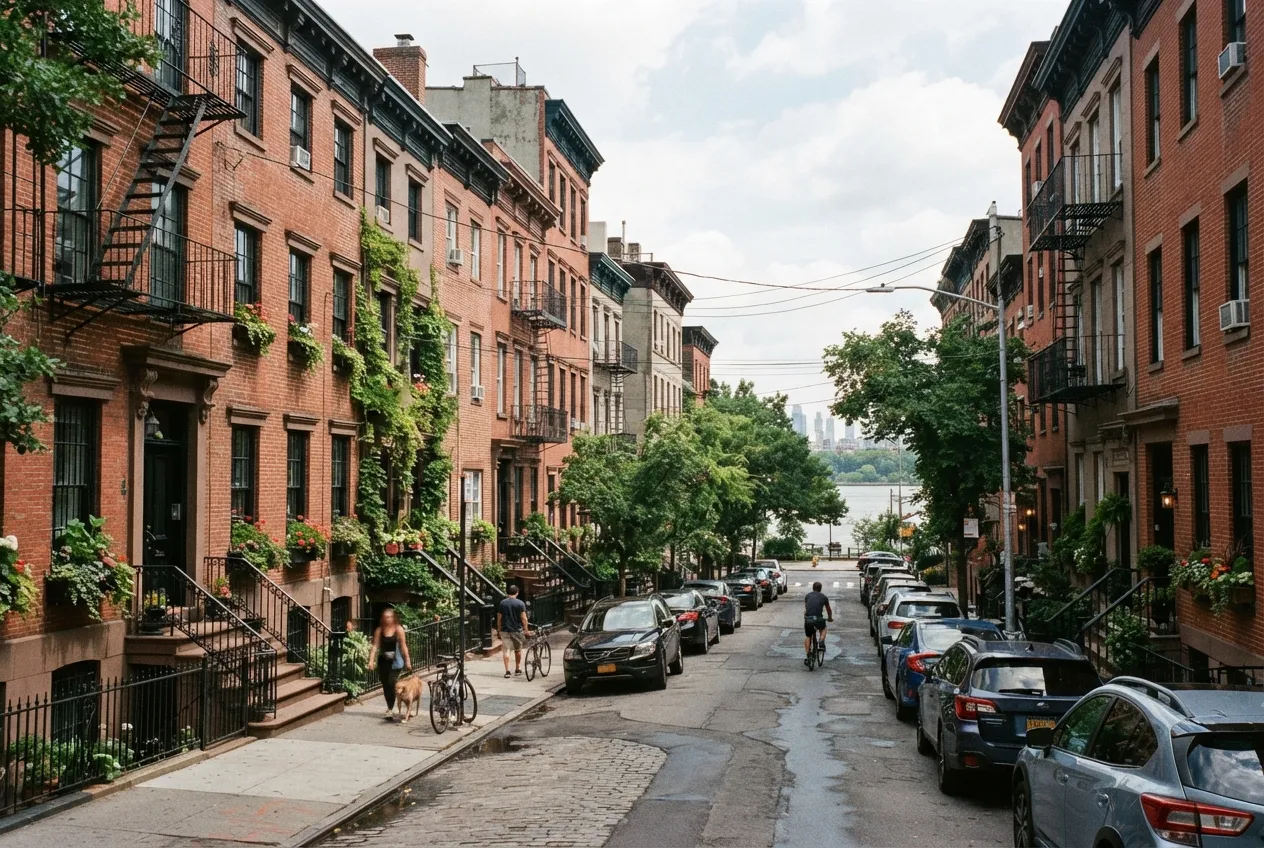
Many West Village homes were built long before modern heating equipment, and their chimneys show it. A chimney liner is the protective channel inside the flue that carries smoke and exhaust out of the house while keeping heat and corrosive byproducts away from brick, mortar and nearby framing. When that liner is cracked, missing or wrong for the appliance it serves, the chimney can no longer do its job safely. Nexora Chimney Services installs and replaces liners in brownstones, rowhouses and pre-war apartment buildings throughout ZIP code 10014, working from our office in Gramercy, about a mile east. This page explains when a liner is needed, how we choose the right one, what installation involves in a Manhattan building, and how to plan the work around the heating season.
Why West Village Chimneys Often Need a New Liner
Older masonry chimneys in the neighborhood were commonly built with clay tile liners, and some were built with no liner at all. Over many decades, freeze-thaw cycles, building settlement and repeated heating can crack tiles and wear away the mortar joints between them. In a rowhouse with shared party walls, or in an apartment building where one tall stack serves several floors, there is a lot of hidden flue surface where damage can go unnoticed. Gaps in a flue can let heat reach combustible materials and let exhaust seep into living spaces or neighboring units.
Fuel changes are another common reason for a new liner. When a New York City building converts its boiler from oil to gas, the chimney has to be evaluated as part of the work, and a new liner is often needed. Gas exhaust produces acidic condensate that can corrode an old masonry flue from the inside, so a liner built and sized for gas equipment protects the chimney going forward.
- Pieces of tile, flaking masonry or dark debris collecting at the base of the flue
- Water stains, efflorescence or damp spots on walls near the chimney
- Smoke or odors entering the room or reaching a neighboring unit
- Poor draft, or a fireplace that is hard to keep burning cleanly
- A new boiler, water heater or fireplace insert, or a switch from oil to gas
How We Decide What Liner Your Chimney Needs
Every liner job starts with an inspection. The NFPA 211 standard calls for chimneys, fireplaces and vents to be inspected once a year and describes three inspection levels. A Level 2 inspection, which includes a camera look inside the flue, applies when the system changes, such as a new appliance or a switch of fuel, or when a home is sold. If a hidden hazard can only be reached by opening part of the chimney or the building, a Level 3 inspection may be needed before any liner work begins.
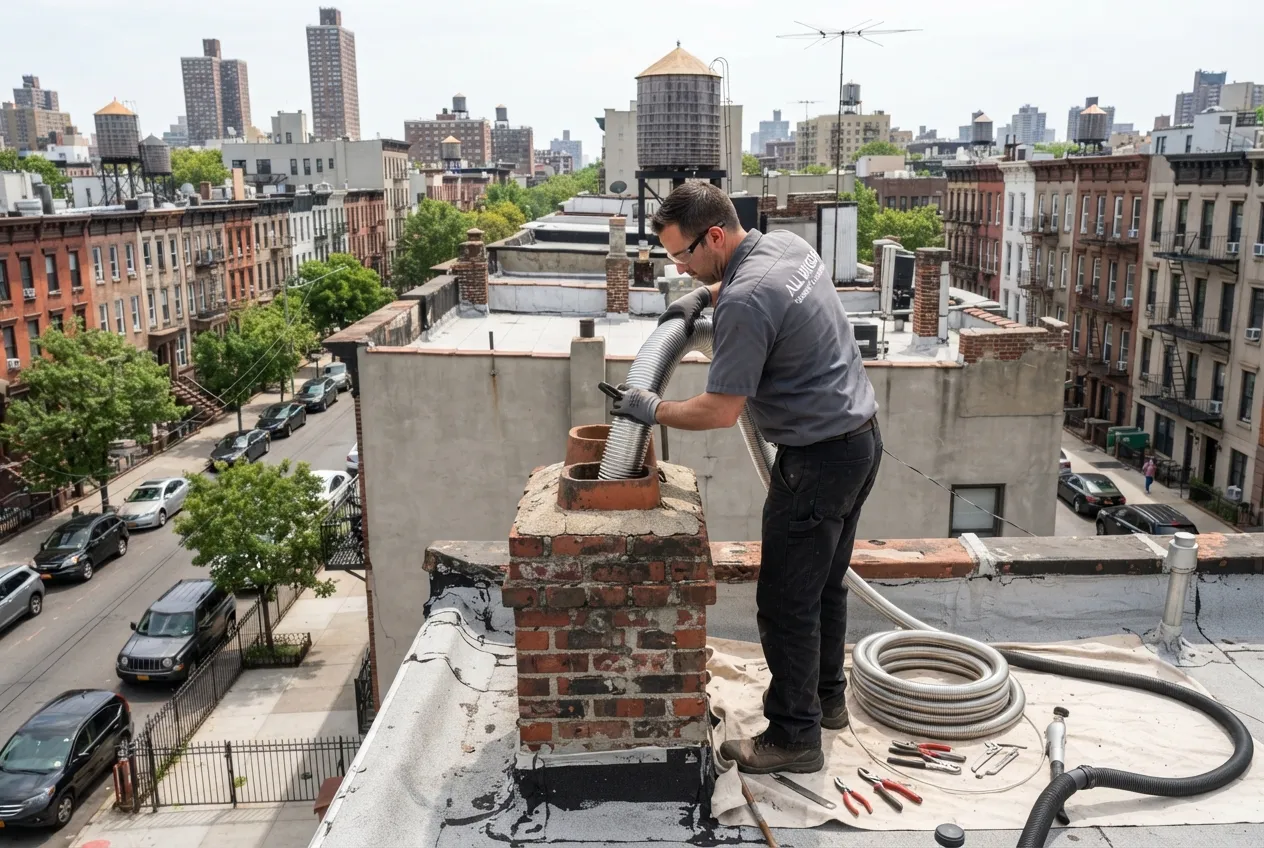
With the inspection results in hand, our certified technicians recommend a liner that fits the appliance and the chimney. Stainless steel liners are the usual choice for gas and oil boilers, water heaters and fireplace inserts, because they handle condensate well and can be fed down an existing flue. Wood-burning fireplaces in older masonry may call for a different approach, and we walk you through the trade-offs. Sizing matters just as much as material: a liner that is too large or too small for the appliance can draft poorly and encourage condensation or creosote buildup.
What Installation Looks Like in a Manhattan Building
Liner work in the West Village usually happens from the roof down, so access is part of the plan from the start. In apartment and co-op buildings we coordinate with the superintendent or managing agent about roof access, elevator use and work hours. In brownstones and rowhouses we look at how the chimney sits against neighboring buildings and protect stairways, floors and furnishings along our path.
- Confirm the appliance, flue size and route with the inspection findings
- Clean the existing flue and remove loose debris or broken tile
- Lower the liner through the flue and connect it to the appliance
- Add insulation where needed to keep exhaust warm and drafting well
- Install a top plate and cap to keep out rain, debris and animals
- Check draft and connections, then review the finished work with you
Time for your annual chimney check?
Planning Liner Work Around the Heat Season
New York City's heat season runs from October 1 through May 31, when building owners must keep apartments heated to the city's minimum temperatures. If your boiler depends on the chimney, a failed liner discovered in winter can put heat service at risk. Scheduling inspections and liner installation in late spring or summer gives time to finish the job, including any coordination with a boiler conversion, before the cold arrives.
Homeowners with fireplaces benefit from the same timing. Having the liner in place before the first fire of the season means you can use the fireplace without worrying about hidden cracks. Beyond the West Village, we install chimney liners in Greenwich Village, Midtown South, Flatiron, Union Square and Gramercy.
More services in West Village
- Chimney Sweep in West Village
- Chimney Inspection in West Village
- Chimney Repair in West Village
- Air Duct Cleaning in West Village