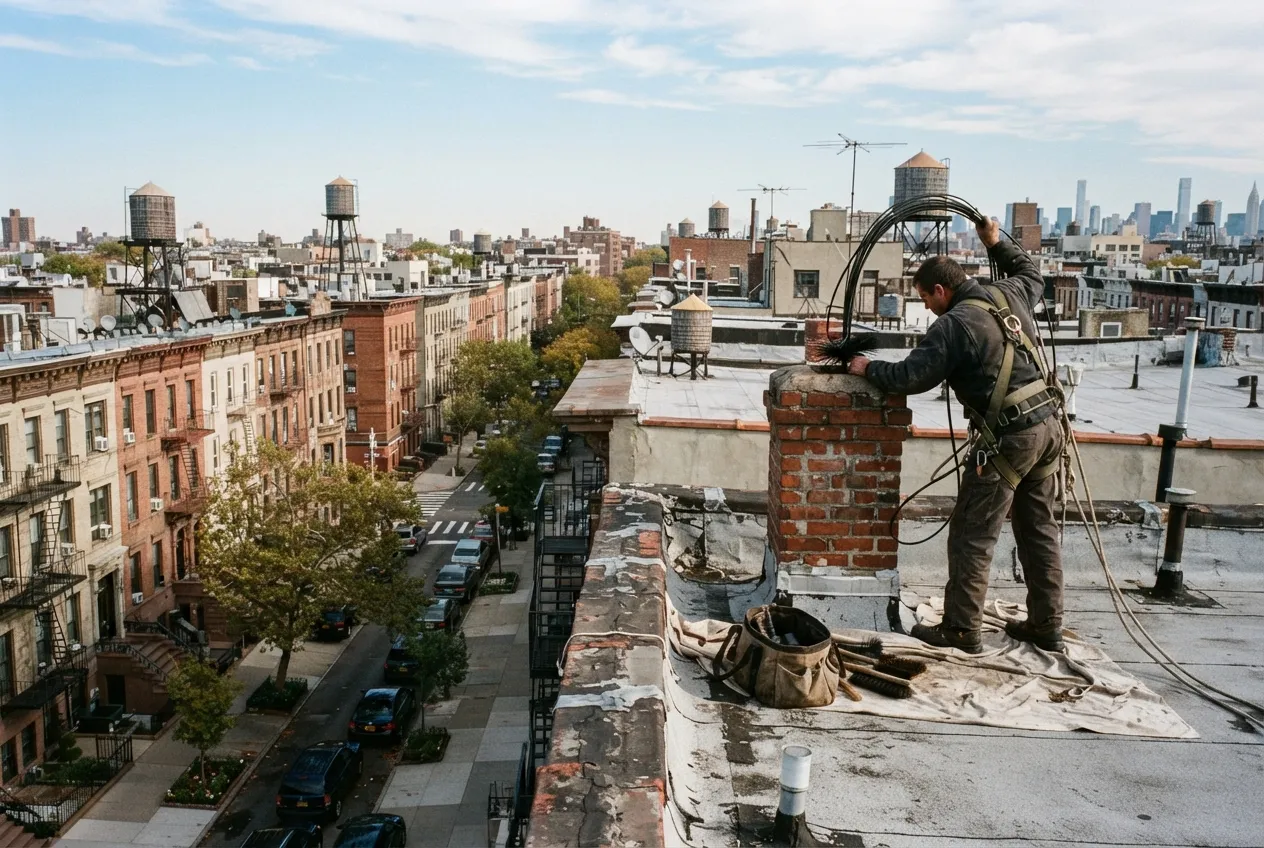
The short answer
Nexora Chimney Services repairs chimney masonry, crowns, flashing, dampers and flue liners for rowhouses, brownstones and pre-war buildings in West Village (10014). Every repair starts with an inspection so the work matches the actual problem, including liner checks when a building converts its boiler from oil to gas.
Many West Village chimneys have been venting fireplaces, boilers and water heaters for generations, through decades of freeze-thaw winters, summer heat and wind-driven rain. Nexora Chimney Services repairs chimneys in West Village homes and buildings in ZIP code 10014, from single-family rowhouses and brownstones to pre-war apartment buildings with shared flues. Our office in Gramercy is about a mile east, so a visit to the neighborhood is a short trip for our certified technicians. On this page we cover the repairs we see most often in the area, how we figure out what a chimney actually needs, and what to expect when the work is scheduled.
What Chimney Repair Looks Like in West Village Homes
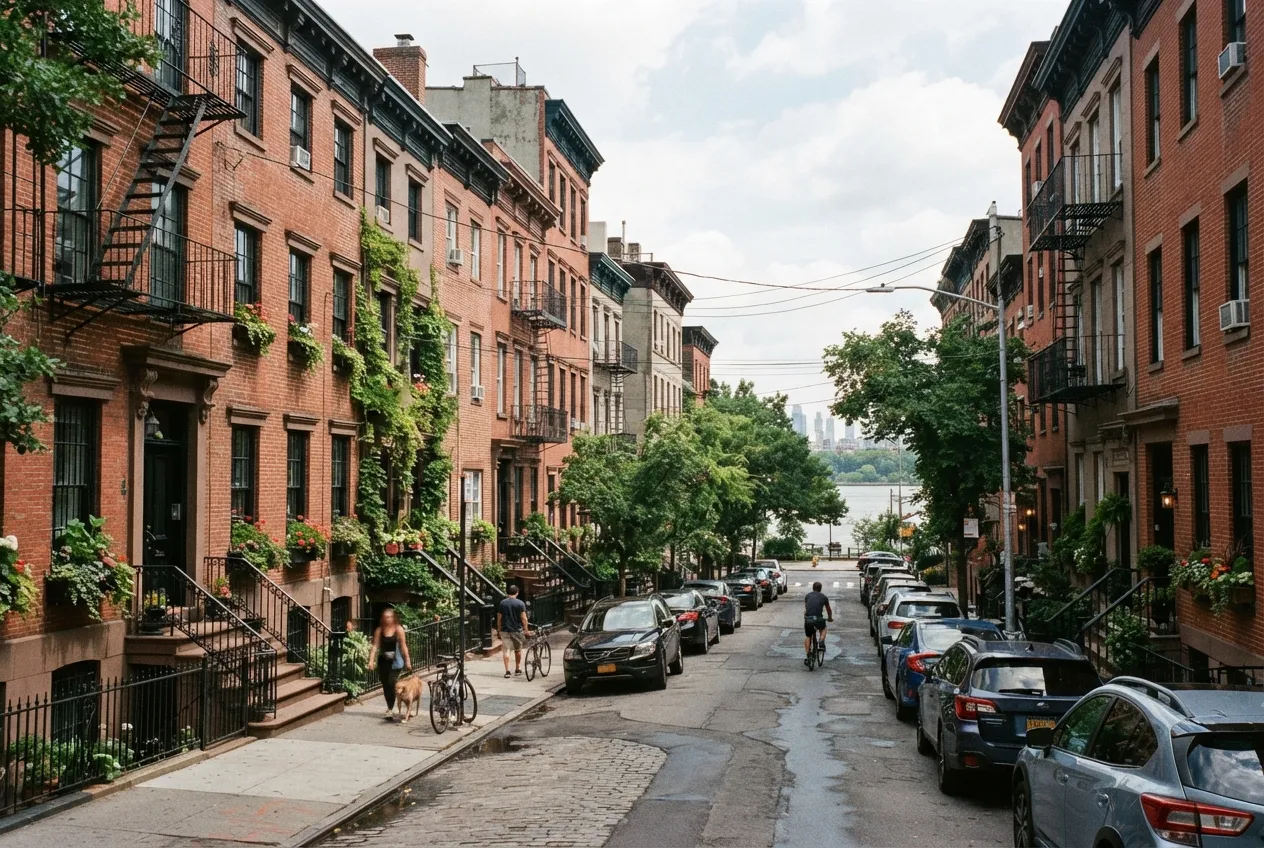
Housing in West Village is mostly older masonry: brick and brownstone rowhouses, townhouses that have been divided into apartments, and pre-war walk-ups and elevator buildings. Their chimneys are often tall, narrow stacks that rise above flat roofs and sit close to neighboring buildings. That layout affects how they age and how they get repaired.
On a flat roof, water tends to collect around the base of a chimney, so flashing and the lower courses of brick take a lot of wear. Chimneys shared by several units or attached to a party wall can let moisture travel into more than one home. In older buildings, original clay tile liners may be cracked or missing, and fireplaces that have not been used in years may have dampers that no longer close.
Chimney Repairs We Handle
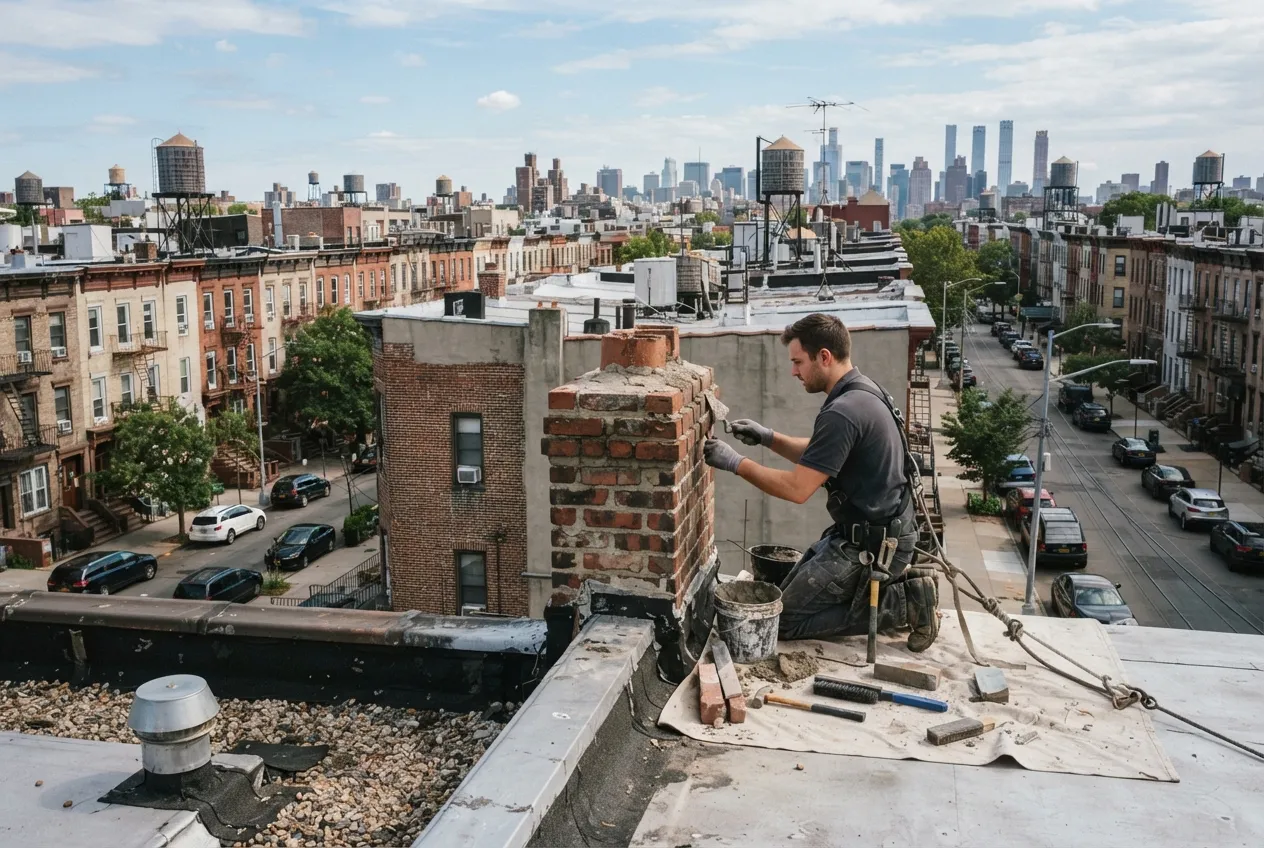
Most of the repair calls we get from the neighborhood fall into a handful of categories. We look at the whole system before recommending anything, because a stain on an interior wall can come from a crown, the flashing or the masonry itself.
- Repointing: replacing eroded mortar joints so water stops working its way into the brick
- Brick and stone repair: rebuilding spalled, loose or cracked sections of the stack
- Crown repair or replacement: fixing the cement cap at the top that sheds water away from the flue
- Flashing repair: resealing the joint where the chimney meets a flat or sloped roof
- Chimney caps: installing caps to keep out rain, debris, birds and animals
- Damper repair or replacement: restoring a seal for fireplaces that leak cold air
- Flue liner repair and relining: addressing cracked clay tiles or installing new liners sized to the appliance
- Firebox repair: replacing damaged firebrick and mortar inside the fireplace
Liners, Oil-to-Gas Conversions and Heating Season
Many buildings in Manhattan have converted, or plan to convert, their boilers from oil to gas. When that happens in New York City, the chimney has to be evaluated as part of the work, and a new liner is often needed. Gas exhaust produces acidic condensate that can corrode a masonry flue that was built for oil, so the existing chimney may not be suitable as it stands.
Timing also matters. New York City's heat season runs from October 1 through May 31, and building owners must keep apartments heated to the city's minimum temperatures during that period. A chimney problem that takes a boiler offline in January is far more disruptive than one found and fixed in late summer. If your building has a conversion coming up or a liner you have questions about, it is worth having the chimney looked at well before October.
Time for your annual chimney check?
How a Repair Visit Works
We start with an inspection. The NFPA 211 standard calls for chimneys, fireplaces and vents to be inspected once a year, and it describes three levels. A Level 1 inspection fits when nothing about the system has changed. A Level 2 inspection applies when the system changes, such as a new appliance or a switch of fuel, or when the home is sold. A Level 3 inspection is used when a hidden hazard has to be reached by opening part of the chimney or building.
After the inspection, we explain what we found, show you photos where possible, and lay out the repair options in plain terms. We separate urgent safety issues from items that can wait so you can plan the work. For multi-unit buildings, we can coordinate with owners, managers and residents about roof access and scheduling.
Serving West Village and Nearby Neighborhoods
We work throughout West Village and the 10014 ZIP code, and we also serve nearby Greenwich Village, Midtown South, Flatiron, Union Square and Gramercy. Whether you own a single rowhouse or manage a pre-war building, we can inspect your chimney and recommend repairs that fit its construction and how it is used.
More services in West Village
- Chimney Sweep in West Village
- Chimney Inspection in West Village
- Air Duct Cleaning in West Village
- Chimney Liner Installation in West Village