The short answer
The NFPA 211 standard calls for chimneys in Union Square, like everywhere else, to be inspected once a year. Most homes need a Level 1 inspection. A Level 2 is needed after a fuel or appliance change, such as an oil-to-gas boiler conversion, or when the home is sold.
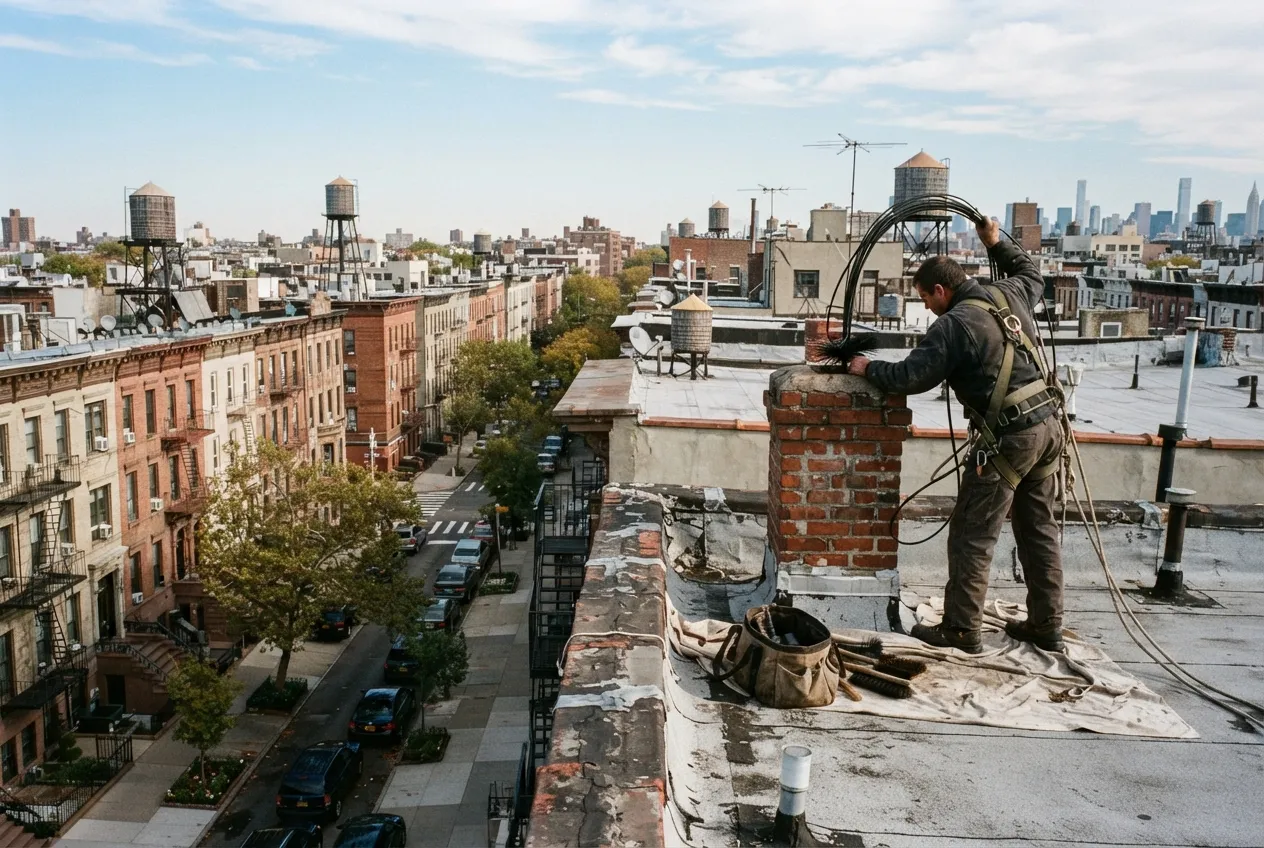
Union Square is about a mile from our Gramercy office, so our certified technicians are close by when your chimney needs to be checked. Most chimneys here belong to older masonry buildings: pre-war apartment houses, walk-ups, converted loft buildings, and some rowhouses and brownstones with working fireplaces. Over the decades, many have been changed. Fireplaces were sealed or reopened, boilers were replaced, and flues were relined or left as they were. An inspection shows what condition your flue is in, whether it suits the appliance connected to it, and what needs attention before you use it.
Which inspection level fits your situation
The NFPA 211 standard calls for chimneys, fireplaces and vents to be inspected once a year. There are three levels of inspection. The right one depends on what has changed since someone last looked at your chimney.
Most Union Square homeowners need a Level 1 in a typical year. If you are buying or selling a co-op or townhouse, or your building has replaced its heating equipment, expect a Level 2.
- Level 1: for a chimney in regular use with no changes. We examine the readily accessible parts of the fireplace, flue and connections for soot buildup, blockages and visible damage.
- Level 2: for when something has changed, such as a new boiler or heating appliance, a switch from oil to gas, or the sale of the home. It includes a camera inspection of the flue interior and a look at accessible roof, attic and basement areas.
- Level 3: for when a hidden hazard can only be reached by opening part of the chimney or the building. This usually follows a Level 2 that found a problem it couldn't fully evaluate.
Chimneys in Union Square buildings
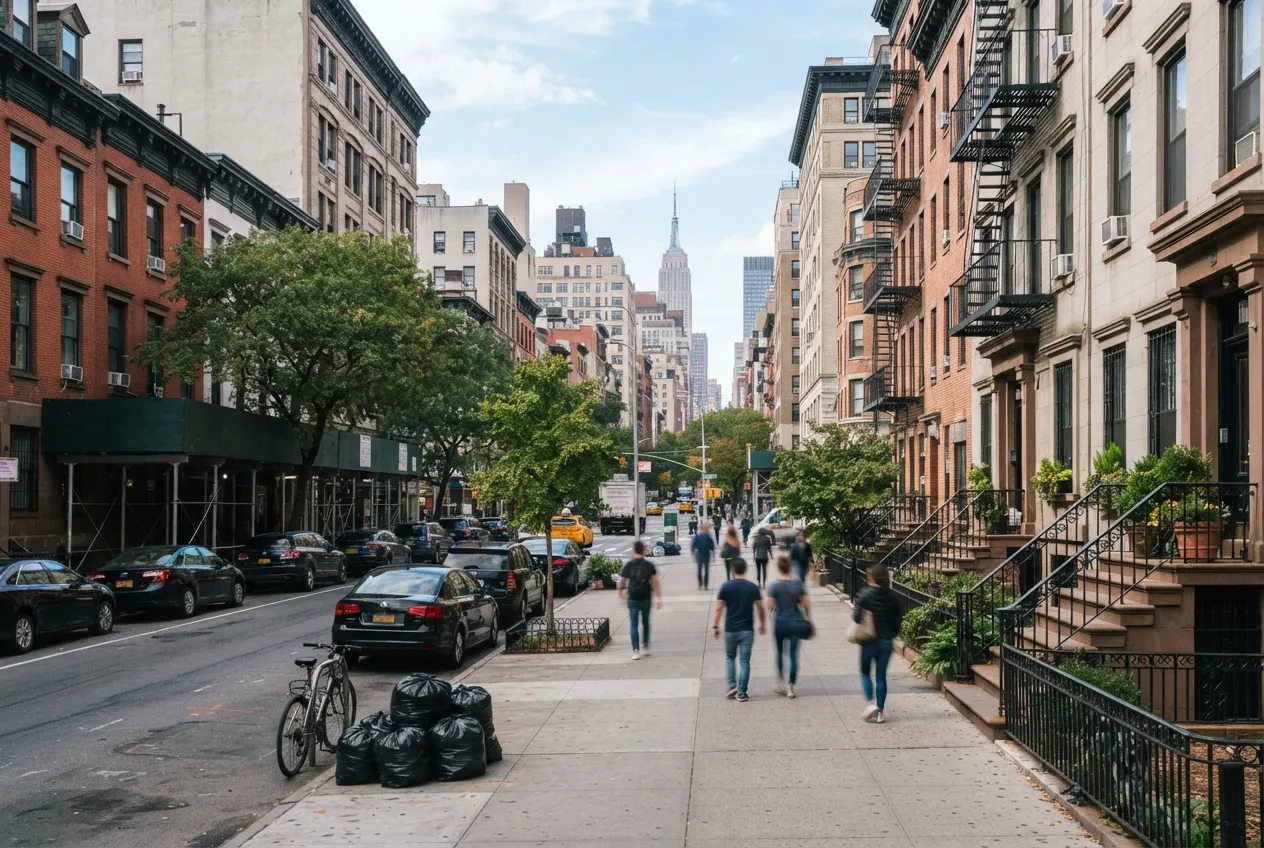
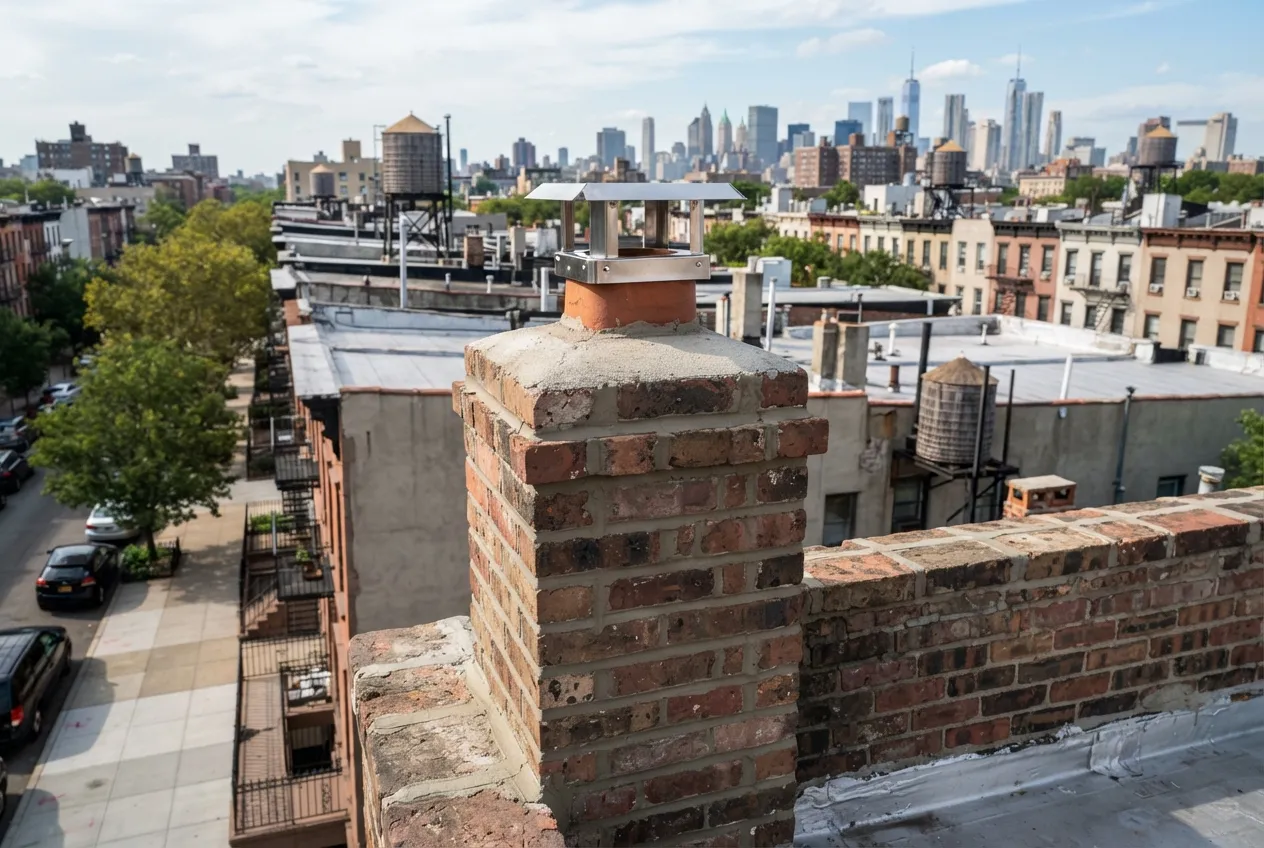
Housing around Union Square is mostly older masonry. That includes pre-war apartment buildings, walk-ups, loft buildings converted to residences, and some rowhouses and brownstones. Chimneys in these buildings tend to be tall, are often shared by several units or appliances, and are hard to see from the street. Access usually runs through a rooftop bulkhead or a mechanical room, so we coordinate with supers and managing agents ahead of time.
Common issues we look for in this kind of housing:
- Deteriorated mortar joints and cracked clay flue tiles
- Fireplaces that were sealed years ago and later reopened without a flue check
- Missing or damaged chimney caps that let in rain, debris and birds
- Cracked crowns and water damage from repeated freeze-thaw cycles
- Creosote buildup in wood-burning fireplaces that get only occasional use
- Shared flues where a new appliance was connected without a review
Oil-to-gas conversions and flue liners
Many Manhattan buildings have converted their boilers from oil to gas. When a New York City building makes that change, the chimney has to be evaluated as part of the work. A new liner is often needed, because gas exhaust produces acidic condensate that can corrode a masonry flue.
If your building converted recently or plans to, an inspection shows whether the existing flue can handle gas exhaust or should be relined. Owners and co-op boards benefit from knowing this early, before the conversion schedule is set.
Time for your annual chimney check?
Plan your inspection around heat season
New York City's heat season runs from October 1 through May 31. During that time, building owners must keep apartments heated to the city's minimum temperatures. A chimney problem found in January can mean shutting down a boiler when it is needed most. An inspection in late spring or summer leaves time to finish repairs before the heat has to be on.
The same reasoning applies to fireplaces. An inspection before the first fire of the season is much easier to schedule than one after you notice smoke in the room.
What to expect on inspection day
When you book, we confirm access details, such as whether we need the super, a roof key or entry to the boiler room. On the day, we:
Afterward, you get a written summary of what we found, with photos where helpful, and a plain explanation of any recommended repairs. We also inspect chimneys in nearby Midtown South, Flatiron, Gramercy, Murray Hill and Kips Bay.
- Check the firebox, damper, smoke chamber and visible flue
- Inspect the chimney exterior, crown and cap from the roof when access allows
- Use a camera on Level 2 inspections to view the full flue interior
- Lay down drop cloths and clean up before we leave
More services in Union Square
- Chimney Sweep in Union Square
- Chimney Repair in Union Square
- Air Duct Cleaning in Union Square
- Chimney Liner Installation in Union Square