The short answer
Nexora Chimney Services sends certified chimney sweeps to Union Square homes, about a mile from our Gramercy office. We clear creosote and debris from fireplace and boiler flues and check the liner and damper. NFPA 211 calls for a yearly inspection, and the best time to book is before heat season starts on October 1.
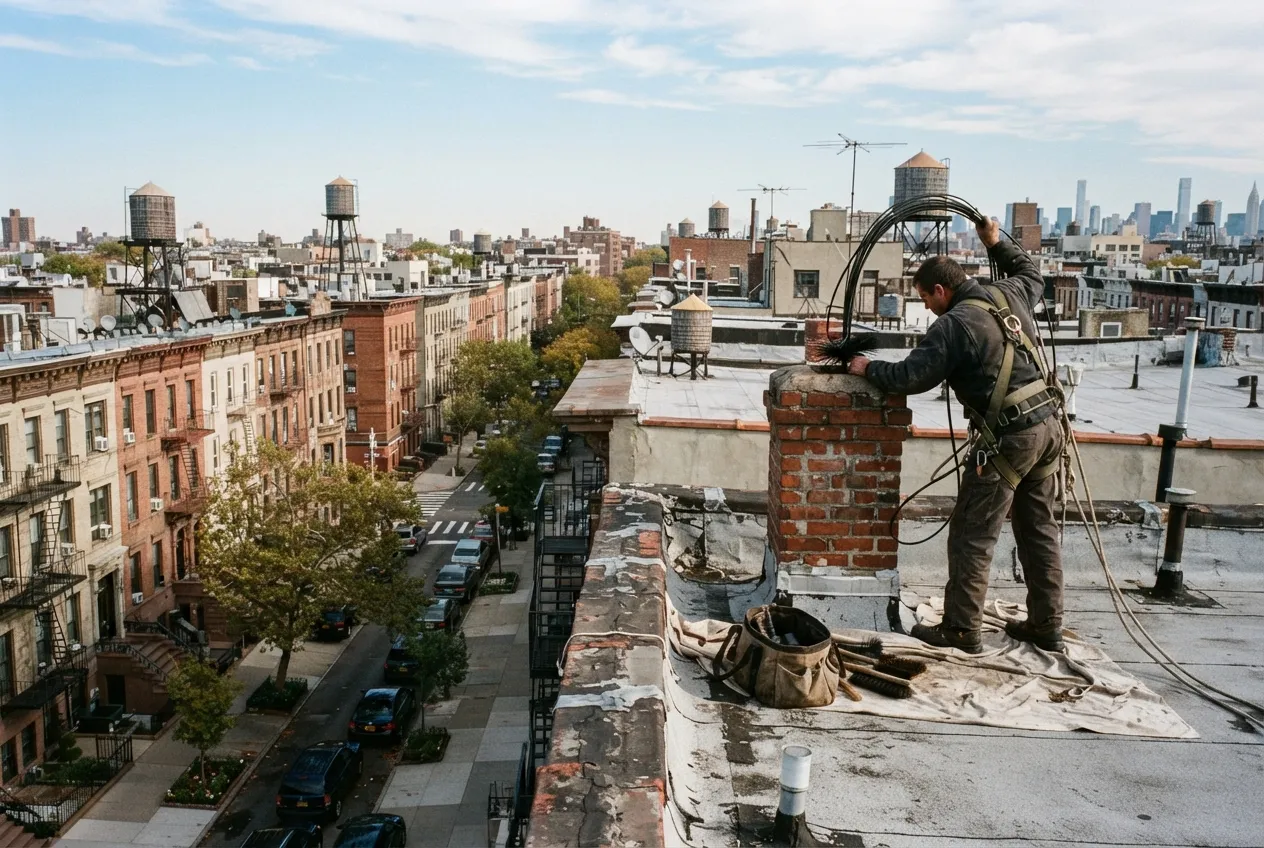
Union Square is about a mile northwest of our Gramercy office, so it's a short trip for our crews. Our certified technicians sweep wood-burning fireplaces, stove flues and boiler chimneys in homes and buildings here. They remove creosote, soot and debris so smoke and exhaust leave the way they should. Below is what a sweep involves in this part of Manhattan, when to book one, and what to expect if your building has a shared flue, a converted boiler or a fireplace that hasn't been used in years.
Chimneys in Union Square Homes
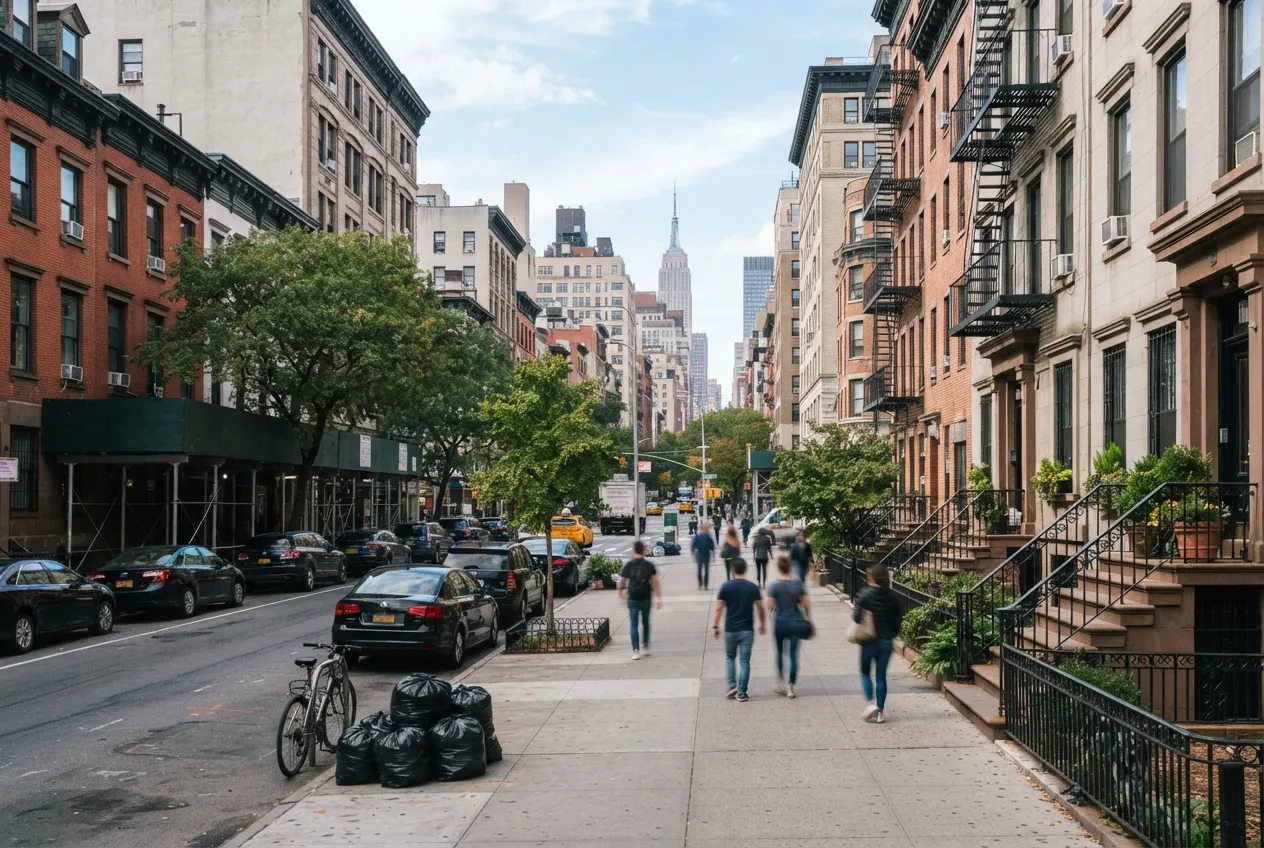
Housing around Union Square is a mix of pre-war apartment buildings, walk-up rowhouses, brownstones and older commercial buildings converted into lofts. Many were built when coal and wood fireplaces were standard. It's common to find several flues running up through one masonry stack, with fireplaces on more than one floor.
Some of those fireplaces are still in regular use. Others were closed off long ago and later reopened, fitted with a gas insert, or left as decoration. A fireplace that looks clean from the room can still have a flue packed with old soot, fallen mortar or nesting material. Before anyone lights a fire in an older unit, the flue should be swept and checked from top to bottom.
Larger buildings also have a boiler chimney that serves the heating system. That flue works hard every winter and needs its own attention, separate from any fireplaces in individual apartments.
What Our Chimney Sweep Includes
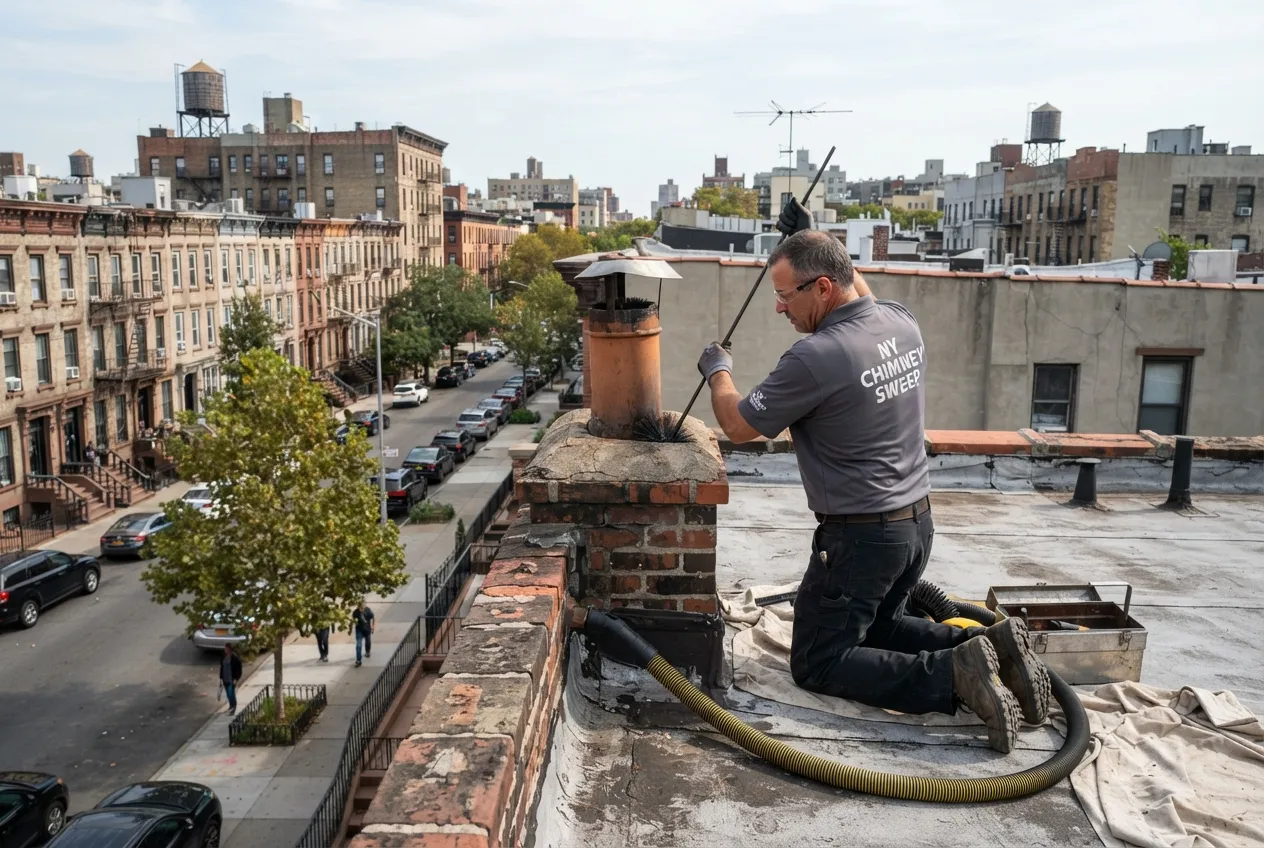
A standard sweep clears the flue and gives you an accurate picture of its condition. On a typical visit, our technicians:
If a flue has heavy glazed creosote or damage that a basic look can't fully assess, we'll tell you and explain the next step. We won't guess.
- Lay down drop cloths and run a sealed vacuum so soot stays out of your living space
- Brush the flue from the firebox, the roof, or both, depending on access
- Remove creosote, soot and loose debris from the smoke chamber, smoke shelf and firebox
- Check that the damper opens smoothly and closes with a proper seal
- Look for cracked flue tiles, missing mortar, blockages and signs of water getting in
- Check the chimney cap and crown where roof access allows
- Explain what we found in plain terms, with photos when they help
When to Schedule a Sweep
The NFPA 211 standard calls for chimneys, fireplaces and vents to be inspected once a year. How often you need a sweep depends on what that inspection shows. A fireplace used most weekends all winter builds up creosote faster than one lit a few times a season.
Chimney professionals use three inspection levels. Level 1 fits when nothing about the system has changed. Level 2 is called for when something does change, such as a new appliance or a switch in fuel, or when the home is being sold. Level 3 is used when a hidden hazard can only be reached by opening part of the chimney or the building.
In New York City, heat season runs from October 1 through May 31. During that period, building owners must keep apartments heated to the city's minimum temperatures. If you book a sweep and inspection in late summer or early fall, boilers and fireplaces will be ready before heat season starts, and any repairs can be handled without a rush.
Time for your annual chimney check?
Oil-to-Gas Conversions and Flue Liners
Many Manhattan buildings have switched their boilers from oil to gas. When a New York City building makes that conversion, the chimney has to be evaluated as part of the work. A new liner is often needed, because gas exhaust produces acidic condensate that can corrode a masonry flue.
If your building has already converted or is planning to, we can sweep the old flue and document its condition. We'll tell you whether the existing liner is suitable or whether relining should be part of the project. Old oil soot left in a flue should be cleared out before the new system starts running.
Sweeping in Apartments and Shared Buildings
In a co-op, condo or rental building, a chimney sweep usually involves more people than just the owner of the fireplace. Building management often controls roof access, freight elevator use and work hours. We're glad to coordinate with your super or managing agent and give them whatever information they need before the visit.
Shared stacks matter too. When several flues run side by side, a crack or blockage in one can affect a neighbor's unit. If we see a problem that goes beyond your flue, we'll point it out so the building can deal with it.
We also serve nearby Midtown South, Flatiron, Gramercy, Murray Hill and Kips Bay.
More services in Union Square
- Chimney Inspection in Union Square
- Chimney Repair in Union Square
- Air Duct Cleaning in Union Square
- Chimney Liner Installation in Union Square