The short answer
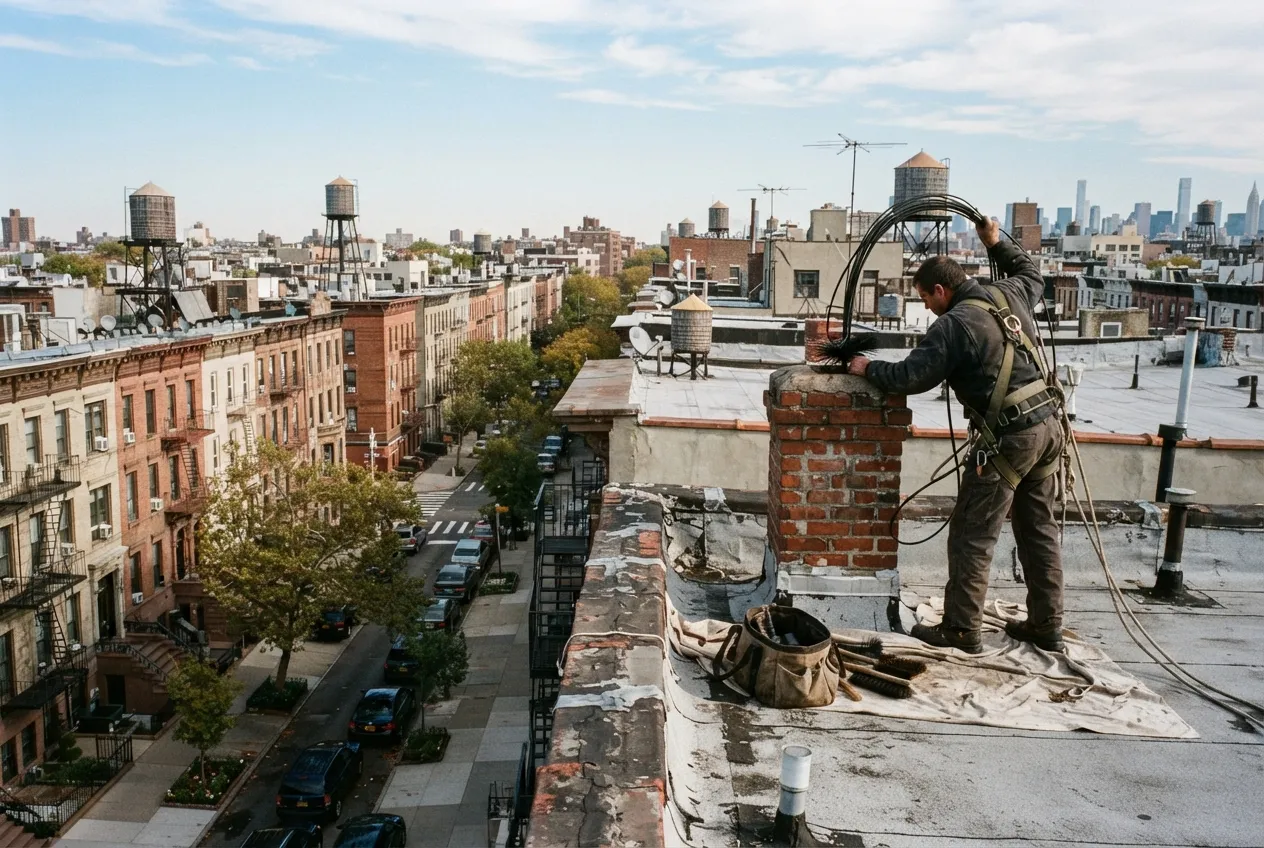
Greenwich Village homeowners should have their chimney inspected once a year, as the NFPA 211 standard calls for, and swept whenever soot or creosote has built up. Late summer or early fall is the best time to book, before New York City's heat season begins on October 1.
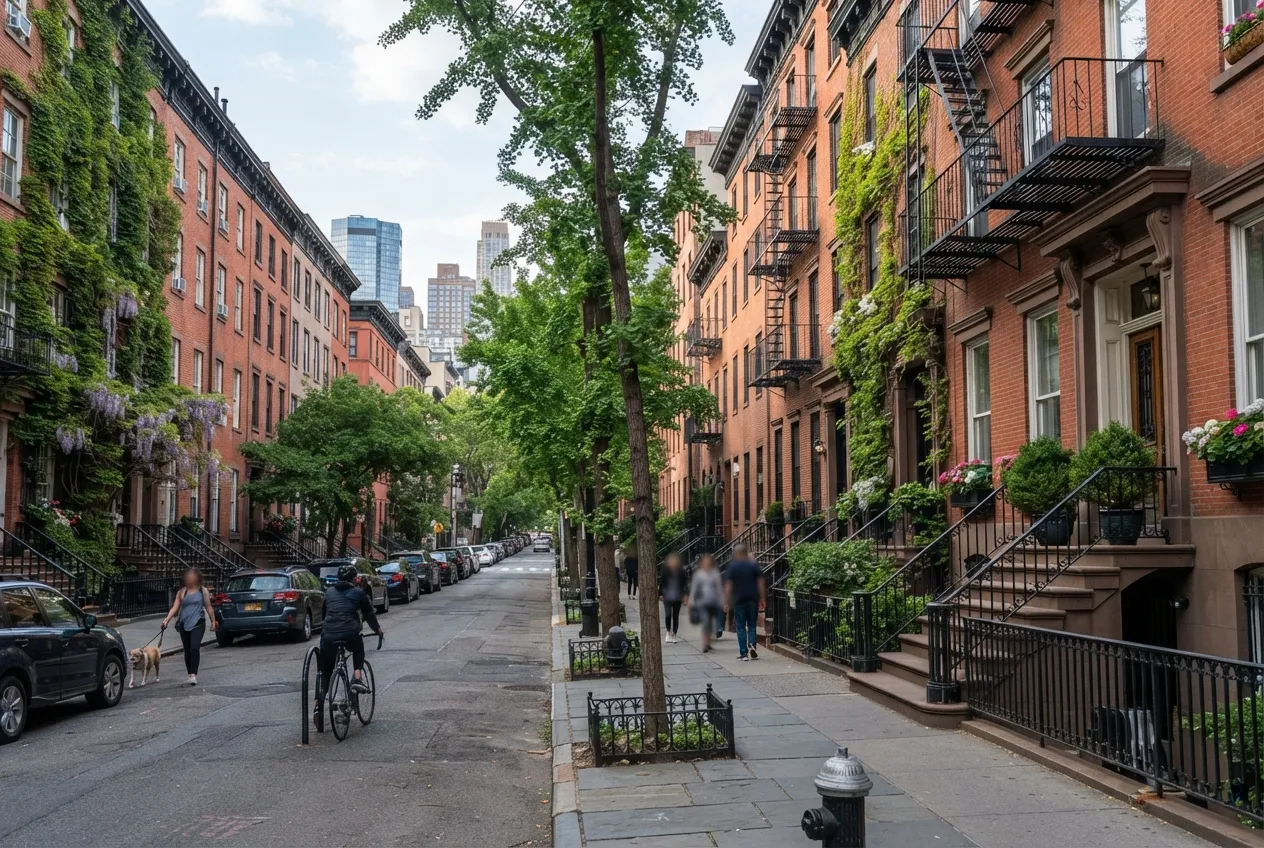
Greenwich Village has many working fireplaces in brownstones, rowhouses and pre-war apartment buildings. Many of them share old masonry chimneys with boilers or neighboring units. Nexora Chimney Services sends certified technicians from our office in Gramercy, about a mile northeast, to sweep and inspect chimneys throughout the Village. This page explains what a sweep involves in this kind of housing, when to schedule one, and what we look for in older Manhattan chimneys.
What a Chimney Sweep Covers in a Village Home
A sweep removes the soot and creosote that build up inside a flue each time you burn wood. Creosote is flammable. A thick layer can also narrow the flue, slow the draft and push smoke back into the room. In a Village townhouse or apartment, the fireplace may sit in a parlor or bedroom below several floors of masonry, so keeping that flue clear matters for both safety and comfort.
On a typical visit, our technician will:
- Cover the hearth and nearby floor with drop cloths and run a vacuum to contain dust
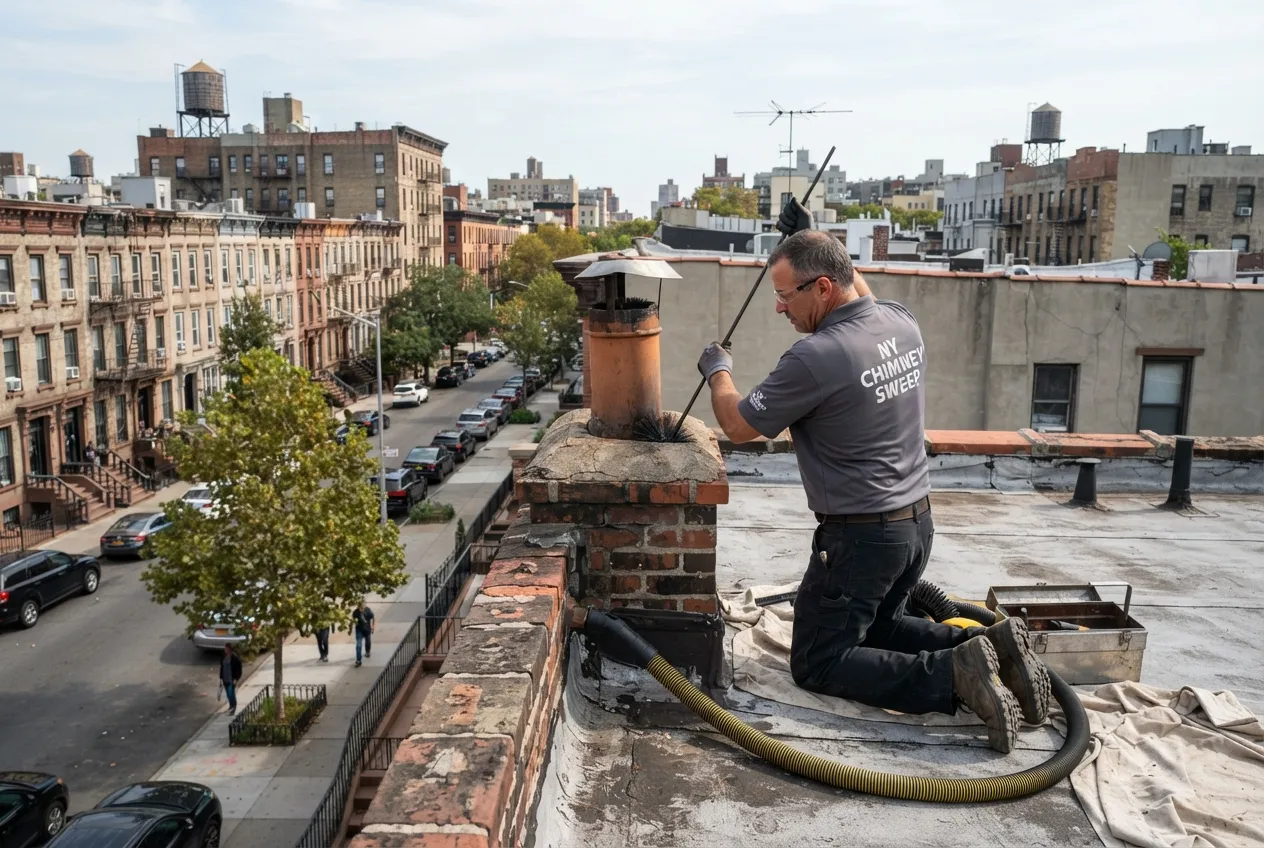
- Brush the flue from the firebox, the roof, or both, depending on access
- Clean the smoke chamber, smoke shelf and damper area, where debris tends to collect
- Check that the damper seals tightly and opens and closes smoothly
- Look for cracked flue tiles, missing mortar, animal nests and water stains
- Walk you through what we found, with photos where we can take them
What We See in Brownstones, Rowhouses and Pre-War Buildings
Much of the housing in Greenwich Village was built long before modern flue liners were common. Many older chimneys are unlined brick, or they have clay tile liners that have shifted or cracked over decades of use. Some fireplaces were originally sized for coal and draft poorly with wood. A single chimney stack can also hold several flues serving different floors or different units.
Because of that, we confirm which flue serves which fireplace before we start, so we sweep the right one and don't disturb a neighbor's. We also check the parts of the system you can't easily see from inside: the chimney crown, the cap, the flashing where the chimney meets the roof, and the brick at the top. Water coming in from above is a common source of damage in older masonry chimneys. It often shows up first as staining or a musty smell near the fireplace.
If a fireplace hasn't been used in years, we recommend an inspection before the first fire. Sealed-off or decorative fireplaces in older apartments can have blockages, broken dampers or gaps that were never meant to handle heat again.
When to Schedule a Sweep in Manhattan
The NFPA 211 standard calls for chimneys, fireplaces and vents to be inspected once a year. Whether you also need a full sweep depends on how often you burn and what the inspection finds, but a yearly inspection is the baseline.
New York City's heat season runs from October 1 through May 31. Boilers and fireplaces get their heaviest use in those months. Late summer and early fall are the easiest times to book and finish any repairs before the cold arrives. If you burn wood often through the winter, a second check in spring can catch buildup before it sits through the humid summer, when creosote tends to smell stronger.
Inspections come in three levels:
- Level 1: the routine check when nothing about the system has changed
- Level 2: needed when something changes, such as a new appliance or a switch in fuel, or when the home is being sold
- Level 3: used when a suspected hidden hazard can only be reached by opening part of the chimney or the building
Time for your annual chimney check?
Oil-to-Gas Conversions and Chimney Liners
Many Village buildings have boilers that vent through the same masonry chimneys as their fireplaces. When a New York City building converts its boiler from oil to gas, the chimney has to be evaluated as part of that work. A new liner is often needed, because gas exhaust produces acidic condensate that can corrode a masonry flue over time.
If your building has converted or plans to, let us know when you book. We'll note which flue served the boiler, look for signs of deterioration, and tell you plainly whether we think a liner or further evaluation is needed.
Getting Ready for Your Appointment
Working in a dense neighborhood takes some planning. If roof access goes through a shared stairwell or hatch, check with your building's super or management ahead of time. Please stop using the fireplace at least a day before the visit so the firebox and flue are cool. Move furniture, rugs and anything fragile a few feet back from the hearth.
We also serve the West Village, Gramercy, East Village, Midtown South and Flatiron. If a neighbor or another unit in your building needs a sweep, ask us about scheduling both visits together.
More services in Greenwich Village
- Chimney Inspection in Greenwich Village
- Chimney Repair in Greenwich Village
- Air Duct Cleaning in Greenwich Village
- Chimney Liner Installation in Greenwich Village