The short answer
Most Greenwich Village chimney problems come from aging masonry, failed flashing, cracked crowns or flue liners that no longer suit the fuel being burned. Nexora inspects the chimney, shows you what we found, and repairs the specific problem, from repointing and crown work to relining after an oil-to-gas boiler conversion.
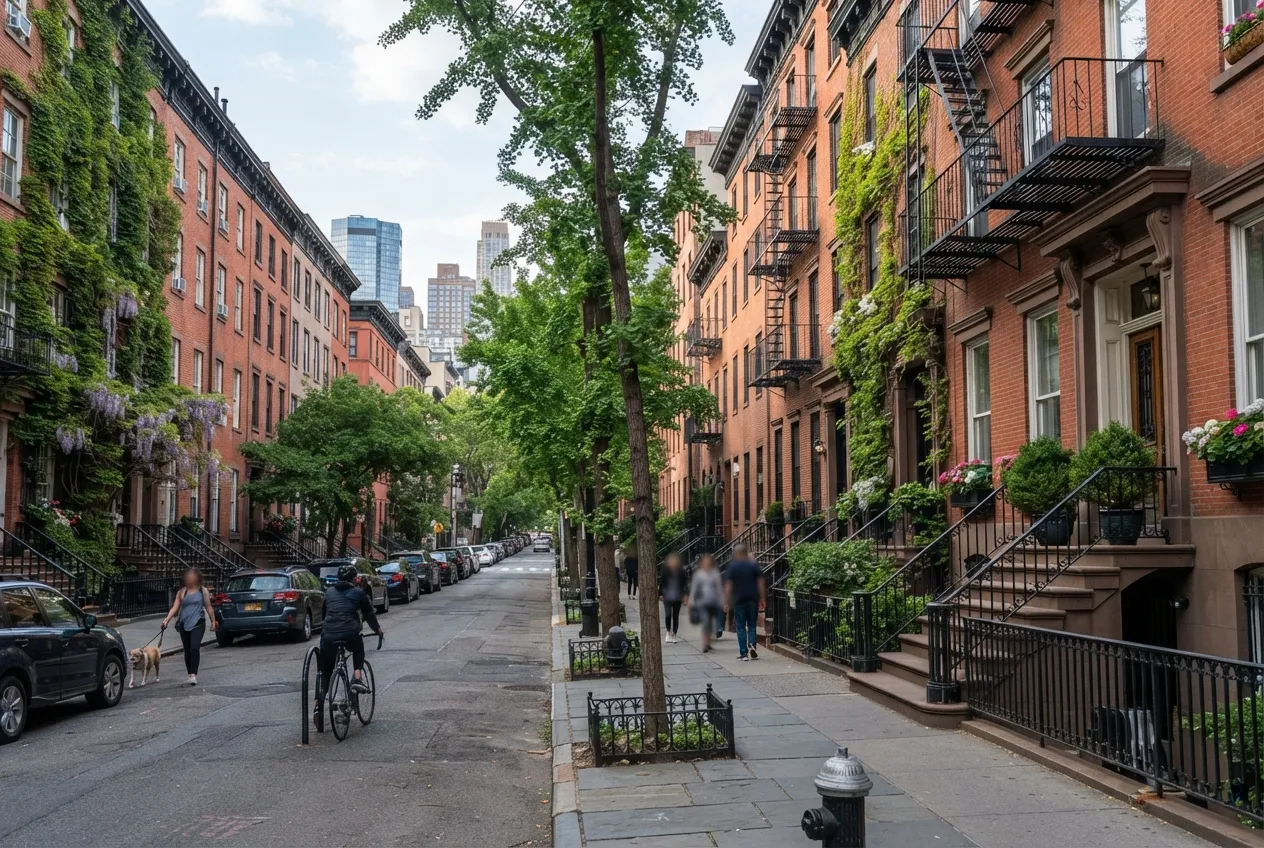
Greenwich Village has a lot of older masonry: rowhouses, brownstones, walk-ups and pre-war apartment buildings, many with chimneys that have been through decades of weather, fuel changes and patch jobs. Nexora Chimney Services repairs those chimneys from our office in Gramercy, about a mile northeast of the Village. Our certified technicians find out what is actually wrong, explain it in plain terms, and fix it so the chimney vents safely and keeps water out of your walls and ceilings.
Common chimney problems in Village rowhouses and pre-war buildings
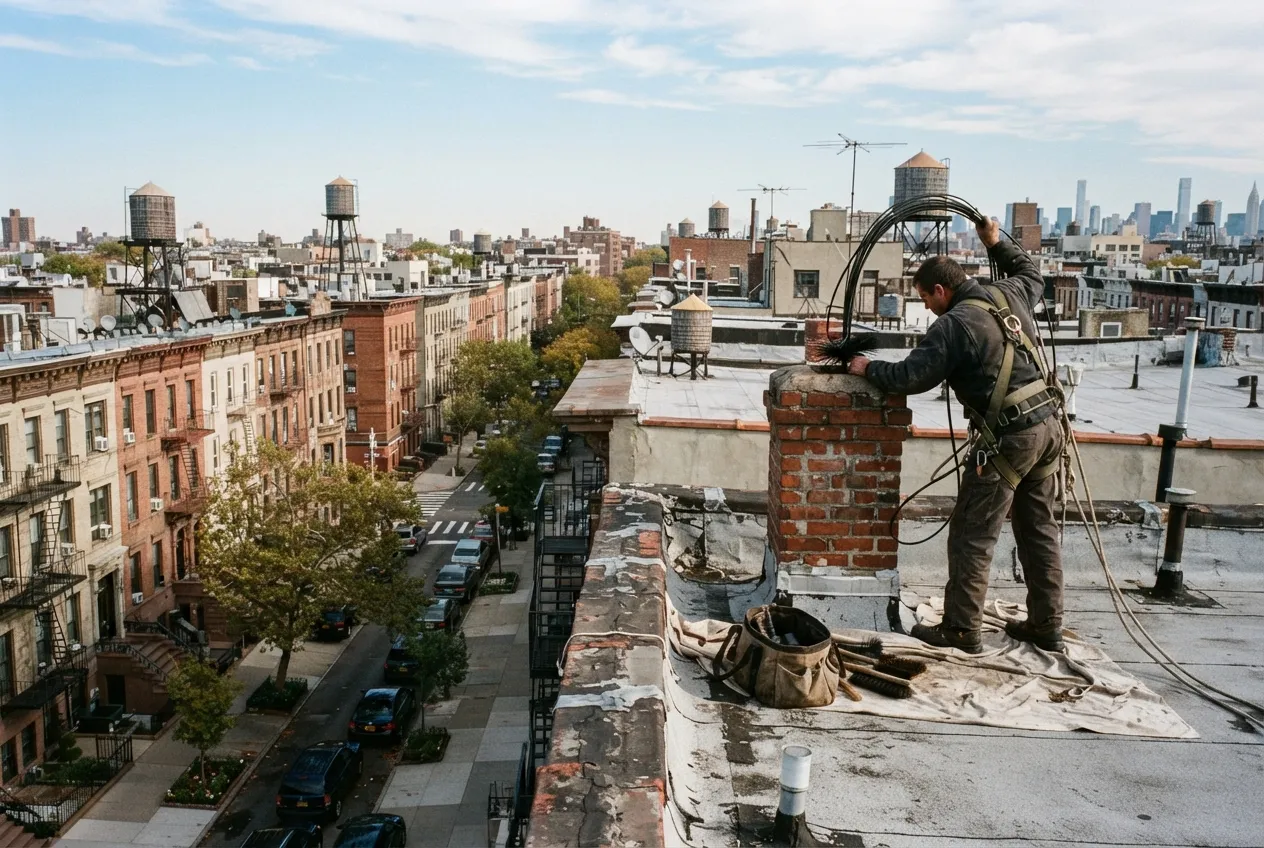
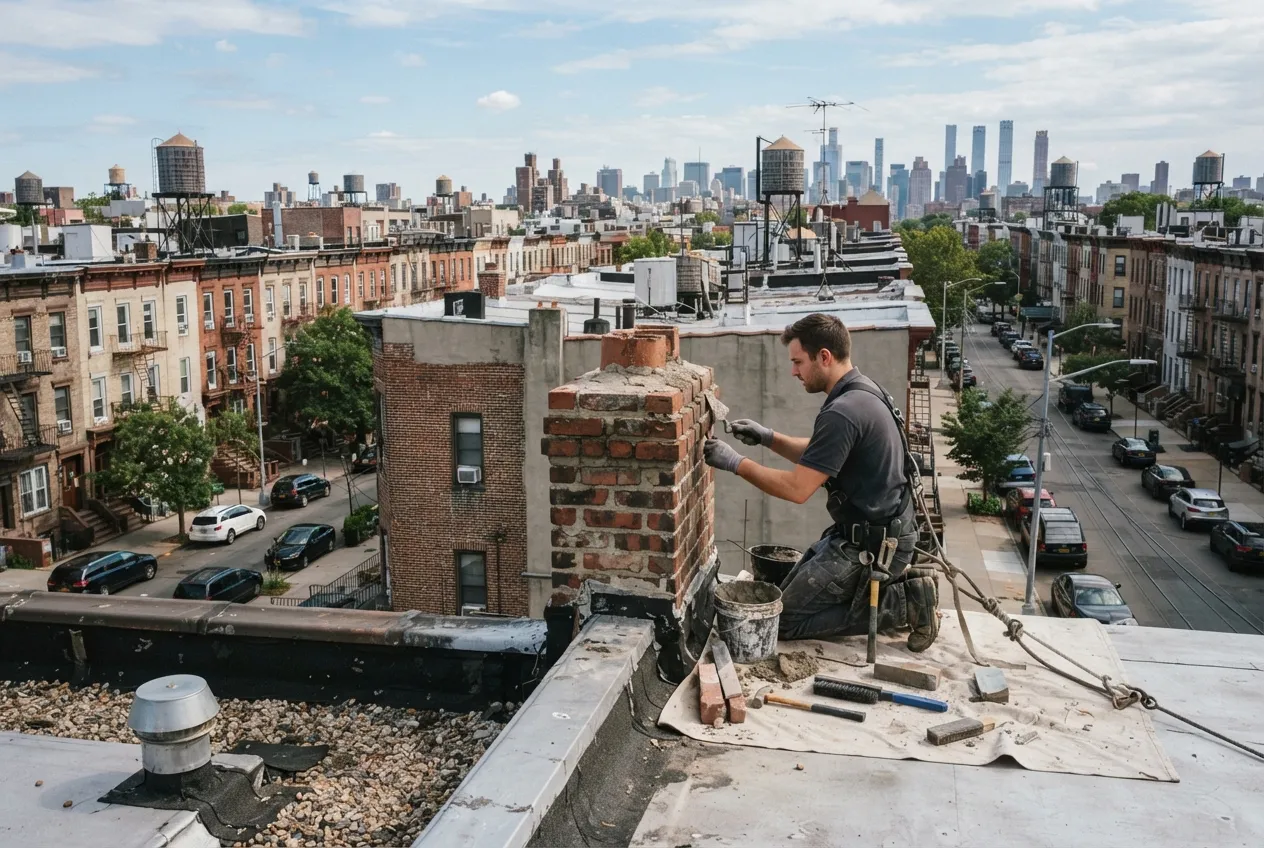
Chimneys on older Manhattan buildings tend to fail in predictable places. The top of the stack takes the most weather, so crowns crack and mortar joints wash out first. Where the chimney passes through the roof, flashing pulls loose or gets sealed over with tar that eventually splits. Inside, clay tile liners can crack or shift, and older unlined flues may have deteriorated without anyone noticing.
Many homeowners first notice a problem as a stain on a ceiling or wall next to the chimney, crumbling brick on a roof deck, a musty smell from a fireplace in humid weather, or bits of tile or mortar falling into the firebox.
- Cracked or crumbling chimney crowns
- Loose, missing or eroded mortar joints
- Leaking or failed roof flashing
- Spalling brick from water and freeze-thaw damage
- Cracked, shifted or missing flue liners
- Damaged or missing chimney caps and rain covers
- Worn fireplace dampers and damaged firebox brick
Oil-to-gas conversions and flue liners
When a New York City building converts its boiler from oil to gas, the chimney has to be evaluated as part of the work. A new liner is often needed, because gas exhaust produces acidic condensate that can corrode a masonry flue that was built for oil.
If your building has recently converted, or is planning to, we can inspect the flue, tell you whether the existing chimney is suitable, and install a liner sized for the new appliance. Getting this right matters in a neighborhood where so many buildings share walls, roofs and venting with their neighbors.
How we approach a repair
Every repair starts with an inspection, because the visible symptom is often not the actual cause. A water stain can come from the crown, the flashing, the brick itself or a missing cap, and each needs a different fix. The NFPA 211 standard describes three inspection levels. A Level 1 inspection fits when nothing has changed. A Level 2 inspection applies when the system changes, such as a new appliance or a switch of fuel, or when the home is sold. A Level 3 inspection is used when a hidden hazard can only be reached by opening part of the chimney or building.
After the inspection, we walk you through what we found, with photos when that helps, and explain which repairs are urgent and which can be planned. Then we do the work. On attached rowhouses and multi-unit buildings, we can coordinate with your building manager or neighbors when roof access or shared flues are involved.
- Inspection at the level the situation calls for
- A clear explanation of the problem and the repair options
- Repairs matched to the existing masonry and the appliance you use
- A final check that the chimney drafts and drains properly
Time for your annual chimney check?
Timing repairs around the heating season
New York City's heat season runs from October 1 through May 31, when building owners must keep apartments heated to the city's minimum temperatures. A chimney problem that takes a boiler offline in January is far more disruptive than one fixed in late summer. If you own a Village building with tenants, or simply rely on your fireplace or boiler through the winter, the months before October are the easiest time to schedule inspection and repair.
Annual inspection, as NFPA 211 calls for, is the simplest way to catch small problems like a hairline crown crack or loose flashing before they turn into water damage or a venting hazard.
Serving Greenwich Village and nearby neighborhoods
Because we are based in Gramercy, Greenwich Village is close to home for us. We also repair chimneys in the West Village, East Village, Gramercy, Flatiron and Midtown South, where the housing is similarly varied: brownstones, rowhouses, walk-ups and larger pre-war buildings with their own chimney needs.
More services in Greenwich Village
- Chimney Sweep in Greenwich Village
- Chimney Inspection in Greenwich Village
- Air Duct Cleaning in Greenwich Village
- Chimney Liner Installation in Greenwich Village