The short answer
A new chimney liner protects your masonry and keeps exhaust moving safely out of your home. In Greenwich Village it is most often needed when an old clay or unlined flue has deteriorated, or when a building converts its boiler from oil to gas. We inspect the flue first, then install a liner sized to your appliance.
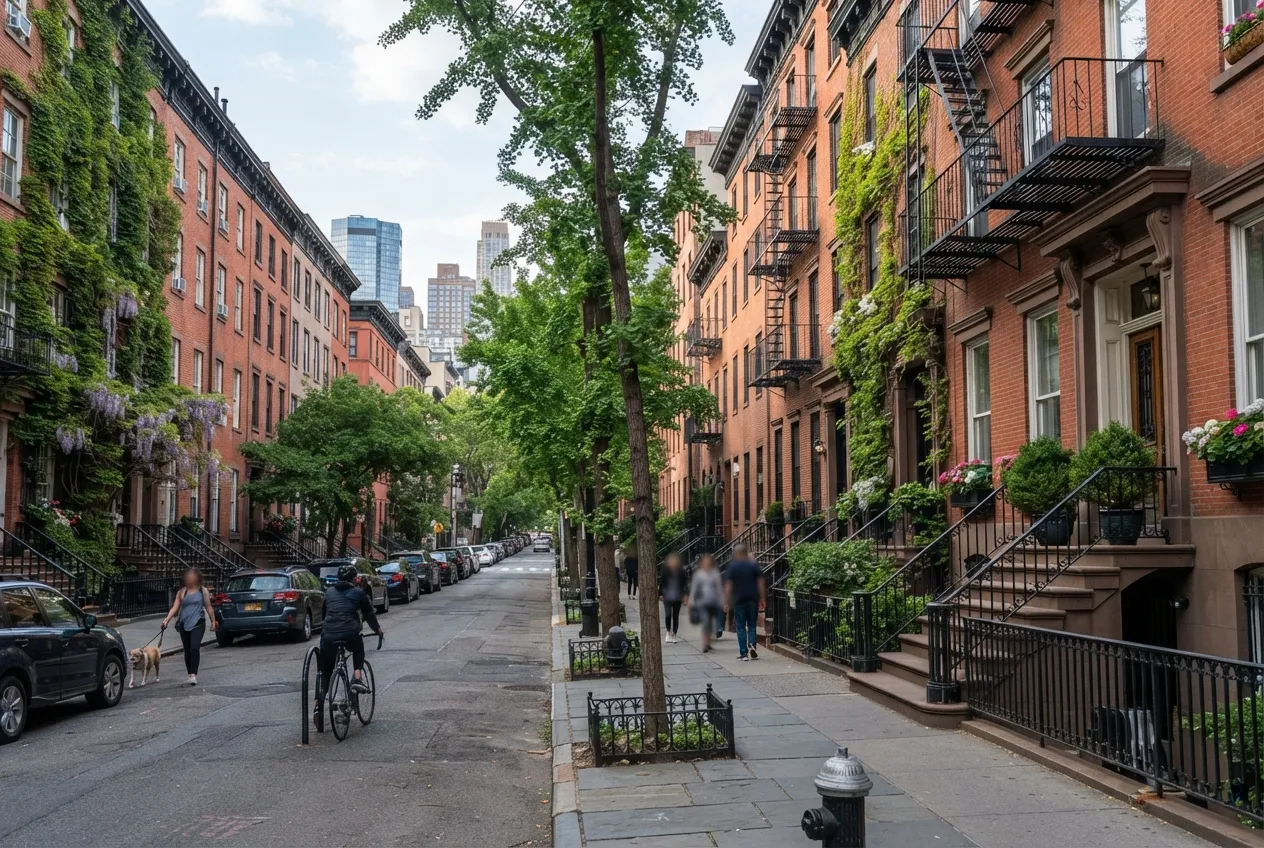
Many Greenwich Village homes were built long before today's heating equipment existed. Brownstones, rowhouses, and pre-war apartment buildings often still rely on the original masonry flue, which may be unlined or lined with clay tile that has cracked over many decades. A chimney liner is the protective channel inside the flue. It carries smoke and exhaust gases out of the house and keeps heat and corrosive byproducts away from the brick, mortar, and nearby wood framing. Nexora Chimney Services installs liners for wood-burning fireplaces, boilers, furnaces, and water heaters throughout the neighborhood. Our office in Gramercy is about a mile away. Our certified technicians start by looking at the flue you actually have, then recommend a liner that fits both the chimney and the appliance connected to it.
When a Greenwich Village Chimney Needs a New Liner
Older masonry chimneys take a lot of wear. Decades of freeze-and-thaw cycles, heat, and acidic exhaust break down mortar joints and clay flue tiles from the inside, often where you can't see it. A liner problem usually shows up during an inspection rather than as something obvious from the street or the living room.
These are the signs that usually lead us to recommend a liner:
- Cracked, shifted, or missing clay flue tiles found during an inspection
- An unlined flue, which is common in older brownstones and rowhouses
- Crumbling mortar or flakes of masonry falling into the firebox or boiler cleanout
- Water stains, white staining on exterior brick, or damp odors near the chimney
- A new or replaced heating appliance that needs a flue of a different size
- A boiler conversion from oil to gas
Oil-to-Gas Conversions in Manhattan Buildings
Many pre-war apartment buildings and townhouses in the Village have moved, or are moving, from oil heat to gas. When a New York City building converts its boiler from oil to gas, the chimney has to be evaluated as part of that work. A new liner is often needed. Gas exhaust produces acidic condensate, and over time it can corrode a masonry flue that was built for oil.
We work alongside the contractor handling the boiler and with building management or the co-op board. The goal is to make the chimney side of the conversion ready when the new equipment is. We look at the existing flue, report what we find, and size the liner to the new appliance so the system vents properly.
Choosing the Right Liner for Your Flue
No single liner fits every chimney. The right choice depends on what is burning, how the chimney is built, and the shape and condition of the existing flue. Here are the common options we discuss with homeowners:
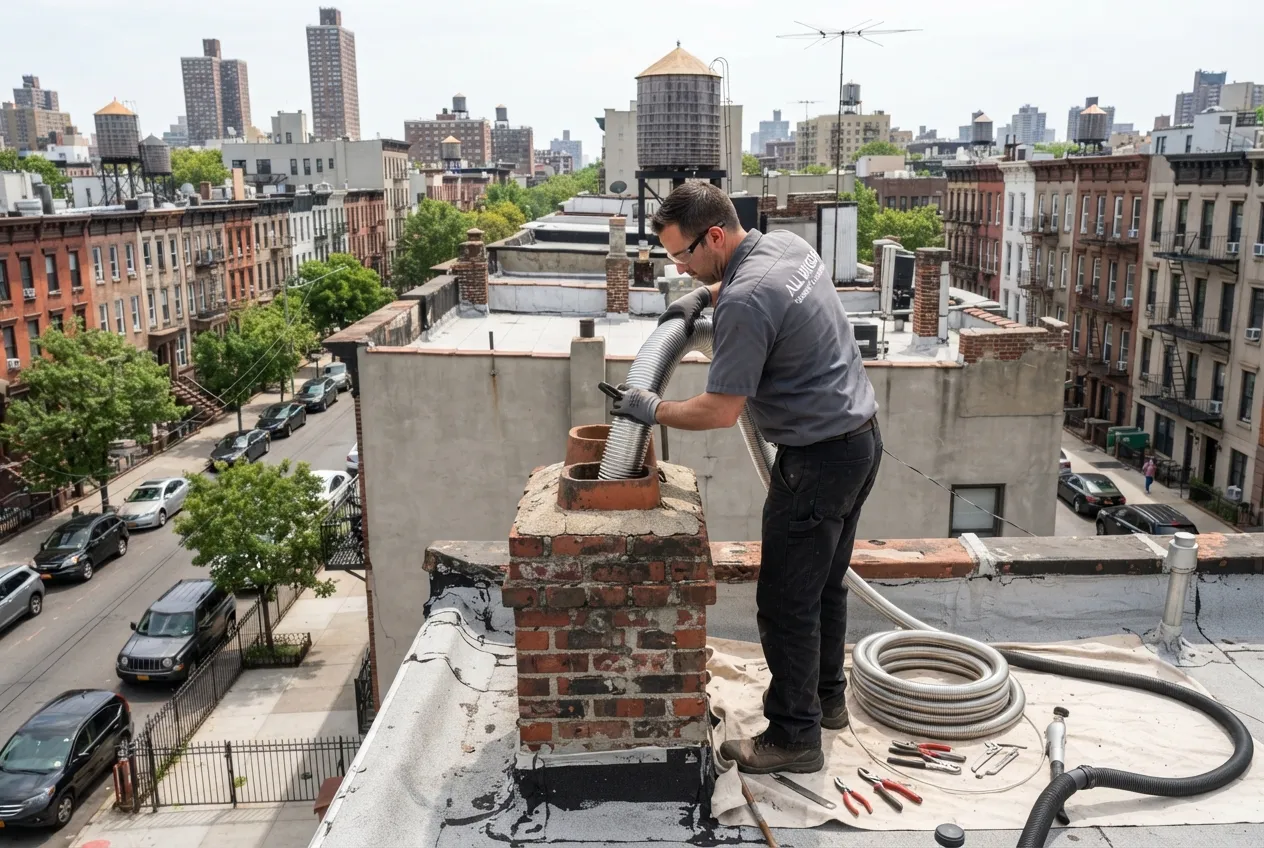
- Stainless steel liners: a frequent choice for gas and oil appliances and for many fireplaces. They work well in flues that bend or have offsets, which is common in older row construction.
- Cast-in-place liners: a mortar-like material formed inside the existing flue. This can make sense when the masonry needs added support.
- Clay tile replacement: sometimes possible in a straight, accessible chimney, though it usually involves more masonry work.
Time for your annual chimney check?
How Liner Installation Works
Every job starts with an inspection. Under the NFPA 211 standard, a Level 2 inspection applies when a system changes, such as a new appliance or a fuel switch. A Level 3 inspection is used when a hidden problem can only be reached by opening part of the chimney or building. We explain which level fits your situation before any work begins.
A typical installation follows these steps:
- Inspect the flue, often with a camera, and document its condition
- Confirm the appliance's venting needs and size the liner to match
- Clean the flue and remove loose or broken material
- Install the liner, along with insulation where it's called for
- Connect the liner at the appliance and fit a proper top and cap
- Walk you or your building contact through what was done
Planning Around Heat Season
New York City's heat season runs from October 1 through May 31. During those months, building owners must keep apartments heated to the city's minimum temperatures. If your building's boiler shares the chimney being relined, that matters. Scheduling liner work in late spring or summer avoids taking heat offline when tenants depend on it.
For single-family townhouses and fireplace-only work, timing is more flexible, but booking ahead of fall is still easier. Besides Greenwich Village, we serve the West Village, Gramercy, East Village, Midtown South, and Flatiron.
More services in Greenwich Village
- Chimney Sweep in Greenwich Village
- Chimney Inspection in Greenwich Village
- Chimney Repair in Greenwich Village
- Air Duct Cleaning in Greenwich Village