The short answer
A chimney sweep clears soot, creosote and debris from your flue so smoke and exhaust leave the building safely. Lower East Side homeowners and building owners should have chimneys inspected once a year under NFPA 211 and swept whenever that inspection finds buildup. Fall, before heat season starts on October 1, is the most practical time to schedule.
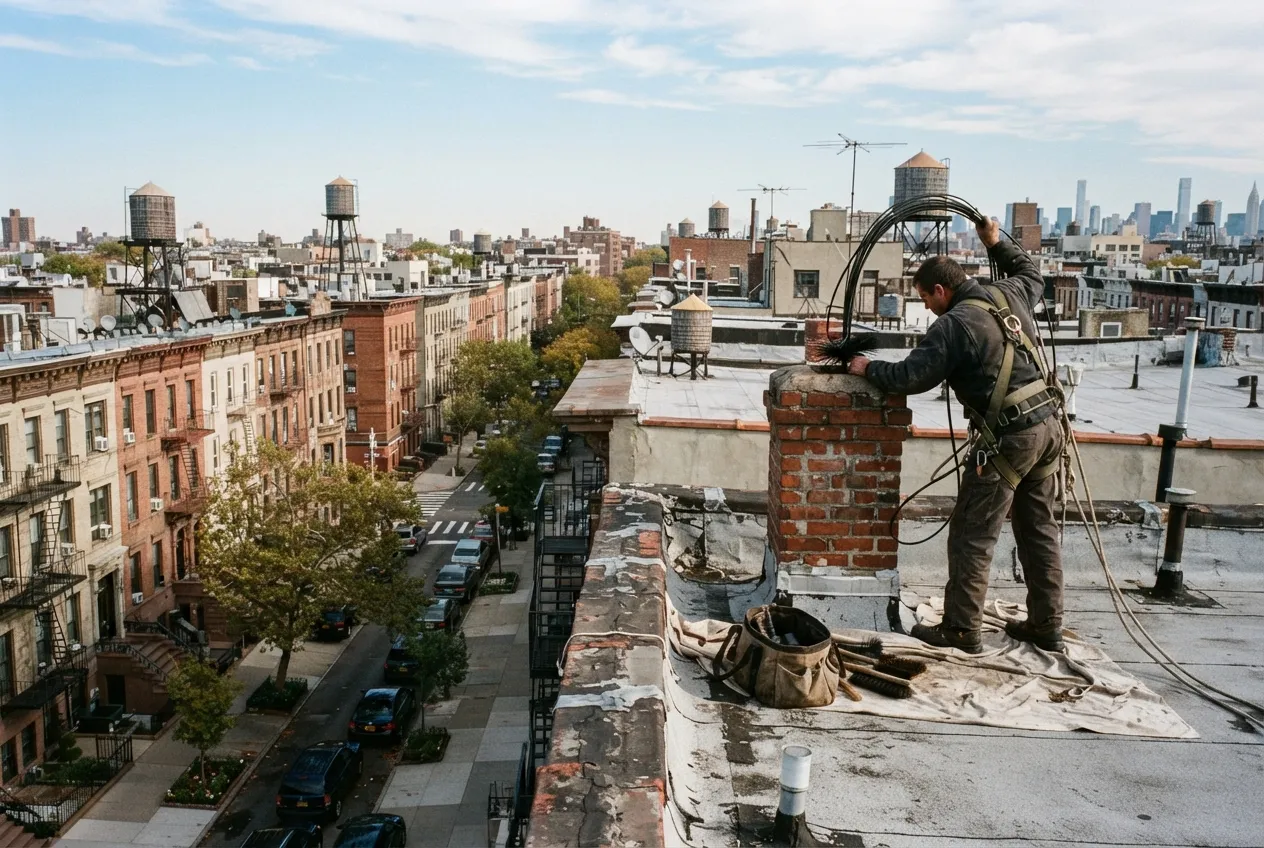
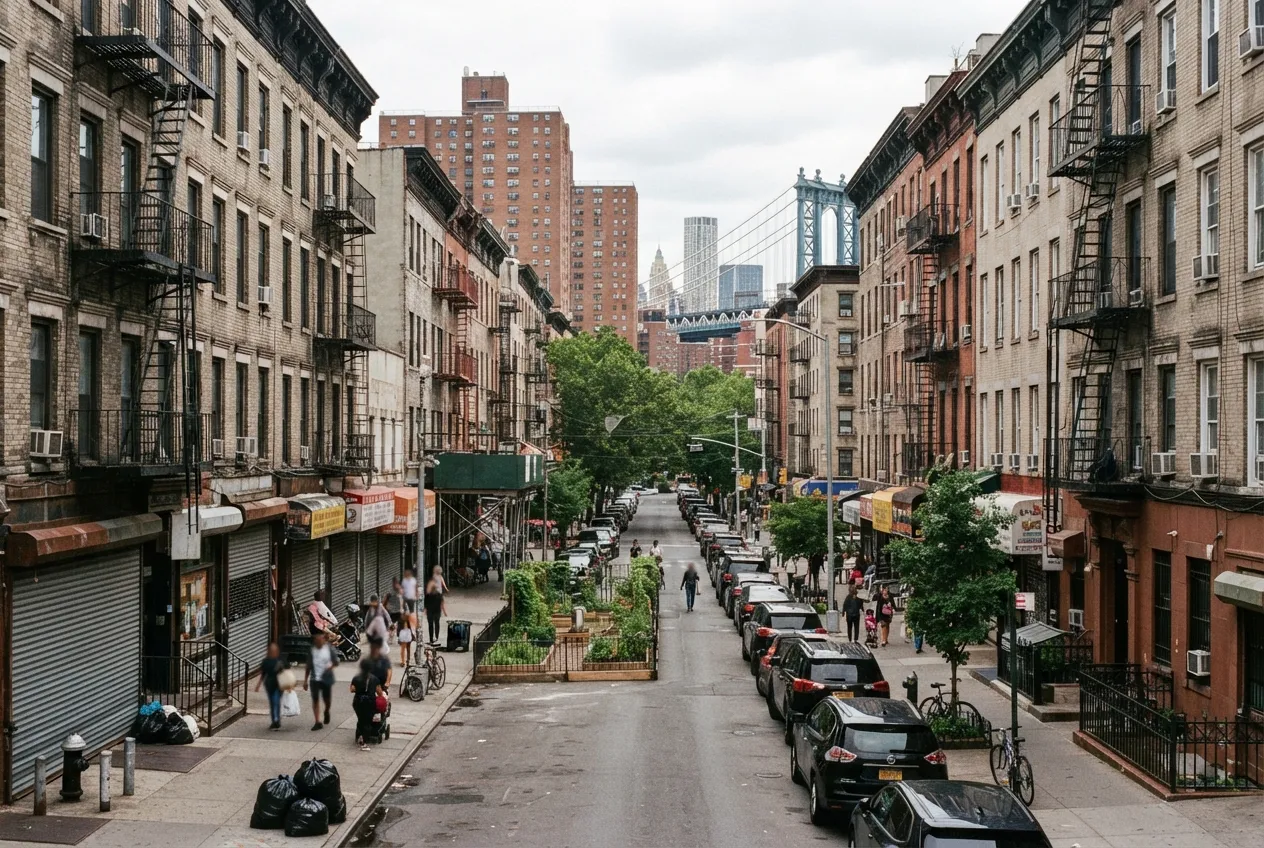
Many Lower East Side buildings still rely on chimneys, from tenement-era walk-ups and pre-war apartment buildings to rowhouses with working or long-closed fireplaces. Nexora Chimney Services sends certified technicians from our Gramercy office, about a mile north, to sweep fireplace and boiler flues throughout ZIP code 10002. A sweep removes soot, creosote and debris that narrow the flue and can catch fire. It also gives us a close look at the liner, damper and crown so you know where the system stands before you light a fire or the building's heat comes on.
Why Lower East Side Chimneys Need Regular Sweeping
Much of the neighborhood's housing is older masonry construction. Many of these chimneys have served several generations of heating equipment, from coal to oil to gas, and the flues often carry decades of residue. Fireplaces that sat sealed for years can also collect nesting material, fallen mortar and debris from the top of the stack.
In a wood-burning fireplace, creosote is the main concern. It builds up in layers on the flue walls and can ignite if a hot fire reaches it. In a boiler or furnace flue, the risk is different. Soot and debris can partly block the flue and push exhaust back into the building. A sweep addresses both by clearing the passage so it draws properly.
What Our Chimney Sweep Includes
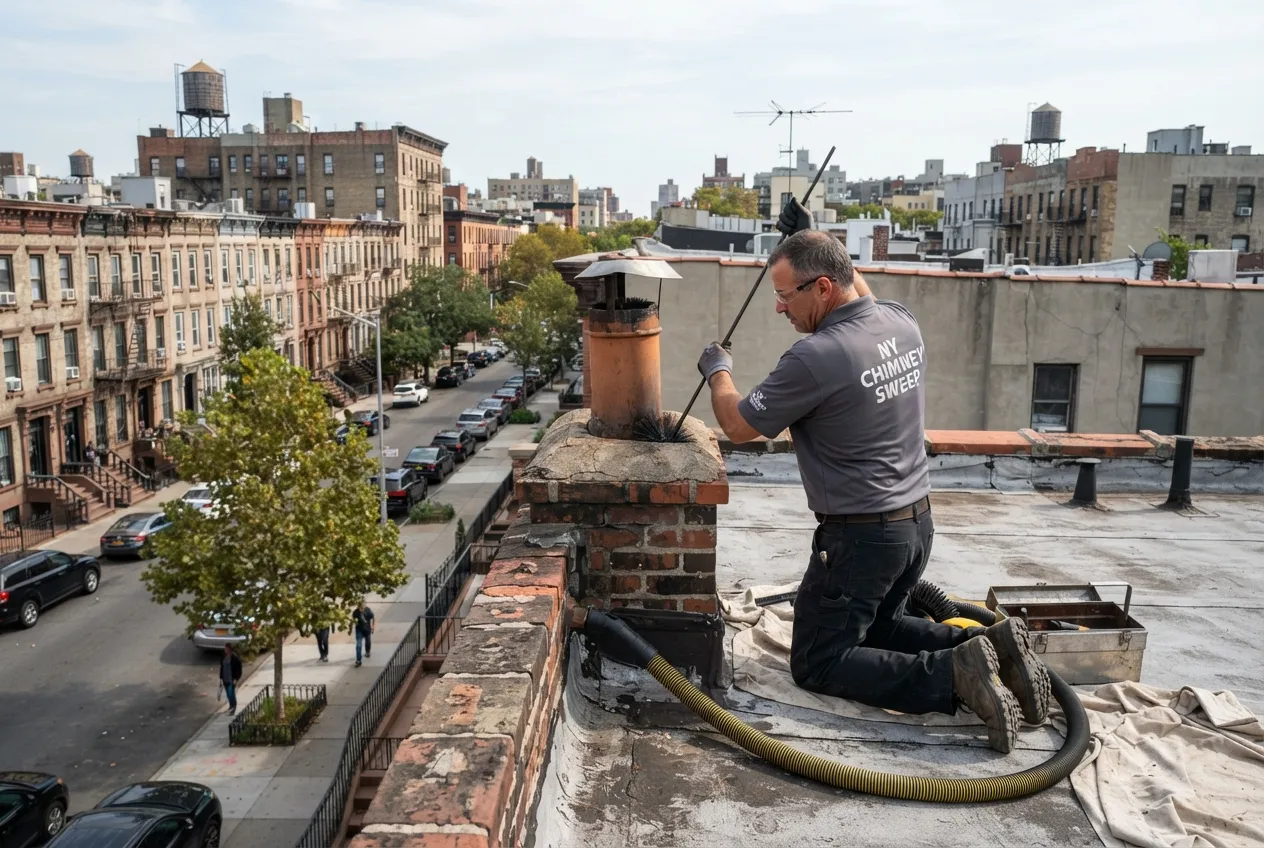
We protect the area around the fireplace or appliance, then use brushes and vacuum equipment sized to your flue to remove buildup without spreading soot through the apartment or hallway. Our technicians check each part of the system as they work and tell you plainly what they found.
- Brushing the flue from the firebox up or from the roof down, depending on access
- Cleaning the smoke chamber, smoke shelf and damper area
- Removing loose debris, nesting material and fallen masonry
- Checking the damper for smooth operation and a good seal
- Looking for cracked flue tiles, gaps in the liner and deteriorated mortar joints
- Noting the condition of the crown and cap where roof access allows
- A clear explanation of any problems and what we recommend next
Inspections and the NFPA 211 Standard
The NFPA 211 standard calls for chimneys, fireplaces and vents to be inspected once a year. A sweep and an inspection often happen on the same visit, because cleaning the flue makes it much easier to see its condition.
Inspections come in three levels. A Level 1 inspection fits most annual visits when nothing about the system has changed. A Level 2 inspection applies when the system changes, for example when a new appliance goes in or the fuel is switched, and also when a home is sold. That matters for co-op and condo buyers in the neighborhood. A Level 3 inspection is needed only when a suspected hidden hazard has to be reached by opening part of the chimney or building.
Time for your annual chimney check?
Boiler Flues, Oil-to-Gas Conversions and Heat Season
Many apartment buildings and rowhouses here vent a central boiler through a masonry chimney. When a New York City building converts its boiler from oil to gas, the chimney has to be evaluated as part of the work. A new liner is often needed, because gas exhaust produces acidic condensate that can corrode a masonry flue. A sweep before or during a conversion removes old oil soot so the flue can be assessed accurately.
Timing also matters. New York City's heat season runs from October 1 through May 31, and building owners must keep apartments heated to the city's minimum temperatures during those months. Scheduling the sweep in late summer or early fall means any liner or flue problems can be handled before the boiler has to run steadily.
Scheduling a Sweep in the Lower East Side
We work in walk-ups, elevator buildings and single-family rowhouses throughout the Lower East Side. Before the visit, let us know how roof access works in your building and whether a super or managing agent needs to be involved. That helps the appointment go smoothly. Our crews also serve nearby East Village, Stuyvesant Town, Peter Cooper Village, Greenwich Village and Gramercy, so we are close by when you need a follow-up visit.
More services in Lower East Side
- Chimney Inspection in Lower East Side
- Chimney Repair in Lower East Side
- Air Duct Cleaning in Lower East Side
- Chimney Liner Installation in Lower East Side