The short answer
A chimney liner is a sealed, correctly sized channel inside your chimney that carries smoke and exhaust safely out of the house. In Murray Hill, liners are most often needed when old clay tiles have cracked, when a flue was never lined, or when a building converts its boiler from oil to gas.
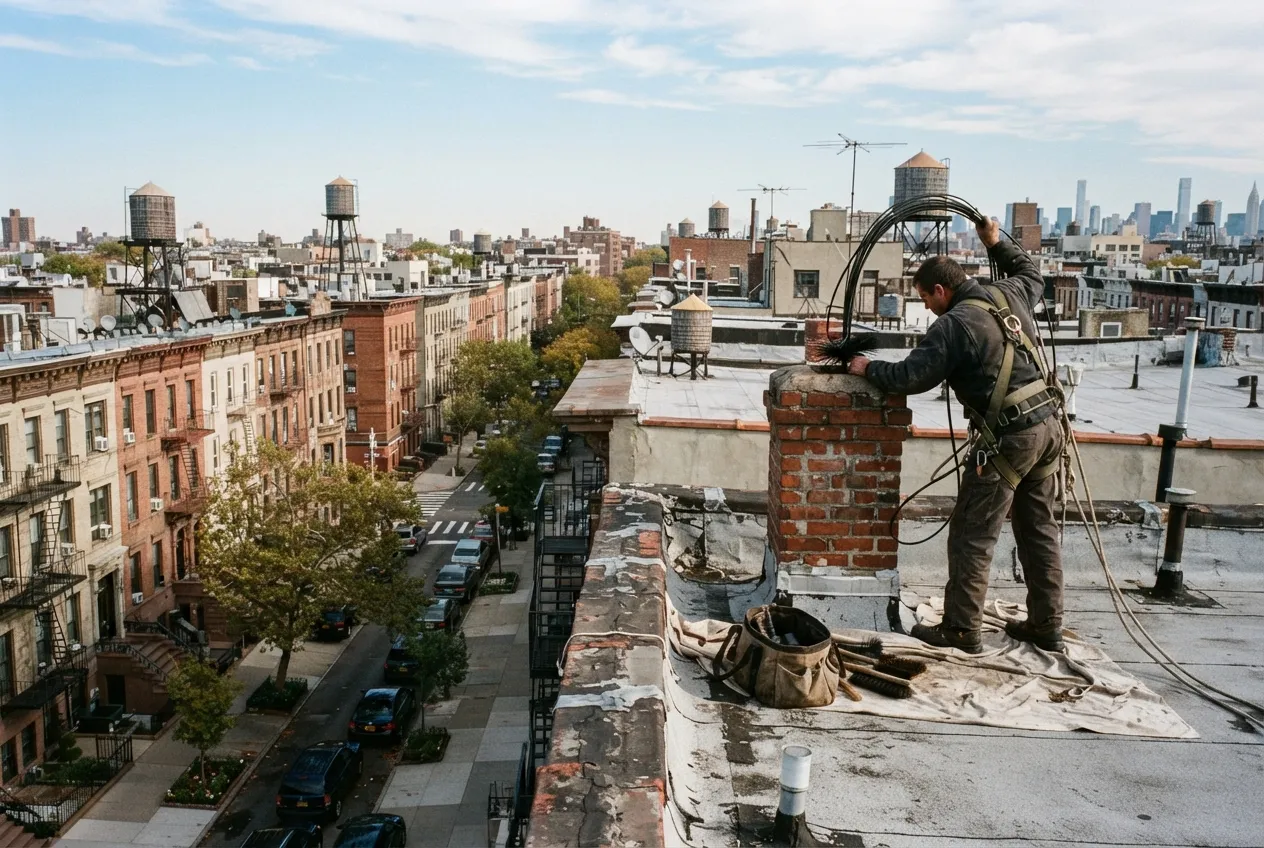
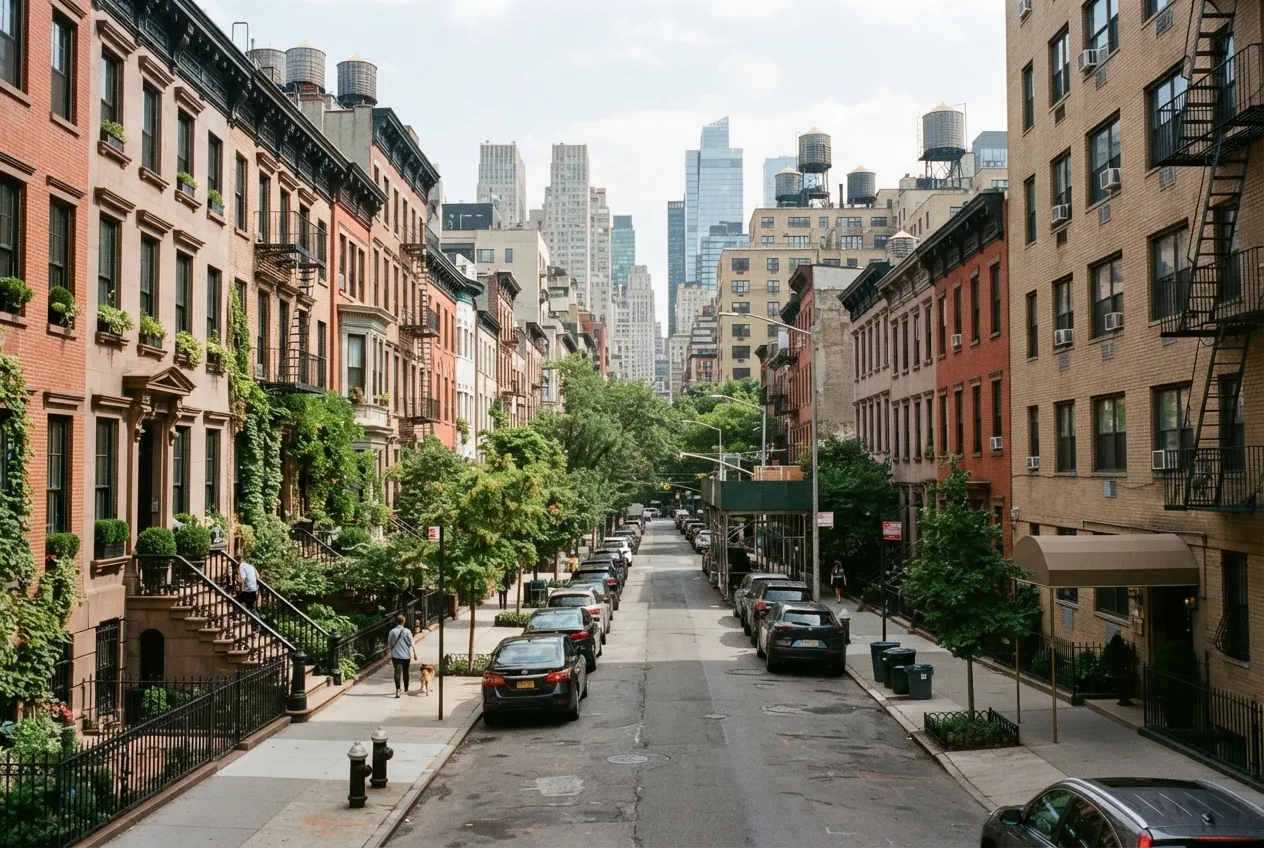
Many homes in Murray Hill still vent through masonry chimneys built long before today's furnaces, boilers, and gas fireplaces existed. Brownstones, rowhouses, and pre-war apartment buildings often have original clay tile flues, or no liner at all, behind the brick. Over time that masonry cracks, joints open up, and the flue may no longer match the appliance connected to it. Nexora Chimney Services installs chimney liners for homes and buildings in ZIP codes 10016 and 10168. Our office is in Gramercy, about a mile southwest, so Murray Hill is close to home for our certified technicians.
Why Older Murray Hill Chimneys Often Need Relining
A liner protects the brick and the surrounding structure from heat, smoke, and corrosive exhaust. When the liner fails, hot gases and condensation reach the masonry directly. That can speed up mortar decay, let carbon monoxide find its way into living space through cracks, and allow heat to travel toward wood framing inside walls.
Chimneys in older row buildings can also share walls with neighbors, so a damaged flue is not only your concern. Relining restores a continuous, sealed path from the appliance to the top of the chimney.
- Cracked, shifted, or missing clay flue tiles found during an inspection
- Pieces of tile or crumbling mortar collecting at the base of the chimney
- Water stains, white staining, or spalling brick on the chimney or nearby walls
- A new boiler, furnace, water heater, or insert that the existing flue was not sized for
- Smoke or exhaust odors indoors when an appliance is running
Oil-to-Gas Conversions and Liners
Oil-to-gas boiler conversions are one of the most common reasons for relining in Manhattan. When a New York City building converts its boiler from oil to gas, the chimney has to be evaluated as part of the work. A new liner is often needed because gas exhaust produces acidic condensate that can corrode a masonry flue.
If your building is planning a conversion, we can evaluate the chimney early so the liner is part of the plan rather than a surprise late in the project. We size the liner to the new equipment, since a flue that is too large for a modern, efficient boiler can stay cool, allow condensation to build up, and draft poorly.
Choosing the Right Liner for the Appliance
There is no single liner that suits every chimney. The right choice depends on the fuel, the appliance's venting requirements, the size and shape of the existing flue, and how straight or offset the chimney runs through the building.
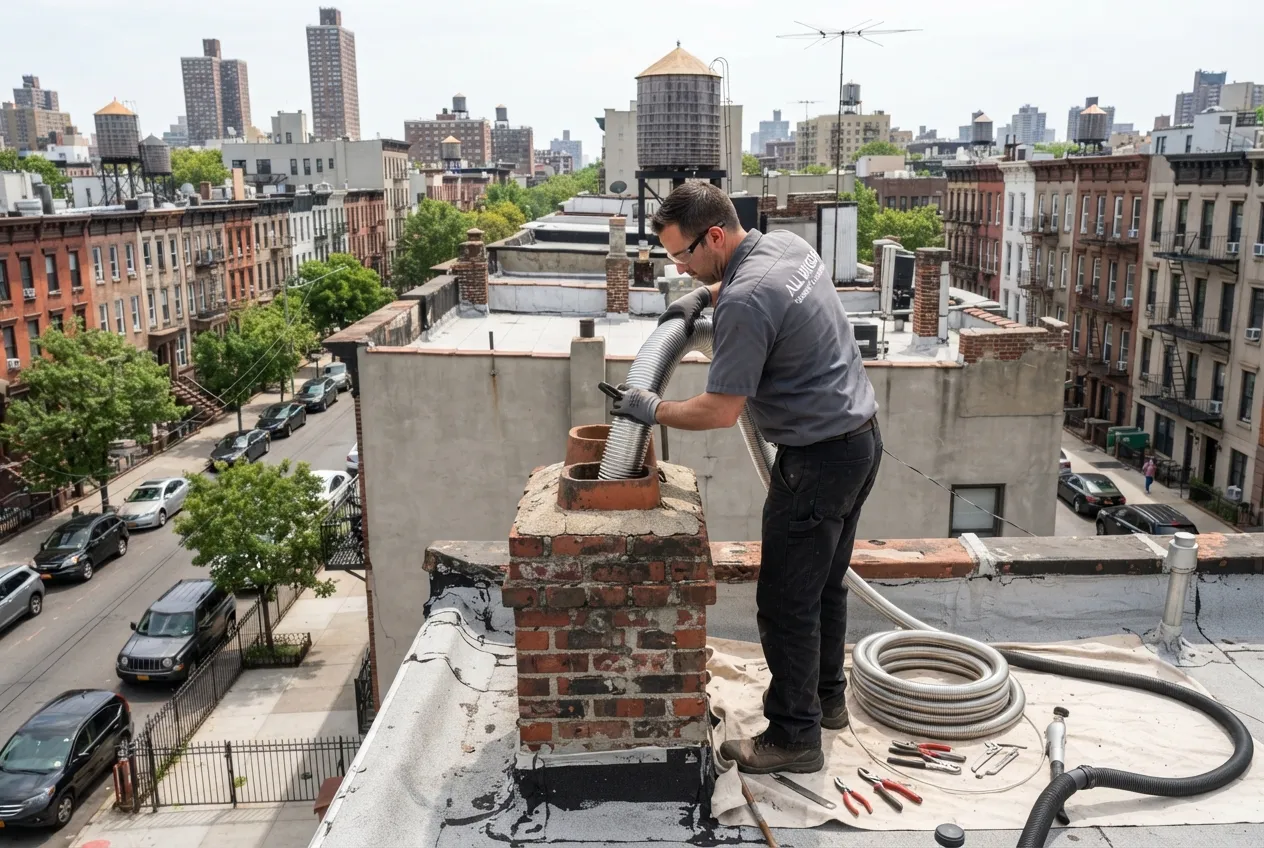
Stainless steel liners are widely used for gas and oil appliances and for many wood-burning inserts because they handle heat and corrosive exhaust well and can be fitted into flues that bend. We match the liner diameter and material to the manufacturer's specifications for the appliance it will serve, and we explain the options before any work begins.
Time for your annual chimney check?
What Liner Installation Involves
The NFPA 211 standard calls for chimneys, fireplaces, and vents to be inspected once a year, and it calls for a more detailed Level 2 inspection when the system changes, such as a new appliance or a switch of fuel. That is usually where a relining job starts. If a hidden problem has to be reached by opening part of the chimney or building, a Level 3 inspection may be needed.
In apartment buildings and co-ops, we work with building management on roof access, scheduling, and any building rules.
- Inspect the chimney and record the condition of the existing flue
- Measure the flue and confirm the appliance's venting needs
- Clean the chimney and remove loose or broken tile where required
- Install the liner from the roof and connect it to the appliance
- Fit a top plate and chimney cap to keep out rain and animals
- Check draft and the appliance connection before we leave
Timing Your Project Around Heat Season
New York City's heat season runs from October 1 through May 31, when building owners must keep apartments heated to the city's minimum temperatures. Relining a chimney that serves a boiler means that boiler may need to be off for part of the work, so late spring and summer are the easiest times to schedule. If a liner problem turns up in the middle of winter, we will talk through how to keep downtime as short as possible.
Besides Murray Hill, we install chimney liners in Kips Bay, Gramercy, Midtown South, Flatiron, and Union Square.
More services in Murray Hill
- Chimney Sweep in Murray Hill
- Chimney Inspection in Murray Hill
- Chimney Repair in Murray Hill
- Air Duct Cleaning in Murray Hill