The short answer
If your East Village building is switching its boiler from oil to gas, or an inspection finds a damaged or undersized flue, you likely need a new chimney liner. Nexora's certified technicians inspect the chimney first, size the liner to your appliance, and install it with as little disruption to residents as possible.
Many East Village buildings went up long before modern gas boilers and high-efficiency water heaters existed, and their chimneys were not built with today's exhaust in mind. A chimney liner is the protective channel inside the flue that carries smoke and combustion gases up and out while shielding the surrounding masonry. When that liner is cracked, missing, or the wrong size for the appliance it serves, a new one is usually the fix. Nexora Chimney Services installs liners in rowhouses, brownstones, pre-war walk-ups, and larger apartment buildings across ZIP codes 10003 and 10009, working from our office in Gramercy about a mile north.
Why East Village Chimneys Often Need a New Liner
Older East Village chimneys are typically either unlined brick or lined with clay tiles that have been exposed to decades of heat, moisture, and freeze-thaw cycles. Over time, tiles crack, mortar joints open up, and pieces can fall into the flue. Those gaps let heat and exhaust reach the brick and, in some cases, nearby wood framing or neighboring units.
Fuel conversions are another common reason. When a New York City building converts its boiler from oil to gas, the chimney has to be evaluated as part of the work. A new liner is often needed because gas exhaust produces acidic condensate that can corrode a masonry flue. A chimney that served an oil burner for years may not hold up once it starts venting a gas appliance.
Signs Your Liner Needs Attention
Some liner problems can only be seen with a camera inspection, but there are warning signs you or your building super may notice first.
- Your building is planning an oil-to-gas boiler conversion or replacing a water heater
- Pieces of tile, crumbled mortar, or flaky debris collecting at the base of the chimney or in the cleanout
- Water stains, damp spots, or white mineral deposits on walls next to the chimney
- Brick that is spalling or crumbling at the top of the chimney on the roof
- Exhaust odors or backdrafting near the boiler or fireplace
- A recent inspection that noted cracked, missing, or mismatched flue tiles
How We Install a Chimney Liner
Every job starts with an inspection. The NFPA 211 standard calls for chimneys, fireplaces, and vents to be inspected once a year, and it recommends a more detailed Level 2 inspection when the system changes, such as a new appliance or a switch of fuel, or when a home is sold. That inspection tells us the condition of the existing flue and what kind of liner the job requires.
From there, our certified technicians size the liner to the appliance it will serve. A liner that is too large or too small can cause poor draft and condensation problems, so we match it to the boiler, water heater, or fireplace rather than simply filling the existing opening.
- Camera inspection of the full flue and a written explanation of what we found
- Cleaning the existing flue and removing loose or broken tile
- Choosing a liner material and diameter suited to your fuel type and appliance
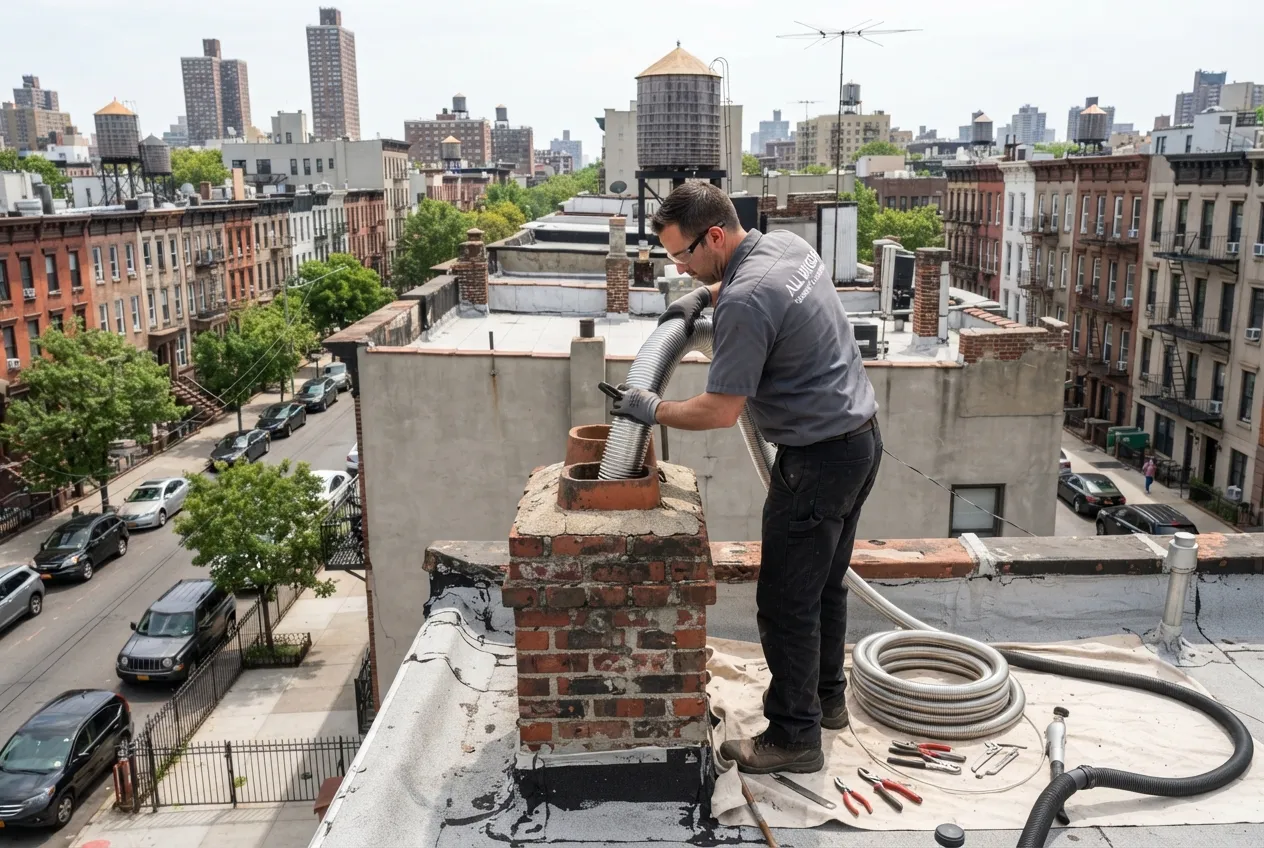
- Installing the liner from the roof down, with insulation where the chimney needs it
- Connecting it properly at the appliance and finishing the top with a cap
- A final check of draft and connections before the system goes back into service
Time for your annual chimney check?
Planning Around Heat Season and Shared Buildings
New York City's heat season runs from October 1 through May 31, when building owners must keep apartments heated to the city's minimum temperatures. For buildings that rely on a single boiler, it makes sense to schedule liner work and conversions outside that window when possible. If work has to happen during heat season, we plan the steps so the boiler is offline for as short a time as we can manage.
East Village buildings come with practical challenges: narrow stairwells, tight rooftops, shared walls, and tenants on every floor. We coordinate roof access with owners, managers, and supers ahead of time, protect hallways and work areas, and keep residents informed about when the heat or hot water may be affected. We can also work alongside your boiler contractor on conversion projects.
Serving East Village and Nearby Neighborhoods
Because our office is in Gramercy, East Village is close by, which makes follow-up visits and inspections easy to schedule. We also install and repair chimney liners in Stuyvesant Town, Peter Cooper Village, the Lower East Side, Gramercy, and Greenwich Village.
More services in East Village
- Chimney Sweep in East Village
- Chimney Inspection in East Village
- Chimney Repair in East Village
- Air Duct Cleaning in East Village