The short answer
Air duct cleaning makes sense in an East Village home when you can see substantial mold growth, signs of pests, or heavy dust and debris inside the ducts or blowing out of the registers. If none of those apply, cleaning is usually optional, and we will tell you that. When the ducts do need work, we clean the whole system, not just the grilles.
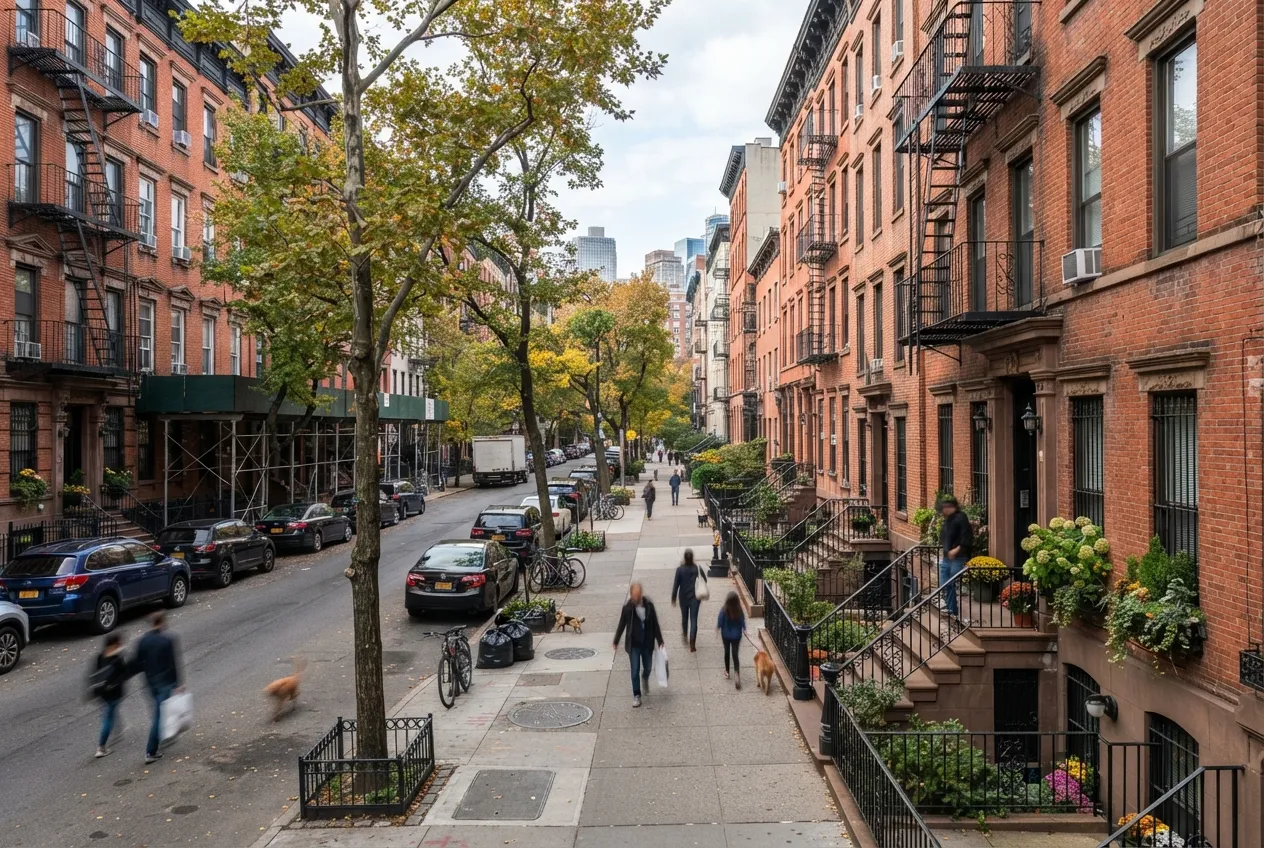
Many East Village homes were built long before central air existed, so the ductwork here is usually a later addition. It might be a ducted system installed during a gut renovation of a rowhouse, a slim high-velocity system threaded through the walls of a brownstone, or the supply and return runs in a newer apartment building. Bathroom and kitchen exhaust ducts and dryer vents show up in every kind of building. Our certified technicians work out of our Gramercy office, about a mile north, and clean ducts in apartments, co-ops, condos and single-family rowhouses across ZIP codes 10003 and 10009. This page covers when cleaning actually helps, what happens during a visit, and how to plan the work around your building.
The duct systems we find in East Village homes
Because so many buildings in the neighborhood are older walk-ups and pre-war apartment buildings heated by radiators, a lot of residents have no forced-air ducts at all. Their ductwork is limited to bathroom exhaust fans, kitchen range hoods and a dryer vent. In renovated rowhouses and brownstones, and in newer condo buildings, you are more likely to find a full ducted heating and cooling system with an air handler in a closet, a ceiling space or the cellar.
Older ductwork that was added later tends to have long horizontal runs, tight turns and sections squeezed into soffits. Dust and renovation debris settle in those spots. Before we quote any work, we look at what you actually have so the plan fits your system.
When duct cleaning is worth doing
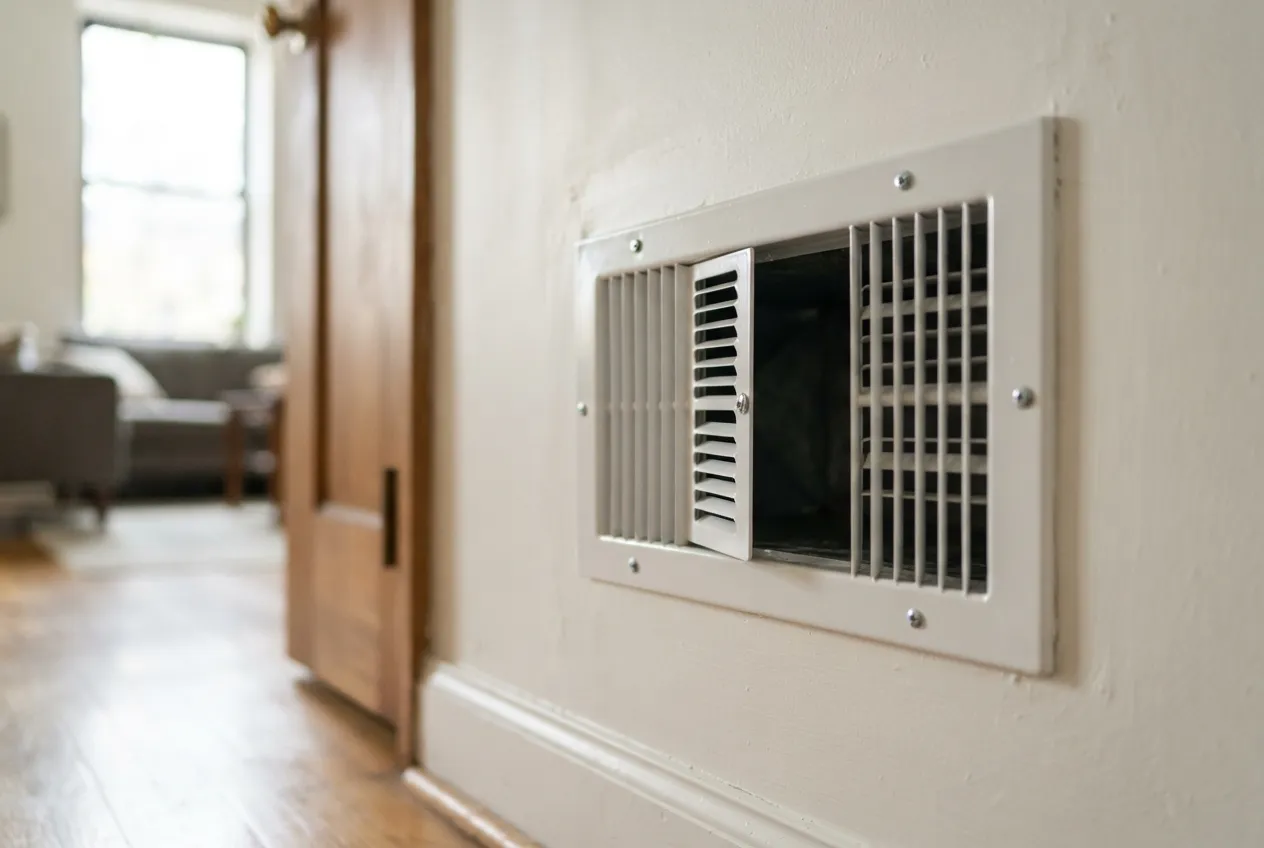
We follow the U.S. EPA's guidance. The EPA recommends cleaning air ducts when there is substantial visible mold growth, evidence of vermin such as rodents or insects, or excessive dust and debris that is clogging the ducts or blowing out of the registers. The EPA also notes that duct cleaning has not been shown to prevent health problems, so we won't promise that it will.
Mold needs a moisture source. If we find growth, we will point out likely causes, such as a leaking condensate line or uninsulated duct sweating in summer, because the mold will come back if the cause isn't fixed.
- Visible mold inside ducts or on the air handler
- Droppings, nesting material or insects in the ductwork
- Dust puffing from registers when the system starts
- Construction dust left behind after a renovation
- A new purchase where the ducts' history is unknown
What happens during a cleaning visit
We start with an inspection. We remove registers and use a camera to look into the accessible runs. If the ducts don't need cleaning, we tell you before any work begins.
When cleaning is warranted, we protect floors and furniture, cover the registers, and connect a collection system that keeps the ducts under negative pressure so loosened debris is pulled out of the system instead of into your rooms. Then we work through each run with brushes and air tools sized for the duct. We also clean the registers, grilles and the accessible parts of the air handler. The EPA warns consumers to be careful with chemical treatments, so we don't apply sealants or biocides as a routine add-on. If one ever seems appropriate, we explain why and let you decide.
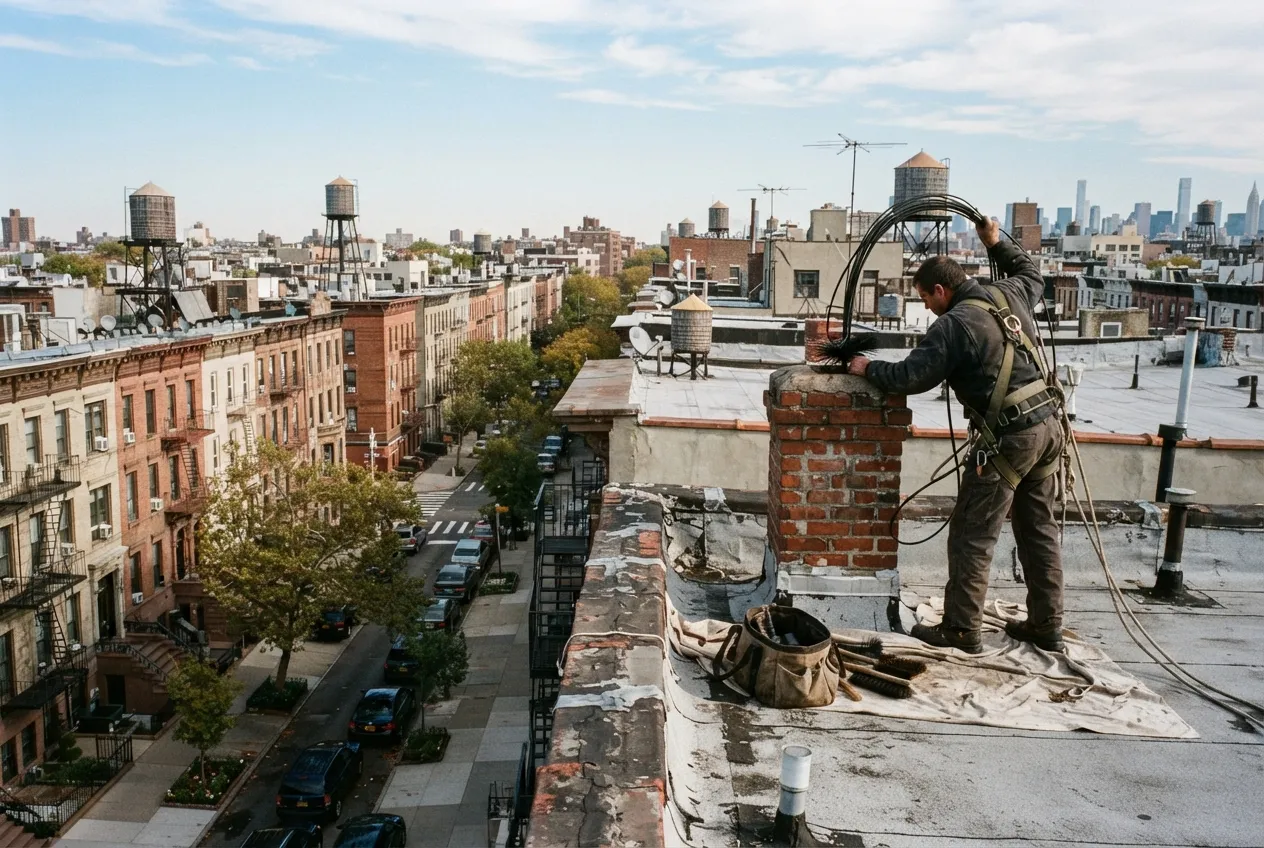
Time for your annual chimney check?
Planning around your building and the heating season
New York City's heat season runs from October 1 through May 31. If your apartment gets forced-air heat, scheduling the cleaning in late summer or early fall means the system is clean before it runs every day. For buildings with radiators and separate cooling, spring is often the easier window.
Co-ops and condos often have rules about work hours, elevator reservations and access to shared spaces. Check with your managing agent or super before the appointment, and let us know about any building requirements when you book.
Dryer vents and exhaust ducts
According to the U.S. Fire Administration, failure to clean is the leading factor contributing to clothes dryer fires in homes. In apartments, dryer vents often run a long way to reach an outside wall or a shared shaft, and lint builds up quickly. We can clean the dryer vent and the bathroom and kitchen exhaust ducts during the same visit. If your dryer takes longer than it used to, or the laundry area feels hot and humid, have the vent checked.
Serving the East Village and nearby neighborhoods
Our Gramercy office is close by, so getting to the East Village is a short trip. We also clean ducts and dryer vents in Stuyvesant Town, Peter Cooper Village, the Lower East Side, Gramercy and Greenwich Village.
More services in East Village
- Chimney Sweep in East Village
- Chimney Inspection in East Village
- Chimney Repair in East Village
- Chimney Liner Installation in East Village