The short answer
Nexora Chimney Services repairs chimney crowns, brick and mortar joints, flashing, caps, dampers and flue liners for homes and buildings in East Village, Manhattan. Every repair starts with an inspection so you know what is damaged and why, and how it can be fixed.
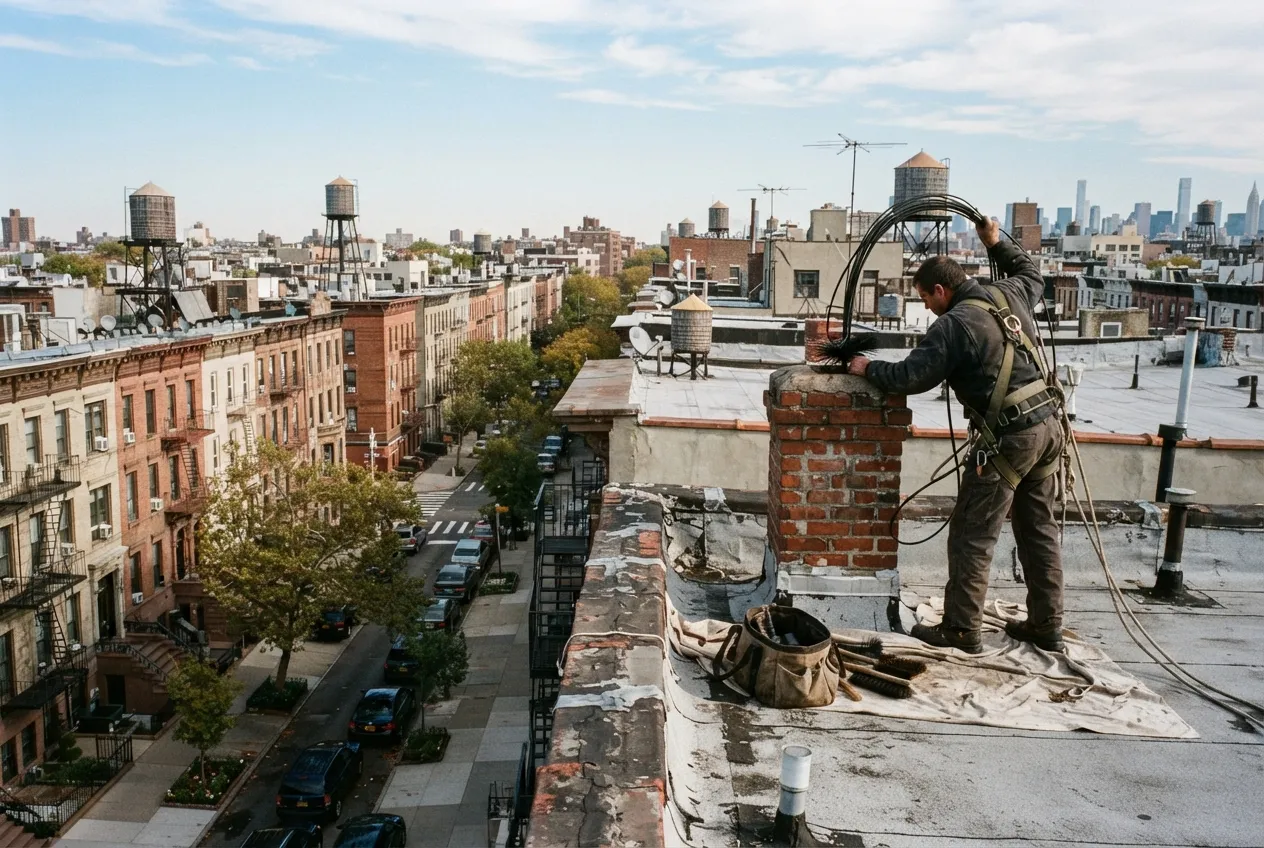
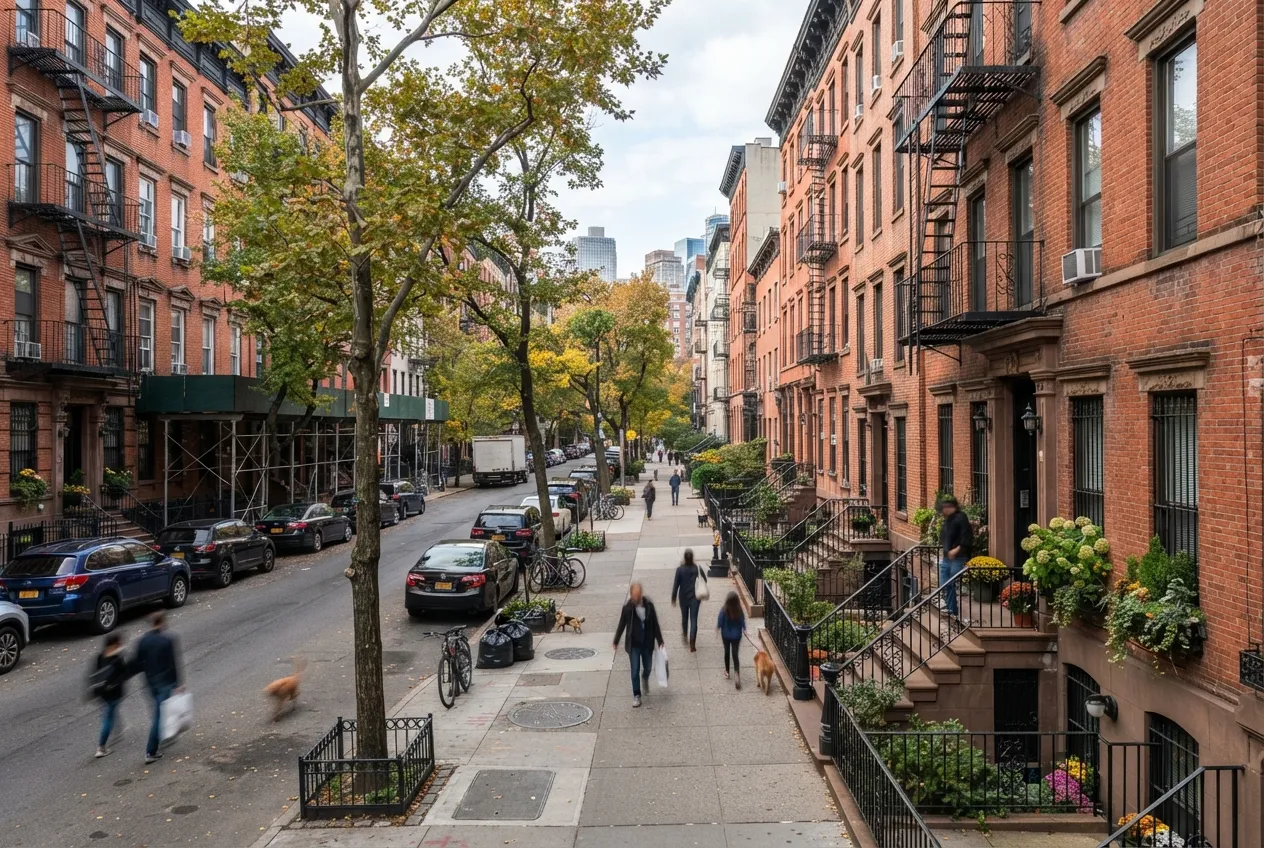
Chimneys in East Village take a beating. Most rise from older masonry buildings, such as rowhouses, brownstones, walk-ups and pre-war apartment buildings. Their brick and mortar have been through decades of New York winters, and some of their flues have served more than one kind of heating system. Nexora Chimney Services repairs chimneys throughout East Village in ZIP codes 10003 and 10009, working out of our office in Gramercy, about a mile north. Our certified technicians start by finding out exactly what is wrong. Then we explain the repair in plain terms before any work begins.
Common Chimney Problems in East Village Buildings
Much of the damage we see in this part of Manhattan comes from water. Rain and snow soak into porous brick and old mortar. When that water freezes and thaws through a New York winter, it slowly pushes the masonry apart. Cracks in the chimney crown let water straight down into the structure. Worn flashing at the roofline can send leaks into a top-floor ceiling or wall.
Inside the chimney, the flue liner and firebox take the heat and the exhaust. A cracked clay tile, a gap between liner sections or crumbling firebox mortar can let heat and combustion gases reach parts of the building they should never touch. Many of these problems are invisible from the street or the roof.
- Cracked or crumbling chimney crowns
- Spalling brick and eroded mortar joints
- Leaking or loose flashing where the chimney meets the roof
- Missing or rusted chimney caps that let in rain, debris and animals
- Damaged clay flue tiles or deteriorated liners
- Worn firebox mortar and dampers that no longer seal
How We Approach a Chimney Repair
We do not guess at repairs. A technician first inspects the chimney using the three inspection levels the industry relies on. A Level 1 inspection covers the readily accessible parts of a chimney when nothing about the system has changed. A Level 2 inspection is used when something has changed, such as a new appliance or a different fuel, or when the property is being sold. It includes a closer look, often with a camera run through the flue. A Level 3 inspection is reserved for cases where a suspected hidden hazard can only be reached by opening part of the chimney or the building.
After the inspection, we walk you through what we found. We show you photos or video where we can, and we explain which repairs matter now and which can be planned for later. You decide how to proceed.
Repairs for Rowhouses, Brownstones and Pre-War Buildings
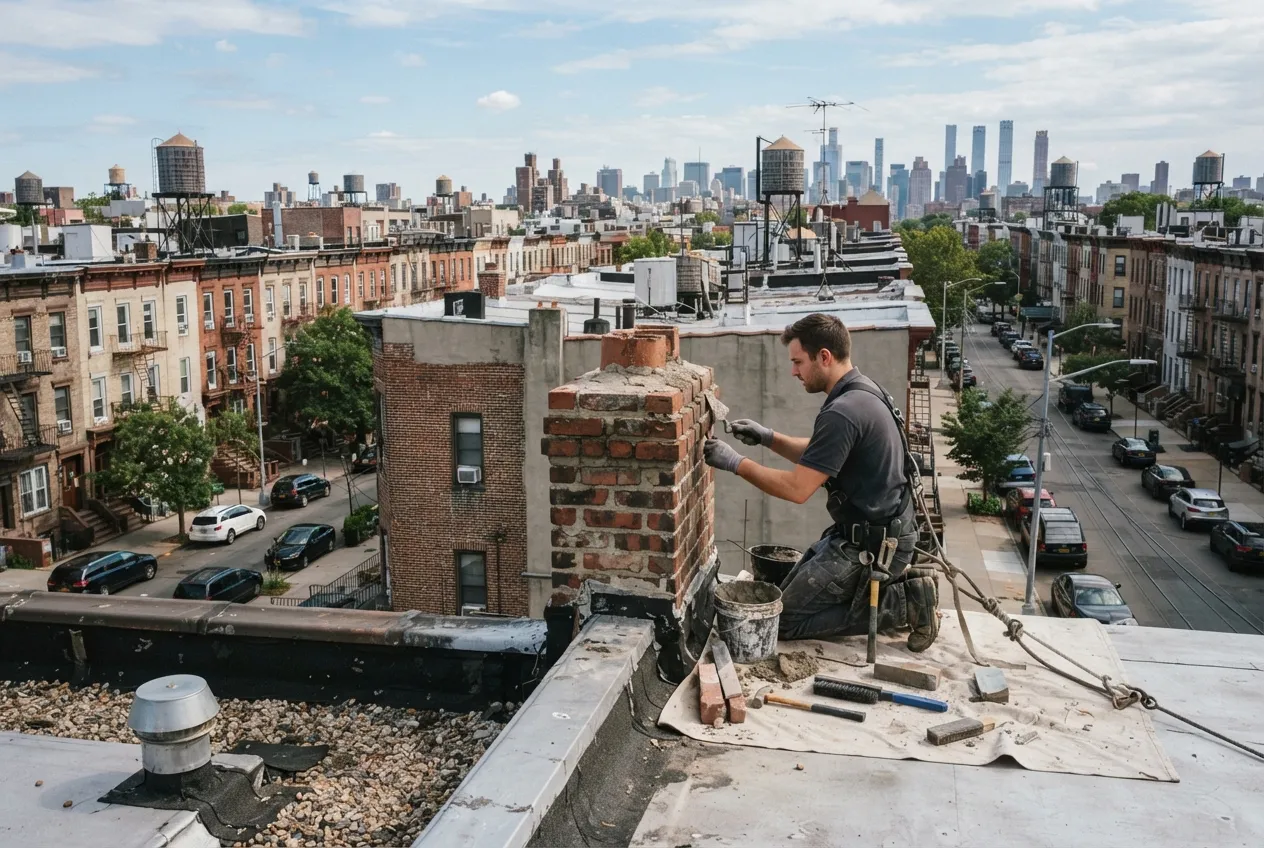
Older masonry needs care. Repointing with a mortar that suits the existing brick helps keep the chimney sound, and so does rebuilding a failing crown so it sheds water away from the stack. We can replace damaged bricks, reseal flashing and add a properly sized cap to keep out weather and animals.
Some East Village chimneys serve more than one unit or connect to a central boiler. If you live in a co-op, condo or rental building, the chimney may be the responsibility of the building owner or board. We are glad to coordinate with your super or management to schedule access to the roof and the boiler room.
Time for your annual chimney check?
Liners and Oil-to-Gas Conversions
When a New York City building converts its boiler from oil to gas, the chimney has to be evaluated as part of that work. A new liner is often needed. Gas exhaust produces acidic condensate, and over time it can corrode an unlined or old masonry flue from the inside. We assess the existing flue, explain whether relining is needed and install a liner sized for the new equipment.
Relining can also be the right fix when clay tiles are cracked or shifted, even if the fuel has not changed.
Timing Repairs Around the Heating Season
New York City's heat season runs from October 1 through May 31, when building owners must keep apartments heated to the city's minimum temperatures. In a building where the boiler vents through the chimney, a chimney problem in the middle of winter can leave you with few good choices. The NFPA 211 standard calls for chimneys, fireplaces and vents to be inspected once a year. Late spring and summer are a practical time to have that inspection and finish any repairs before the heat comes back on.
We also serve nearby Stuyvesant Town, Peter Cooper Village, Lower East Side, Gramercy and Greenwich Village.
More services in East Village
- Chimney Sweep in East Village
- Chimney Inspection in East Village
- Air Duct Cleaning in East Village
- Chimney Liner Installation in East Village