The short answer
A chimney liner may be needed in Midtown South when an existing flue is cracked, the wrong size for the appliance, or being converted from oil to gas heat. Nexora Chimney Services inspects the flue first, then installs a liner matched to the fireplace, boiler, or water heater it will serve.
A chimney liner is the protective channel inside your flue that carries smoke, gases, and heat safely out of the building. In Midtown South, many chimneys serve boilers, water heaters, or fireplaces in pre-war apartment buildings, former loft and commercial buildings converted to residences, and older walk-ups. Over decades, the original clay tile or bare masonry in these flues can crack, shift, or erode. Nexora Chimney Services installs new liners for homes and buildings in Midtown South from our office in Gramercy, about a mile southeast. Our certified technicians evaluate the existing flue, explain what they find, and fit a liner sized for the appliance it serves.
Why Liners Matter in Midtown South Buildings
Much of the housing in Midtown South was built long before modern heating equipment existed. Chimneys were often designed for coal or wood, then later connected to oil boilers, and in many cases are now being tied to gas equipment. Each of those changes affects how the flue performs. A flue that worked fine for one appliance can be too large, too small, or too damaged for the next.
A sound liner keeps hot exhaust and corrosive byproducts away from the surrounding brick and mortar, helps the appliance draft properly, and reduces the chance of combustion gases leaking into living spaces. In buildings where apartments share walls with the chimney, a failing flue is a concern for more than one household.
Oil-to-Gas Conversions and Your Chimney
When a New York City building converts its boiler from oil to gas, the chimney has to be evaluated as part of the work. A new liner is often needed, because gas exhaust produces acidic condensate that can corrode a masonry flue that was built or relined for oil.
If your building in Midtown South is planning a conversion, it helps to bring us in early. We can inspect the existing flue, confirm whether it can be reused, and recommend a liner size and material that suits the new equipment. Coordinating this with your heating contractor keeps the project from stalling at the chimney stage.
Signs a Flue May Need Relining
Some problems are visible from the fireplace or boiler room, while others only show up during an inspection with a camera. Common warning signs include:
- Pieces of tile, mortar, or masonry falling into the firebox or cleanout
- Damp spots, staining, or crumbling brick on walls next to the chimney
- Smoke or odors entering rooms when an appliance runs
- A boiler or water heater that has been replaced or switched to a different fuel
- Cracks or gaps between flue tiles found during an inspection
- Heavy deposits or deterioration after years of use without a liner
Time for your annual chimney check?
How Liner Installation Works
Every chimney is different, so we start by looking before recommending anything. A typical liner project in Midtown South follows these steps:
- Inspection of the existing flue, often with a camera, to document its condition
- Measuring the flue and reviewing the appliance it serves so the liner is properly sized
- Cleaning the flue so the new liner can be installed against clean surfaces
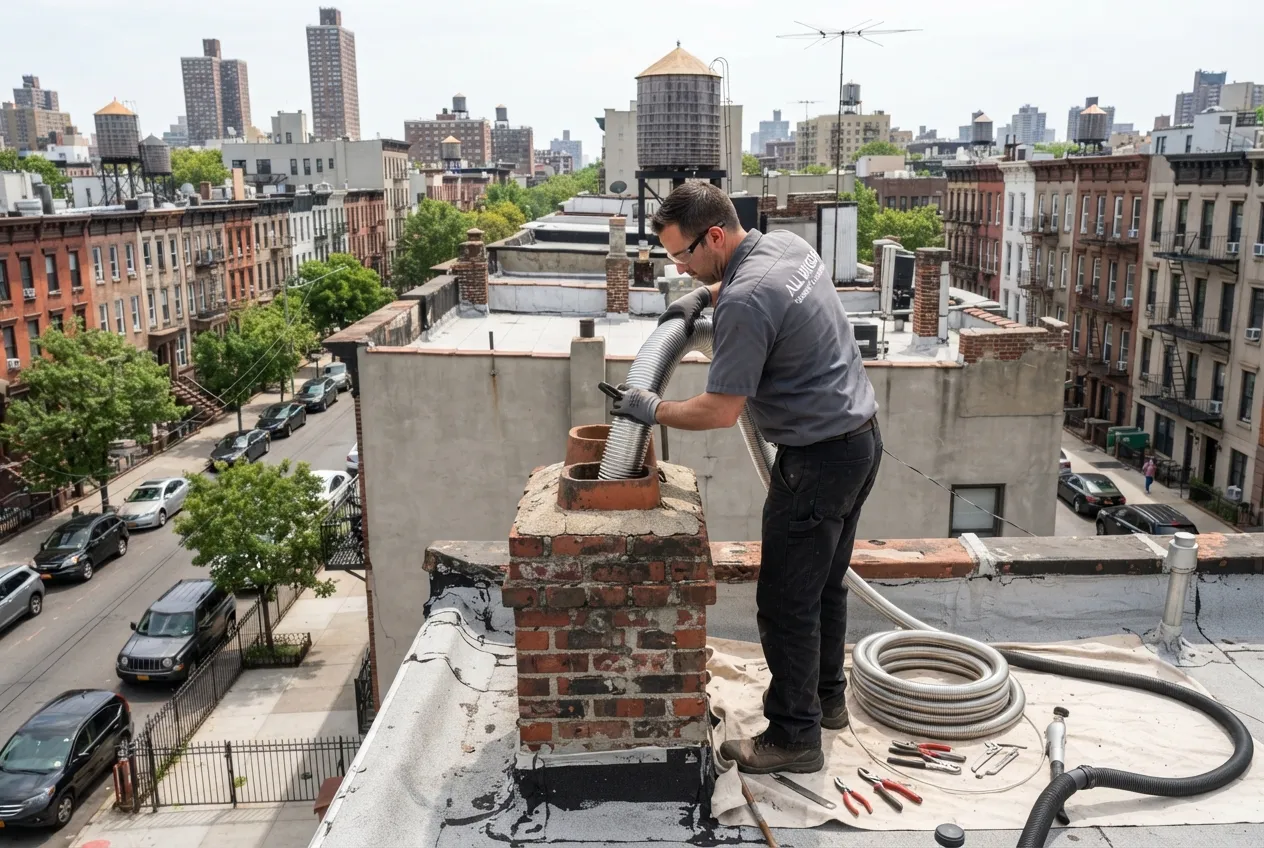
- Lowering and securing the liner from the top of the chimney, with connections made at the appliance
- Adding a cap or other components as needed to keep out water and debris
- A final check that the system drafts correctly, with photos and an explanation of the work
Planning Around Heat Season and Inspections
New York City's heat season runs from October 1 through May 31, when building owners must keep apartments heated to the city's minimum temperatures. Liner work on a boiler chimney is easiest to schedule outside those months, so the heating system is not out of service when tenants need it. If a problem turns up in the middle of winter, we will talk through options with you.
The NFPA 211 standard calls for chimneys, fireplaces, and vents to be inspected once a year. A Level 2 inspection is recommended when the system changes, such as a new appliance or a switch of fuel, or when the home is sold. That makes it a natural first step before any relining.
Serving Midtown South and Nearby Neighborhoods
We work throughout Midtown South, including the 10119 ZIP code, and in neighboring Flatiron, Union Square, Gramercy, Murray Hill, and Kips Bay. Because our office is close by, we know the building types common in this part of Manhattan, from walk-ups to larger pre-war apartment buildings. Contact Nexora Chimney Services to schedule an inspection and find out whether your flue needs a new liner.
More services in Midtown South
- Chimney Sweep in Midtown South
- Chimney Inspection in Midtown South
- Chimney Repair in Midtown South
- Air Duct Cleaning in Midtown South