The short answer
A chimney liner is needed when the existing flue is cracked, deteriorated, the wrong size, or about to serve a new appliance or fuel, such as after a boiler conversion from oil to gas. Nexora Chimney Services inspects the chimney first, then installs a liner sized to the appliance in Kips Bay homes and buildings.
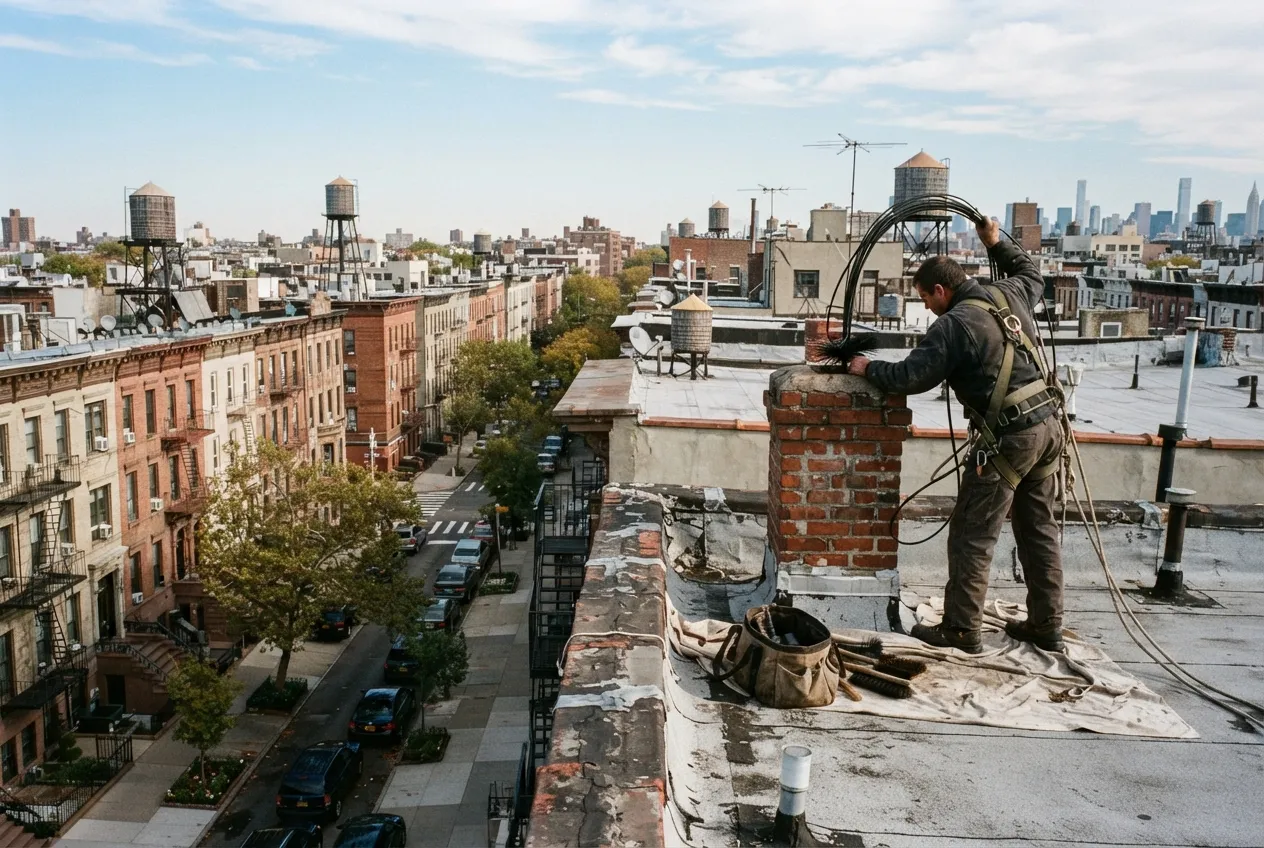
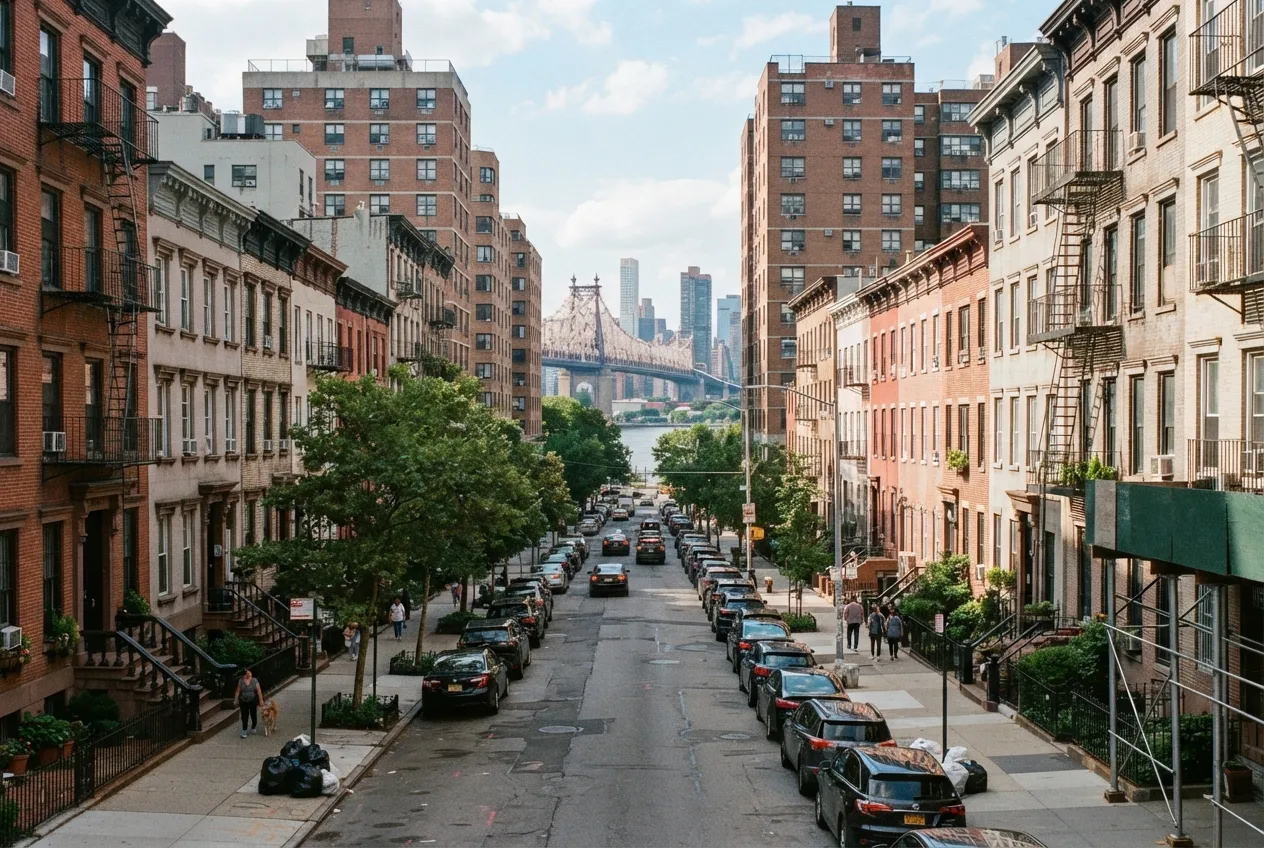
A chimney liner keeps heat, smoke and exhaust gases inside the flue and away from the masonry, framing and neighboring walls around it. In Kips Bay, many homes and buildings have older masonry chimneys serving fireplaces, boilers or water heaters, and those flues often need a new liner when they crack, wear out or start serving a different appliance. Nexora Chimney Services installs chimney liners for homeowners and building owners in Kips Bay, about a mile northeast of our office in Gramercy. Our certified technicians start with an inspection, size the liner to the appliance it will serve, and explain what we found before any work begins.
Why Liners Matter in Kips Bay Chimneys
Kips Bay has a mix of brownstones, rowhouses, pre-war apartment buildings and newer residential buildings. In older masonry buildings, the original flue may be clay tile or bare brick. Over many decades, heat cycles, moisture and exhaust can crack tiles, wash out mortar joints and leave gaps where heat or gases can escape.
Because rowhouses and attached buildings share walls, a damaged flue is not only your concern. Gases or heat escaping through a cracked flue can reach spaces next door. A properly sized, continuous liner gives exhaust a sealed path from the appliance to the top of the chimney.
Oil-to-Gas Conversions and New Liners
When a New York City building converts its boiler from oil to gas, the chimney has to be evaluated as part of the work. A new liner is often needed because gas exhaust produces acidic condensate that can corrode a masonry flue that was built for oil.
If your building is planning a conversion, it helps to have the chimney looked at early so the liner work can be coordinated with the boiler installation instead of holding it up. We can review the existing flue, note its size and condition, and explain what a new liner would involve for the new appliance.
How Liner Installation Works
Every job starts with an inspection. The NFPA 211 standard describes inspection levels, and a Level 2 inspection applies when the system changes, such as a new appliance or a switch of fuel. That usually includes a camera look inside the flue. If a hidden problem has to be reached by opening part of the chimney or building, a Level 3 inspection may be needed.
After the inspection, a typical installation includes these steps:
- Measuring the flue and confirming the appliance's venting needs so the liner is the right size and type
- Cleaning the existing flue and clearing debris or obstructions
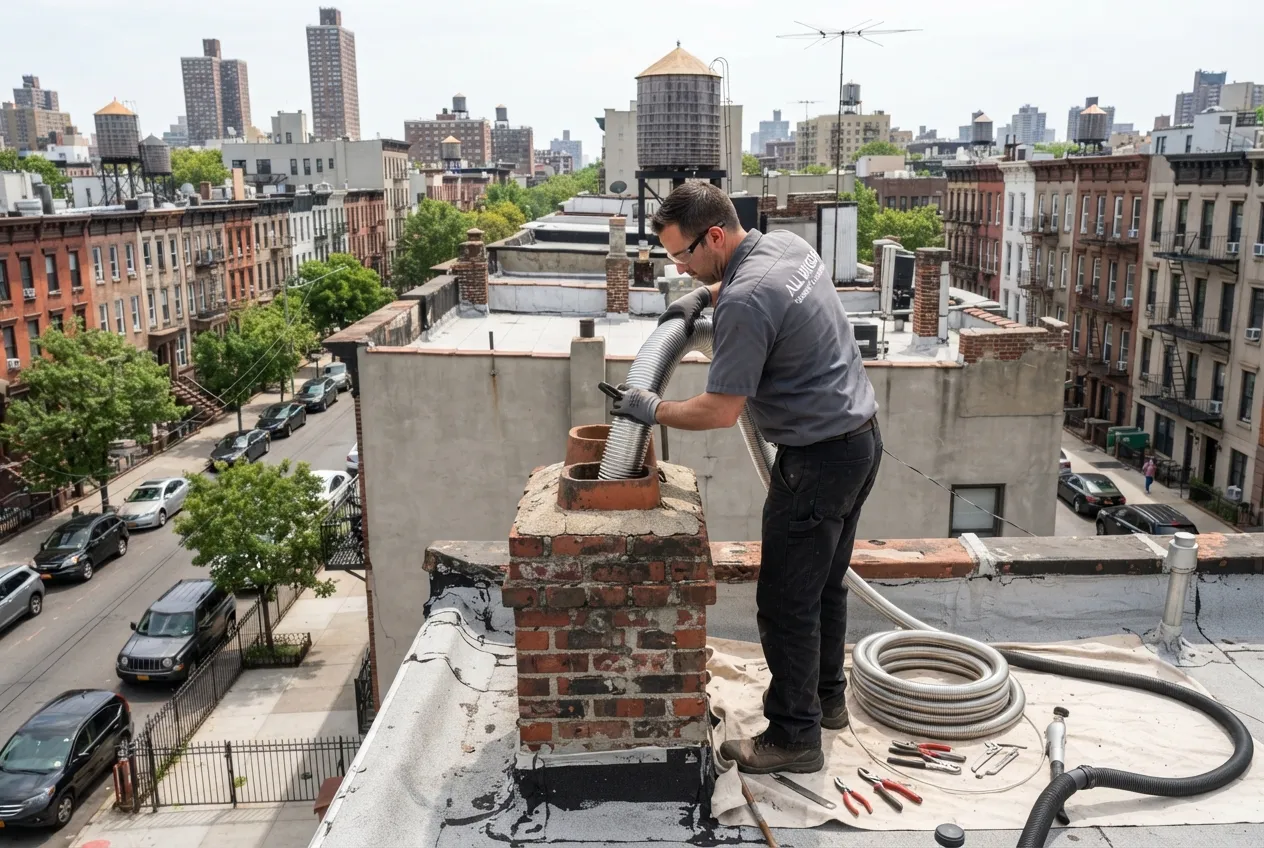
- Lowering the liner down the chimney from the roof and connecting it to the appliance
- Installing a top plate, cap and connections to keep out rain, debris and animals
- Checking the finished system and walking you through what was done
Time for your annual chimney check?
Choosing the Right Liner
The right liner depends on what the chimney serves. A gas boiler, an oil boiler, a water heater and a wood-burning fireplace each produce different exhaust, temperatures and condensation. A liner that works for one may not suit another.
Stainless steel liners are common in Manhattan because they can be fed through existing masonry flues, including chimneys with offsets. Some fireplaces may need other options depending on the flue's shape and condition. We will explain which liner type fits your appliance and why, in plain terms.
Planning Around Heat Season
New York City's heat season runs from October 1 through May 31, when building owners must keep apartments heated to the city's minimum temperatures. Liner work on a chimney that serves a boiler can mean the heating system is offline for part of the job.
For that reason, many building owners schedule liner installation in late spring or summer. If a problem is found during heat season, we will talk through timing with you so the work disrupts heat as little as possible.
Serving Kips Bay and Nearby Neighborhoods
We work throughout Kips Bay, including ZIP codes 10016 and 10168, and in nearby Murray Hill, Gramercy, Midtown South, Flatiron and Union Square. Being close by makes it easier to schedule inspections and return visits for coordinated work like boiler conversions.
More services in Kips Bay
- Chimney Sweep in Kips Bay
- Chimney Inspection in Kips Bay
- Chimney Repair in Kips Bay
- Air Duct Cleaning in Kips Bay