The short answer
Nexora Chimney Services provides chimney inspections and cleaning, dryer vent cleaning and air duct cleaning across Queens, including Long Island City and Hunters Point. Chimneys and vents should be inspected once a year, and summer or early fall is the easiest time to schedule before New York City's heat season begins.
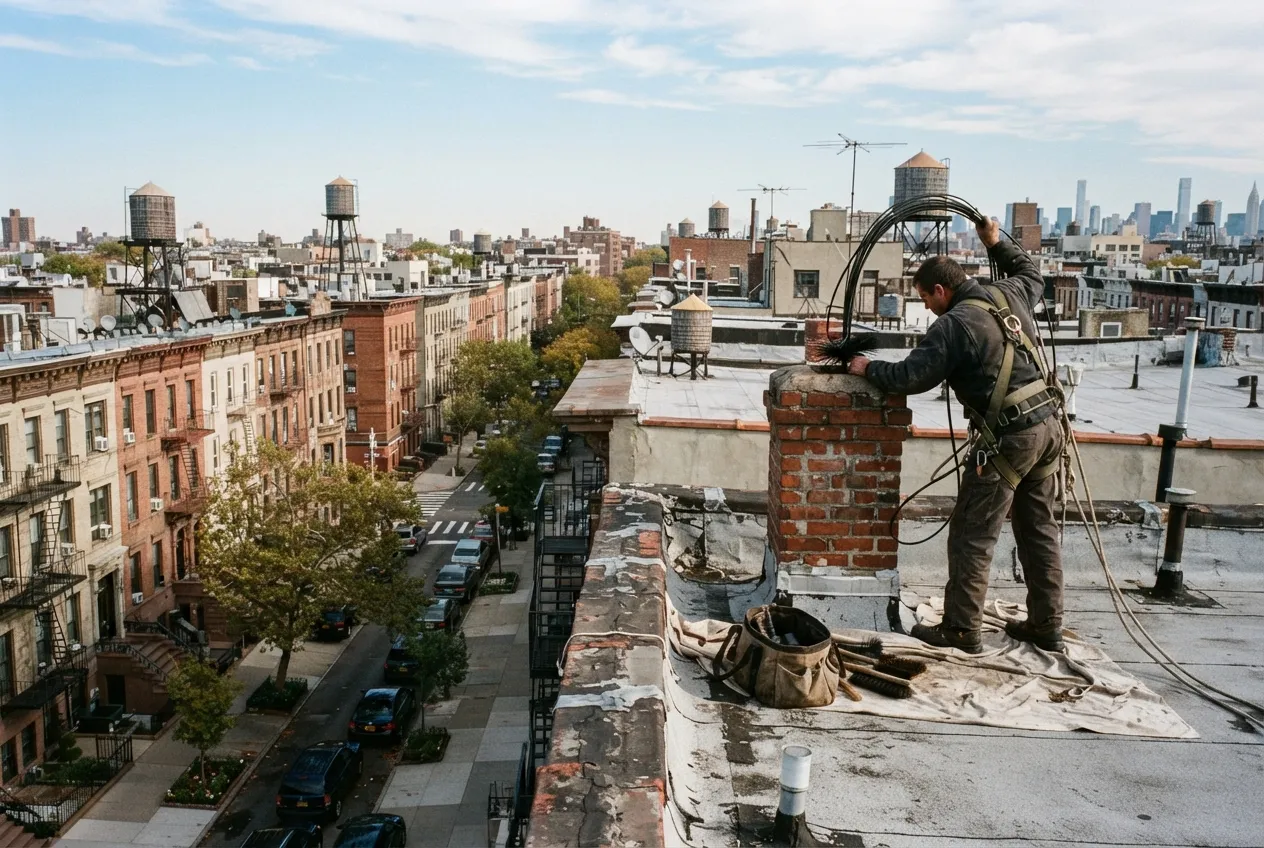
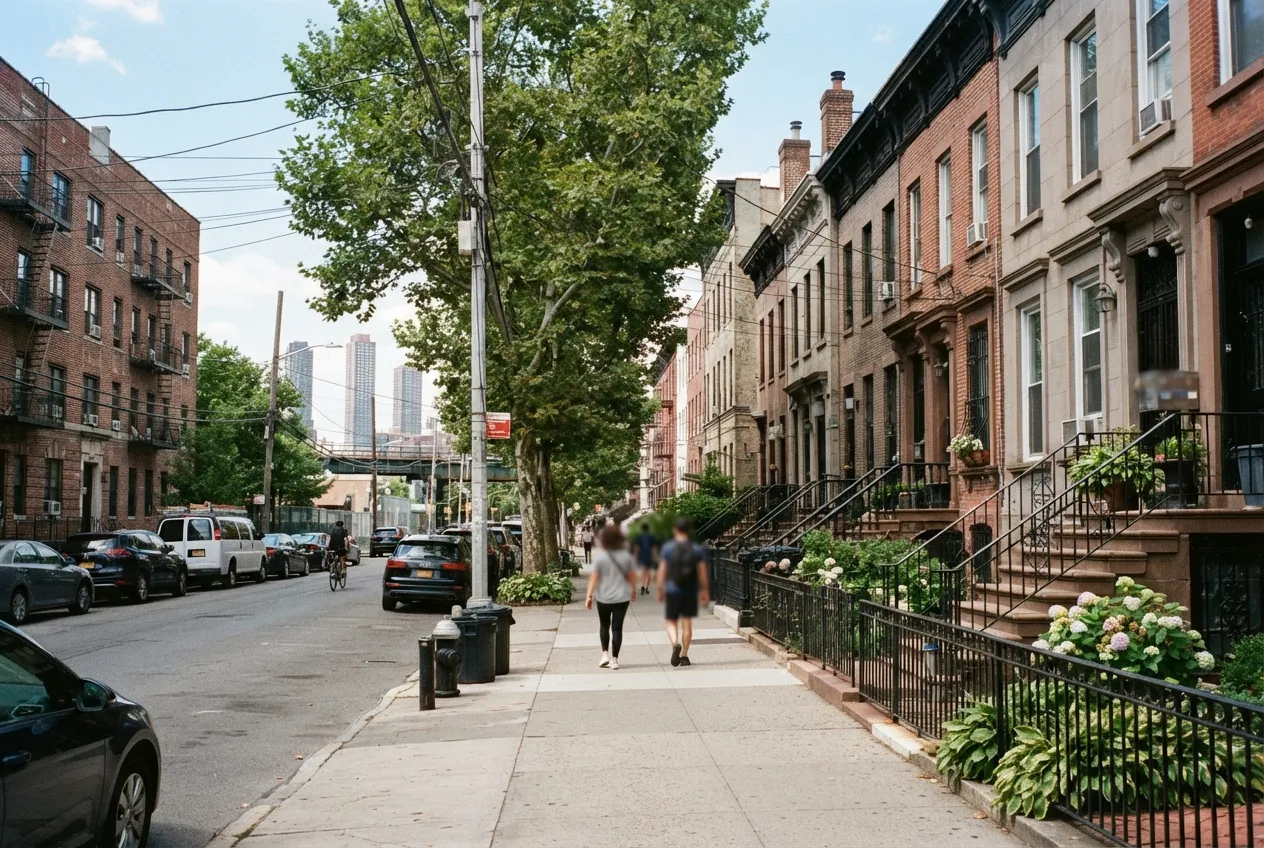
Queens homes come in every shape, and so do their flues and vents. In Long Island City and Hunters Point, Nexora Chimney Services works on fireplaces in older rowhouses, boiler chimneys that serve multi-family buildings, and dryer vents and air ducts in apartments. Our certified technicians first find out how your system actually works. Then they clean and inspect what needs attention and explain what they found in plain terms.
Start With What You're Noticing
Most calls begin with a symptom rather than a schedule. Here are a few common ones and what they usually point to:
- Smoke drifting into the room when the fireplace is lit: a draft problem, a blockage, or a damper that isn't fully open.
- A strong, campfire-like odor on humid days: creosote buildup in the flue.
- Laundry that takes two cycles to dry: lint packed into the dryer vent run.
- Dust that settles quickly after cleaning, or musty air from the registers: worth inspecting the ductwork, though not always a reason to clean it.
- Debris, nesting sounds or water at the base of the firebox: often an animal or a missing chimney cap.
What Happens During a Visit
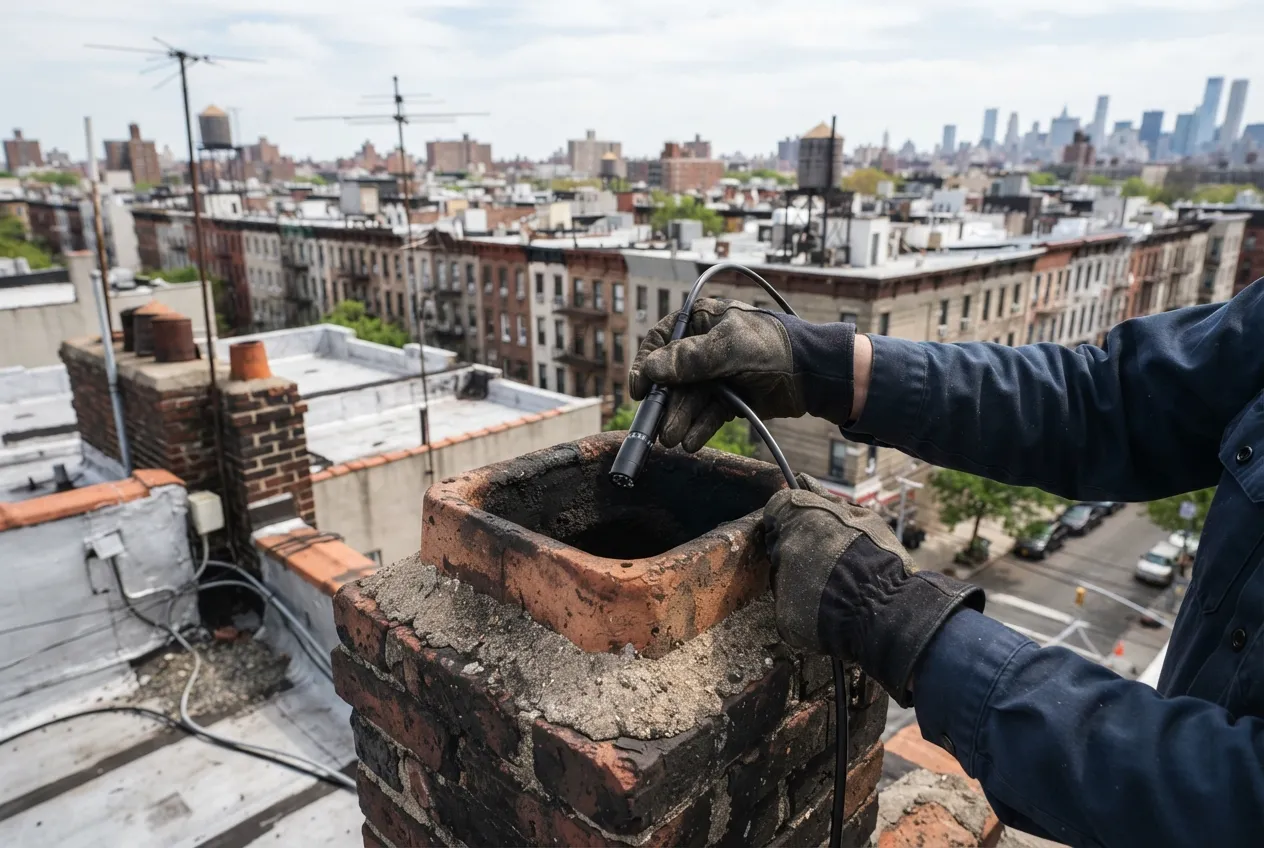
We start with a few questions. What appliance uses the chimney? What fuel does it burn? Has anything changed since the last inspection? The answers decide the inspection level. The NFPA 211 standard calls for chimneys, fireplaces and vents to be inspected once a year. A Level 1 inspection fits when nothing has changed. A Level 2 inspection applies when you've added a new appliance, switched fuels or are selling the home. A Level 3 inspection is for hidden hazards that can only be reached by opening part of the chimney or the building.
We cover the work area before cleaning. Afterward, we show you photos or video of the flue so you can see its condition for yourself.
Oil-to-Gas Conversions in Older Buildings
Many Queens buildings have boilers that once burned oil. When a New York City building converts its boiler from oil to gas, the chimney has to be evaluated as part of the job. A new liner is often needed because gas exhaust produces acidic condensate that can corrode a masonry flue from the inside. We can assess the existing flue and tell you whether relining is likely before the conversion moves forward.
Time for your annual chimney check?
Dryer Vents and Air Ducts: Realistic Expectations
The U.S. Fire Administration identifies failure to clean as the leading factor in home clothes dryer fires. Long vent runs in apartments and stacked laundry units collect lint quickly. We clean from the dryer connection all the way to the exterior opening and check for crushed or disconnected sections along the way.
Air ducts are a different matter. The EPA advises cleaning when there is substantial visible mold growth, vermin, or excessive dust and debris. It also notes that duct cleaning has not been shown to prevent health problems. If your ducts don't need cleaning, we'll tell you, and we don't push chemical treatments. The EPA also suggests researching the process before responding to very cheap duct cleaning offers.
Plan Around the Heat Season
New York City's heat season runs from October 1 through May 31. During that period, building owners must keep apartments heated to the city's minimum temperatures. If you book chimney and boiler flue work in summer or early fall, any problems get fixed before the heat has to stay on, not in the middle of a cold snap.