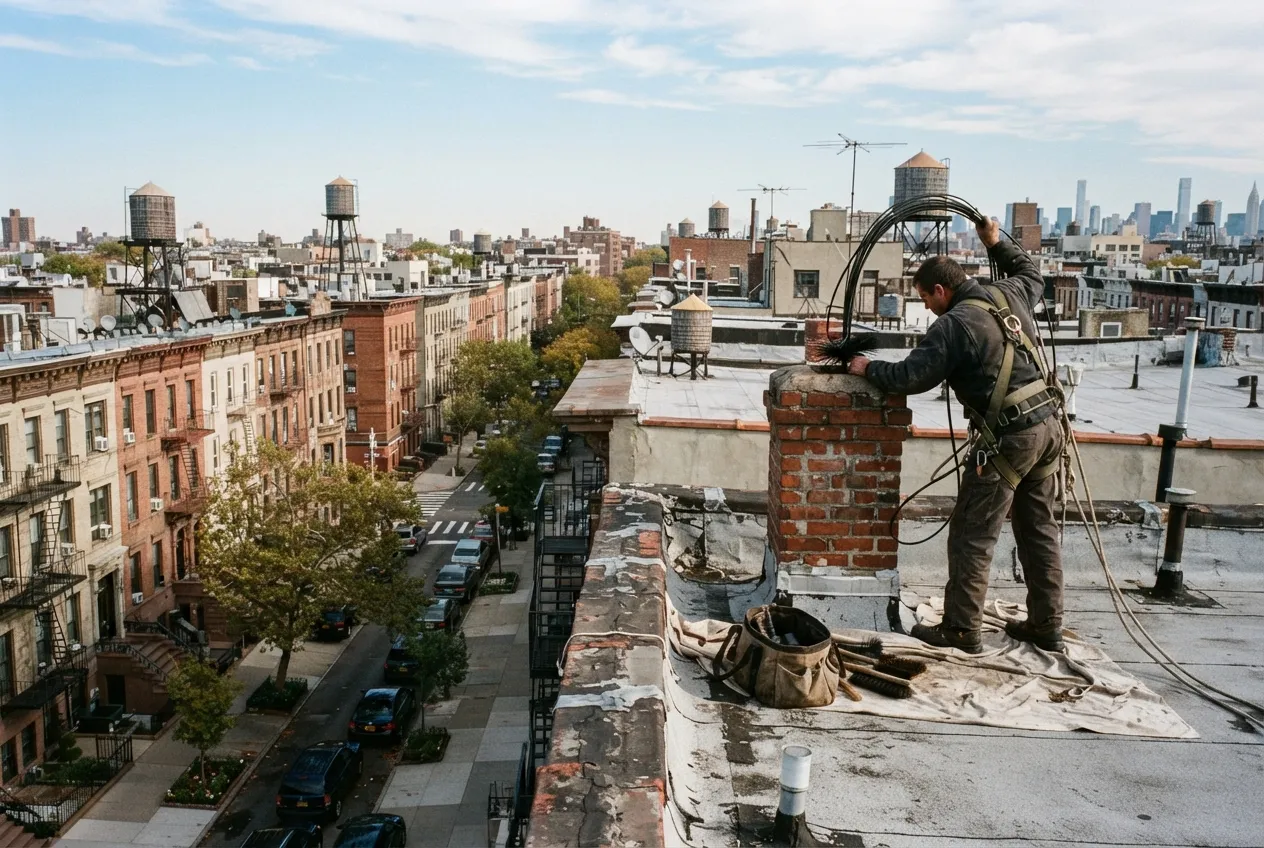
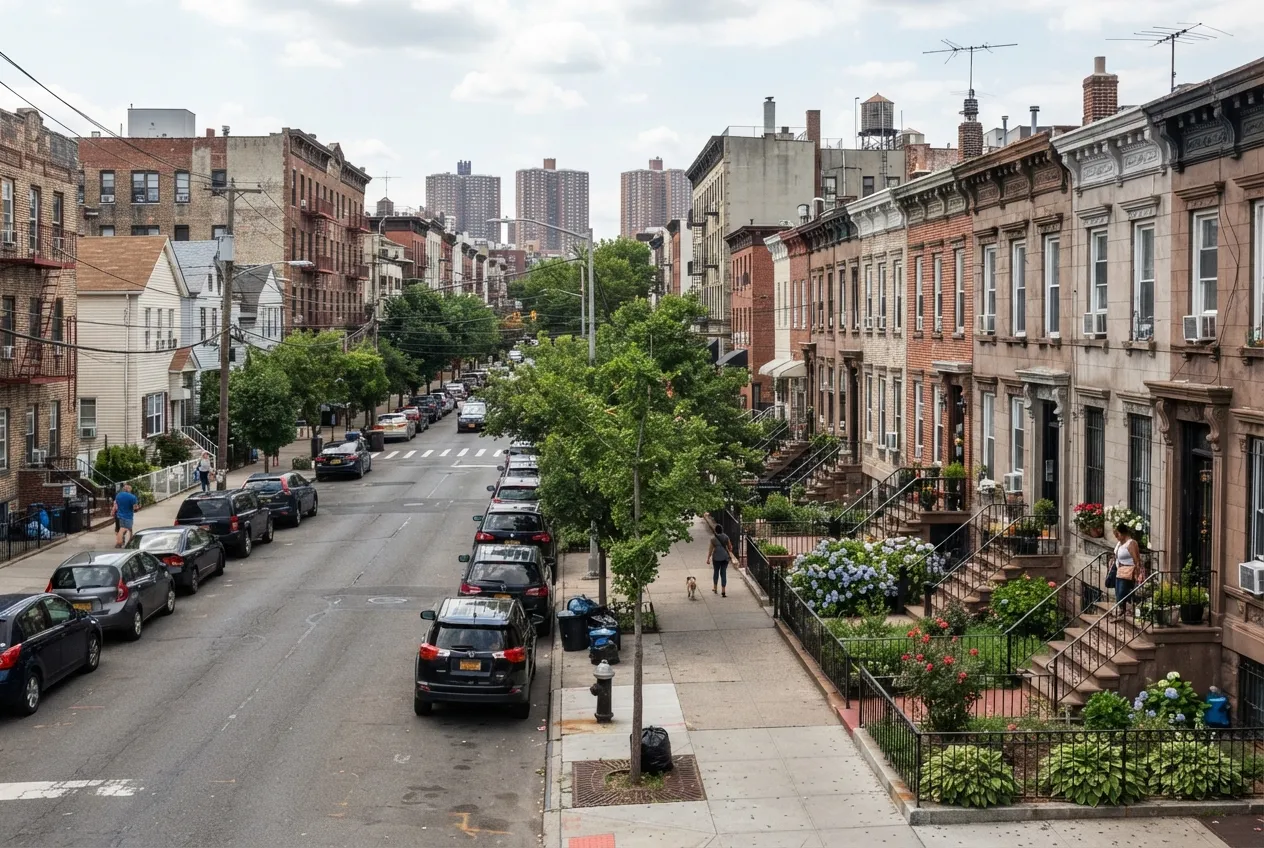
The short answer
Nexora Chimney Services provides chimney sweeping, inspection, repair, liner installation, and dryer vent and air duct cleaning across Midtown Manhattan. Our office in Gramercy is about two miles away, and we work in Midtown's apartment buildings, co-ops, and townhouses.
Nexora Chimney Services works throughout Midtown, about two miles north of our office in Gramercy. Our certified technicians sweep, inspect, and repair chimneys and fireplaces, install liners, and clean dryer vents and air ducts in homes and buildings across ZIP codes 10020, 10103, 10110, 10111, 10112, 10153, 10165, 10173, and 10177. Most of the neighborhood is tall and dense, so a lot of our Midtown work involves shared flues, boiler chimneys, long vent runs, and rooftop access. We also serve nearby Murray Hill, Kips Bay, Midtown South, Flatiron, and Union Square.
Midtown Buildings and Their Chimneys
Midtown's housing is mostly pre-war and post-war apartment buildings, high-rise co-ops and condos, and mixed-use buildings with apartments above street-level businesses. Some side streets still have older townhouses and brownstones with original masonry fireplaces. Each type of building has its own problems.
In larger buildings, the main concern is usually the boiler chimney and its liner, along with the dryer and exhaust vents that serve many units. In townhouses and brownstones, the fireplaces are often over a century old. Their clay tile liners can be cracked, their dampers can be rusted shut, and the brick at the top of the chimney often needs work. Before we quote any job, we look at how the system is actually built so the recommendation fits the building.
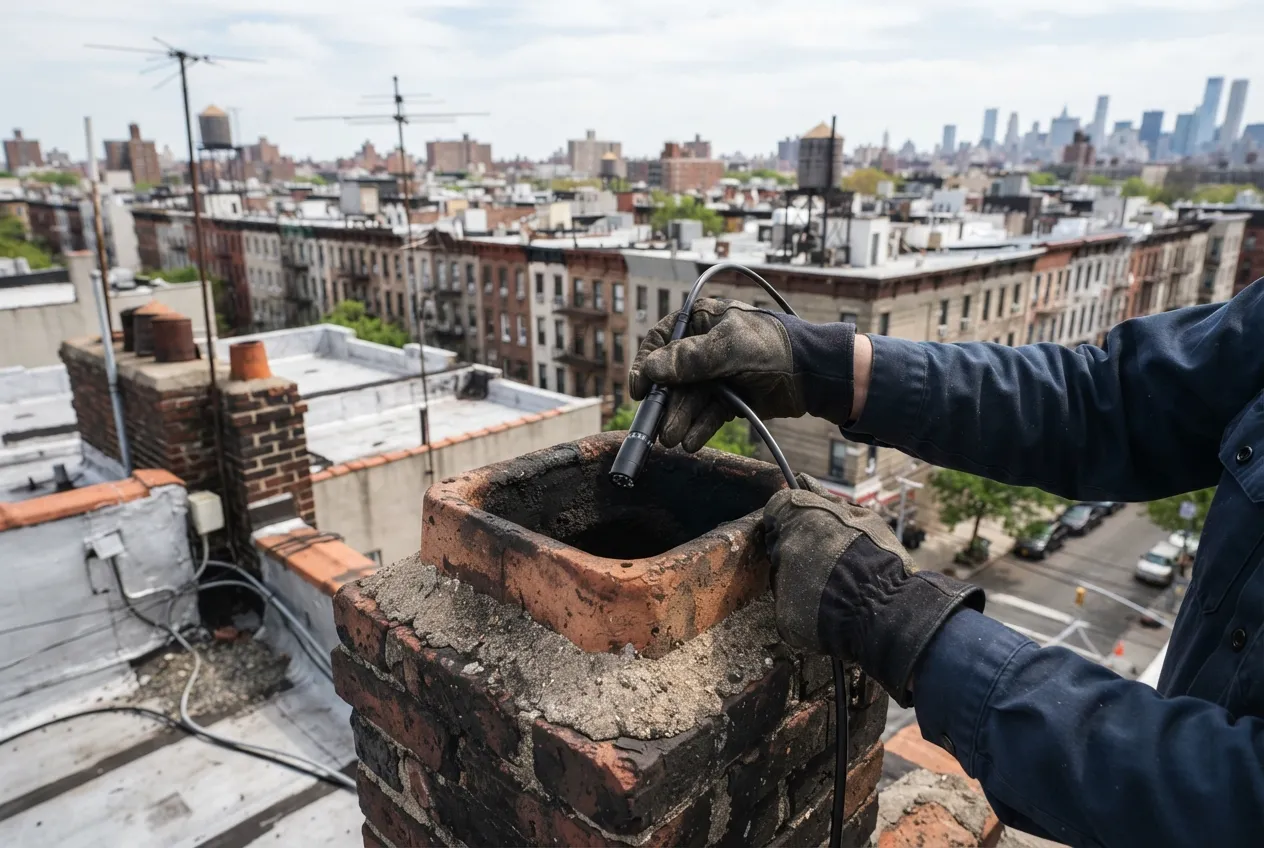
Yearly Inspections and Which Level You Need
The NFPA 211 standard calls for chimneys, fireplaces, and vents to be inspected once a year. Chimney professionals use three levels of inspection. Which one fits depends on what has happened since the last one.
- Level 1: a routine check when nothing about the system has changed.
- Level 2: needed when the system changes, such as a new appliance or a switch in fuel, or when the property is sold. This level is common in Midtown co-op and condo sales and renovations.
- Level 3: used when a suspected hidden hazard can only be reached by opening part of the chimney or building.
Oil-to-Gas Conversions and Liner Installation
Many Midtown buildings have converted, or plan to convert, their boilers from oil to gas. In New York City, the chimney has to be evaluated as part of that work. A new liner is often needed because gas exhaust produces acidic condensate that can corrode a masonry flue from the inside.
Timing matters. New York City's heat season runs from October 1 through May 31, and building owners must keep apartments at the city's minimum temperatures during that time. Scheduling the chimney evaluation and any liner installation in late spring or summer helps keep the boiler running when tenants need heat.
Time for your annual chimney check?
Weather, Water, and Masonry Repair
Midtown has cold winters, repeated freeze-thaw cycles, heavy rain, and coastal storms. Wind is stronger at roof height on taller buildings. Water that gets into brick and mortar freezes and expands, which loosens joints and cracks crowns over time.
We install and replace chimney caps and chase covers to keep out rain, debris, and birds. We also apply breathable waterproofing to masonry and repair crowns, flashing, and mortar joints. When a chimney top has deteriorated too far to patch, we rebuild it. We also repair fireplace fireboxes and dampers so older fireplaces seal properly when they're not in use.
Dryer Vent and Air Duct Cleaning
Dryer vents in Midtown apartments often run a long way before they reach the outside, and lint builds up along the way. According to the U.S. Fire Administration, failure to clean is the leading factor contributing to clothes dryer fires in homes. Warning signs include long drying times, a hot laundry area, or a burning smell. We clean the full length of the vent, not just the lint trap area.
For air ducts, we follow the U.S. EPA's guidance. It recommends cleaning when there is substantial visible mold growth, vermin, or excessive dust and debris. The EPA also notes that duct cleaning has not been shown to prevent health problems, so we inspect first and only recommend cleaning when one of those conditions is present. The EPA also urges caution with chemical treatments, and we discuss any treatment with you before we use it.
ZIP codes we serve
- 10020
- 10103
- 10110
- 10111
- 10112
- 10153
- 10165
- 10173
- 10177